


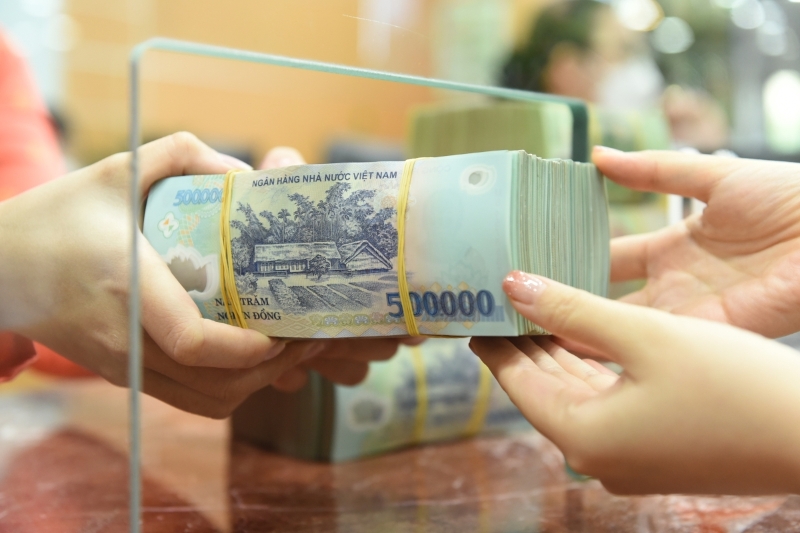
After a year of mandatory transfer, four banks - CBBank, OceanBank, GPBank, and DongABank - have begun to show clear signs of recovery. Under the stewardship of major commercial banks such as Vietcombank, MBBank, VPBank, and HDBank, these banks have significantly improved their financial performance, sharply reduced their bad debts, and gradually restructured their operating models.
Immediately after the transfer, all four banks were converted into single-member limited liability companies, with 100 per cent of equity owned by their parent bank. This new legal structure enabled parent banks to proactively reorganize governance and staffing, while exercising tighter control over credit activities, liquidity management, and non-performing loan (NPL) resolution.
New orientations
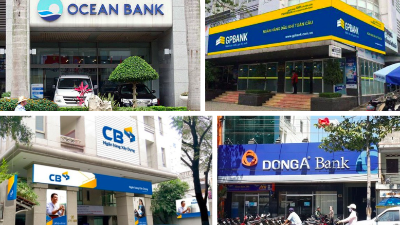
In terms of brand identity, the banks have been renamed in line with their new orientations: CBBank has become VCBNeo, OceanBank has been renamed MBV, and DongABank is now Vikki Bank, while GPBank has retained its name but is operating under a completely new business strategy.
At the banking sector task deployment conference for 2026, held in mid-January, Mr. Nguyen Manh Hung, Member of the Board of Directors at Vietcombank and Chairman of the Members’ Council at VCBNeo, said VCBNeo’s operating motto is to strengthen internal capacity, accelerate digitalization, and pursue sustainable efficiency.
It has therefore set out eight key priorities for 2026: boosting organic business growth; developing digital platforms; improving credit quality; strengthening large debt recovery; restructuring the investment portfolio; optimizing collateral assets; further streamlining the organizational structure; and effectively implementing support mechanisms from the State Bank of Vietnam (SBV).
In 2025, when the new VCBNeo brand was officially launched, the bank decisively transformed its operating model by closing a large number of physical branches and replacing them with digital transaction points. This formed part of a robust restructuring strategy aimed at streamlining operations and optimizing costs. As a result, at the end of 2025 VCBNeo posted a profit of more than VND1.8 trillion ($69.23 million), marking a major turnaround after years of accumulated losses that had eroded its equity.
At an investor meeting on January 27, a VPBank representative said that a year after taking over GPBank under the mandatory transfer scheme, GPBank had achieved a pre-tax profit of more than VND500 billion ($19.23 million).
According to Ms. Luu Thi Thao, Standing Deputy CEO and Senior Executive Managing Director of VPBank, the restructuring process has been comprehensively implemented across four pillars: people, processes, platforms, and products. GPBank currently operates more than 80 transaction points nationwide, which are being reorganized to align with its strategy of expanding retail banking and serving small and medium-sized enterprises.
Meanwhile, less than a year after joining MBBank, MBV has undergone a clear transformation. By September 2025, its total assets stood at VND91.5 trillion ($3.52 billion), up 129 per cent; outstanding credit reached VND65.3 trillion ($2.51 billion), up 94 per cent; and deposits totaled VND58.1 trillion ($2.23 billion), up 30 per cent. MBV recorded a pre-tax profit of around VND100 billion ($3.85 million) for 2025 as a whole, ending a prolonged loss-making streak.
Mr. Vu Thanh Trung, Vice Chairman of the Board of Directors at MBBank and Chairman of the Members’ Council at MBV, said MBV’s relatively small scale allows it to be more agile, making it suitable for piloting new products and reaching younger, tech-savvy customers. The bank is now being positioned as a next-generation digital banking platform.
Meanwhile, Mr. Le Thanh Trung, Member of the Members’ Council at Vikki Bank, said that shortly after being mandatorily transferred to HDBank, it had already returned to profitability. More importantly, Vikki Bank has laid the foundation for sustainable development in the years to come, with a strategic orientation towards becoming one of Vietnam’s leading digital banks.
These early positive results not only reflect the recovery of weak banks but also demonstrate the tangible effectiveness of policies aimed at restructuring the banking system. According to the Vietnam Banks Association (VNBA), the process has helped strengthen financial system stability and created opportunities to pilot digital business models, thereby reinforcing market and depositor confidence.
The VNBA said that, by the end of 2025, the NPL ratios of weak banks had been effectively controlled, falling from double-digit levels to below the safe threshold of 3 per cent. Successful restructuring has not only protected the legitimate interests of depositors but has also reinforced confidence in the stability of the banking and financial system.
Expanding growth opportunities
The mandatory transfer of weak banks has delivered significant benefits to major commercial banks, both in the short and long term. Under the Law on Credit Institutions and support policies from the SBV, banks participating in restructuring are entitled to a range of special incentives.
First and foremost is the allocation of higher credit growth quotas than the industry average, representing a form of compensation from the SBV. In 2025, banks such as MB, HDBank, and VPBank recorded credit growth of around 30 per cent, or 1.5 to two-times higher than the average, thereby expanding lending capacity, asset growth, and profitability.
In addition, banks receive liquidity support through access to refinancing loans from the SBV at preferential interest rates, or through the issuance of long-term bonds to institutions such as Deposit Insurance of Vietnam. This helps ease financial pressure during the support of transferred banks.
Another key benefit is a 50 per cent reduction in required reserve ratios, freeing up capital for credit and investment activities and improving capital efficiency.
Notably, private banks participating in restructuring are allowed to raise the foreign ownership limit from 30 per cent to 49 per cent. This policy does not apply to Vietcombank, however, as it remains a State-controlled bank.
Analysts believe that loosening the foreign ownership cap will help HDBank, MBBank, and VPBank attract strategic investors, thereby strengthening financial capacity and long-term competitiveness. The participation of strategic investors is expected to bolster capital buffers, improve governance, support growth, and expand access to international capital.
At the same time, banks are granted exemptions from certain accounting and capital adequacy regulations, such as not having to consolidate financial statements with weak banks or being allowed to exclude certain loans when calculating safety ratios.
In practice, several acquiring banks have announced plans to inject new capital once accumulated losses at the weak banks have been resolved. This is a key factor in strengthening liquidity, restoring operations, and enhancing resilience against future risks.
Specifically, VPBank plans to contribute VND16 trillion ($615.38 million) to GPBank during the mandatory transfer period. MBBank has announced a plan to inject VND5 trillion ($192.31 million) into OceanBank over seven to eight years, while HDBank plans to invest VND9 trillion ($346.15 million) in DongABank after its accumulated losses have been fully addressed.





 Google translate