



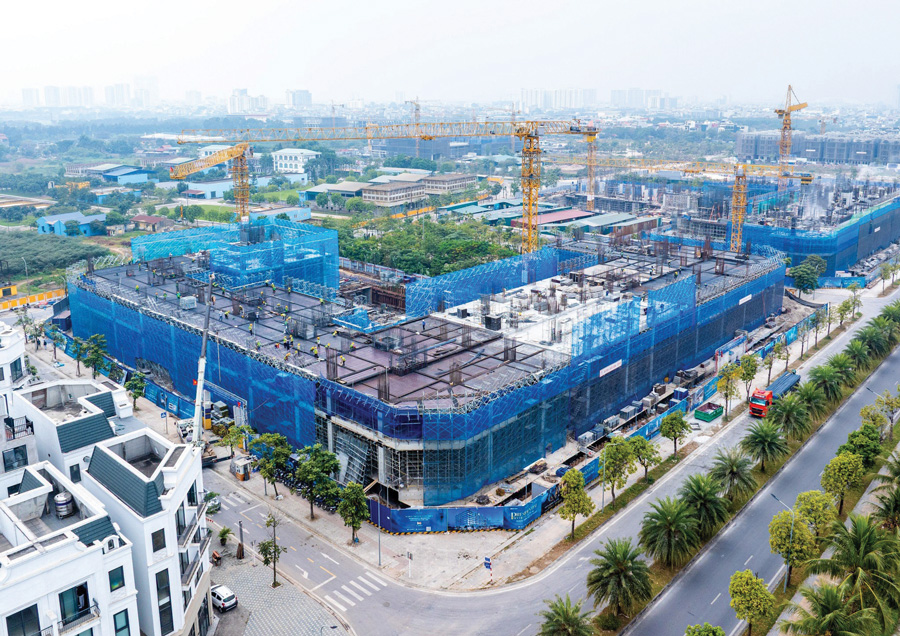
Vietnam’s construction and real estate sector, which contributes some 9-10 per cent of the country’s GDP, is expected to grow by up to 12 per cent in 2026, positioning it as a key driver of economic expansion. The year has, however, already experienced a wave of mounting pressure on construction and real estate businesses, from rising interest rates, escalating input costs, human resources shortages, and persistent legal bottlenecks that remain only partially resolved.
Issues to address
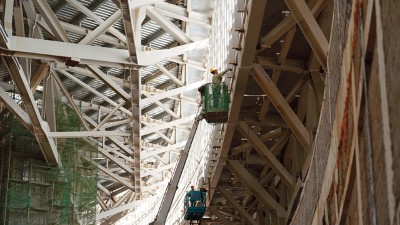
One of the most critical bottlenecks in the sector is a severe shortage of necessary human resources. Large-scale public investment and the recovery of industrial and infrastructure construction have driven a sharp increase in worker demand, while many employees moved to more stable industries following previous downturns.
Contractors report that workloads could rise by as much as 50 per cent this year compared to 2025, but human resources shortages had already become acute by the end of the second quarter last year. The issue is not only quantitative but also qualitative, particularly regarding the shortage of engineers, site managers, and skilled technical workers.
The gap is most evident in projects requiring advanced execution capabilities, such as high-speed rail, LNG power plants, metro systems, and next-generation deep-water ports, where high standards in management, technology, and international practices are essential. This has intensified competition for talent, driving up labor costs and putting pressure on project timelines.
At the same time, outdated construction cost norms, some dating back to the 1990s, are no longer aligned with current technologies and materials. Though authorities are working to revise pricing frameworks, the impact has been uneven. The Real Estate Business Survey, released in February by Vietnam Report, found that 15.8 per cent of companies had yet to see any meaningful change. “While the legal framework is improving and administrative procedures are being streamlined, implementation delays and inconsistencies across localities and project types remain,” a representative from Vietnam Report said. “Continued policy refinement aligned with real business needs is critical to sustaining growth.”
Meanwhile, rising input costs are placing additional strain on businesses. Some 89.5 per cent cited material price volatility as their greatest challenge, directly affecting profit margins and financial control. Geopolitical tensions in the Middle East since early 2026 have further disrupted supply chains, pushing up energy prices and, in turn, increasing costs across the construction value chain, from fuel and logistics to material production.
According to the Ministry of Industry and Trade, the cement industry has experienced at least three price hikes since the start of the year, with increases of around VND100,000 ($3.85) per ton in March. Construction steel prices have also risen, by VND350,000-600,000 ($13-$23) per ton. Some materials have surged by up to 70 per cent, with certain items even doubling in price year-on-year.
These increases are forcing projects to exceed budgets and delay timelines, eroding financial efficiency. Mr. Nguyen Quoc Hiep, Chairman of GP Invest and the Vietnam Association of Construction Contractors, described the situation as a “no-win dilemma” for contractors: continuing projects leads to heavy losses, while halting them risks contract violations.
Similar to construction, the real estate sector showed signs of recovery in 2025 as legal obstacles were gradually removed and projects restarted. However, capital flows remain the biggest challenge. The market depends heavily, on bank credit, at around 70 per cent of capital, while alternative channels such as bonds and investment funds are still underdeveloped.
Rising interest rates have also become a major barrier. Preferential loan packages introduced last year carried rates of 5.5-6 per cent per annum, but by early 2026 had risen to 9-10 per cent, with floating, or variable, rates climbing to 12-14 per cent and at times nearing 16 per cent. Property prices, meanwhile, remain elevated. Apartment prices rose 20-30 per cent on average last year, with some exceeding 40 per cent growth.
The combination of high prices, rising borrowing costs, and tighter credit policies has significantly altered financial planning for buyers, especially those relying heavily on leverage. Liquidity has declined, inventories have increased, and financial costs continue to rise - leaving many developers grappling with survival rather than expansion.
Unlocking capital flows
Experts argue that achieving the construction and real estate sector’s 12 per cent growth target for 2026 hinges on unblocking capital flows. Businesses are calling for stable interest rates and more targeted credit policies, prioritizing projects with clear legal status, solid progress, and actual housing demand, such as social housing and affordable commercial housing.
Developing a unified market data system and implementing property identification mechanisms for each land parcel and housing product are also seen as essential. Transparent data on planning, legal status, transactions, and pricing would help financial institutions better assess project risks and allocate credit more effectively.
Economist Vo Tri Thanh highlighted two major opportunities: redirecting idle savings, estimated at tens of billions of dollars, including gold and foreign currency, into productive sectors, and resolving legal bottlenecks for 800-1,000 stalled projects, which could inject hundreds of trillions of VND into the economy.
Despite some progress being made in easing licensing procedures, land and planning issues continue to pose among the greatest challenges for real estate companies. Land clearance remains a prolonged and difficult process, with some projects taking up to eleven years to complete the process. Even after land clearance, land allocation and pricing present further hurdles, particularly due to the lack of transparency in the land price adjustment coefficient (the K factor), which remains unpredictable and subjective.
Planning processes are also causing delays. In Hanoi, many projects are on hold pending approval of the city’s long-term master plan, as detailed zoning and project-level planning cannot proceed without it.
Previously, completing legal procedures for a project required up to 43 different approvals and at least three years. Though timelines have improved somewhat, the process remains cumbersome and resource-intensive.
Experts believe that sustainable improvement in the real estate investment environment depends on continued administrative reform, faster project approvals, and better coordination among government agencies. Legal frameworks governing investment, land, and real estate must also be further aligned and stabilized.
At the same time, increased public investment, particularly in transport and urban infrastructure, is expected to create spillover effects for real estate markets in emerging areas.
Finally, compensation and land clearance mechanisms need to be made more transparent and market-oriented, ensuring a balance of interests between the government, citizens, and businesses, while shortening project preparation timelines and improving implementation efficiency.
Experts believe that sustainable improvement in the real estate investment environment depends on continued administrative reform, faster project approvals, and better coordination among government agencies. Legal frameworks governing investment, land, and real estate must also be further aligned and stabilized.
Top 5 policy recommendations from real estate businesses:
- Stabilize interest rates and appropriately expand and direct credit flows to the real estate and construction sector;
- Reform administrative procedures, shorten project approval timelines, and improve coordination between regulatory authorities;
- Complete the legal framework governing real estate investment and business activities;
- Accelerate public investment and infrastructure development to create spillover momentum for the market; and
- Improve compensation and land clearance mechanisms in line with market principles.
Source: Real Estate Business Survey, February 2026, Vietnam Report





 Google translate