



What are your thoughts on bilateral agricultural trade cooperation between Vietnam and the UK?
Vietnam and the UK share a strong, long-standing partnership built on a foundation of mutual respect. Notably, the UK-Vietnam Free Trade Agreement (UKVFTA) and the fact that both nations are members of the Comprehensive and Progressive Agreement for Trans-Pacific Partnership (CPTPP) provide significant opportunities to boost bilateral trade and build stronger, more resilient supply chains. Agriculture and food and beverages are an important part of that relationship.
Both countries have deep-rooted traditions in forestry, agriculture, fisheries, and food production as well as a shared vision for a prosperous and sustainable future for these sectors. Trade in agricultural products and food and beverages has therefore developed on a mutually-beneficial basis and continues to grow.
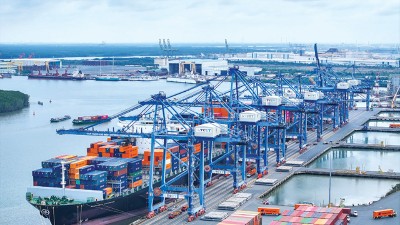
Bilateral trade in agricultural products reached almost $1 billion in 2025. Beyond value, what makes this relationship particularly promising is the complementary nature of the products and strengths that each country brings to the market.
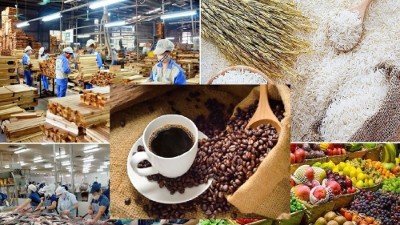
Vietnamese seafood, coffee, cashew nuts, spices, and other high-quality products are increasingly enjoyed by consumers across the UK. Vietnam is currently the UK’s largest supplier of prawns and catfish. The recent arrival of the first shipment of Vietnamese guava in the UK is another example of the growing range of Vietnamese products available to British consumers.
In return, the UK supplies Vietnam with high-quality food and beverages, backed by rigorous standards and controls on traceability and food safety. Vietnam is the UK’s sixth-largest destination for seafood exports, while British food and beverage products have established a strong presence in the Vietnamese market. Dairy products also offer considerable potential, particularly cheese, which is already very popular among Vietnamese consumers.
The strengths of the two countries are complementary, creating a trading relationship that offers greater choice for consumers while opening up new opportunities for producers on both sides. We believe there is considerable scope to build on existing trade flows, expand the range of agricultural and food products exchanged, and further strengthen this important aspect of the Vietnam-UK partnership.
The UK is known for its stringent standards on food safety and traceability. Does it have any specific cooperative programs or technical initiatives to help Vietnamese businesses and farmers better meet these standards and address related technical barriers?
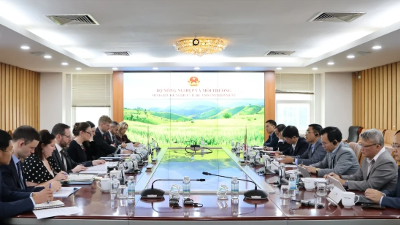
This is an area of particular interest to me. In addition to my responsibilities for agricultural trade, I am also responsible for biosecurity and animal welfare. These are important areas in which the UK has established high standards, and I am particularly proud of the work we have done to maintain them.
We are very keen to work with Vietnam to strengthen cooperation in these fields, share our expertise, and exchange practical experience. I believe there are opportunities for both countries to work more closely together, particularly in areas related to biosecurity and animal welfare.
One specific example is the £12 million ($15.9 million) in funding we have provided to Vietnam through the Fleming Fund to support efforts to address antimicrobial resistance. This initiative reflects our commitment to working with Vietnam on this issue. Through this cooperation, we can strengthen our collaboration and share the knowledge and experience needed to tackle antimicrobial resistance more effectively.
What are the prospects for bilateral agricultural trade cooperation between Vietnam and the UK in the time to come?
The partnership between our two countries goes beyond trade. Vietnam and the UK are already working closely on climate resilience, sustainable fisheries, biodiversity, and resilient food systems.
Vietnam is working toward its commitment to achieve net-zero emissions by 2050 and implementing a project to develop 1 million hectares of high-quality, low-emission rice. We think its commitment to achieving net-zero emissions by 2050 is an excellent initiative, and we are very impressed by this commitment.
Therefore, I am particularly looking forward to seeing that cooperation firsthand in Quang Ninh city. Through the UK Government’s Climate and Ocean Adaptation and Sustainable Transition (COAST) program, we are working with the Ministry of Agriculture and Environment, city and provincial authorities, and local communities to strengthen coastal resilience and support sustainable fisheries and climate-resilient aquaculture.
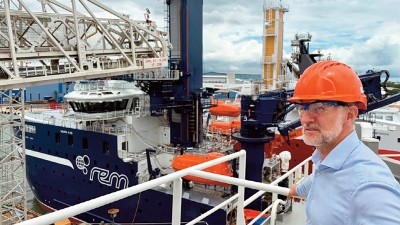
In Quang Ninh, I met local fishers, visited aquaculture projects, and launched new COAST investments. The projects will support low-emission, climate-resilient aquaculture and help restore fisheries resources and marine habitats. They demonstrate something fundamental to our partnership: protecting the environment and supporting economic development can, and should, go hand-in-hand.
Vietnam is a major agricultural exporter and an important contributor to global food security. The UK brings its own strengths in high-quality food and beverages, innovation, traceability, and food safety. By bringing those strengths together, we can create commercial opportunities, strengthen sustainable food systems, and deepen the ties between our countries.
We also have a strong focus on innovation in sustainability and are developing a range of technologies in this area. We would be happy to share these with Vietnam. In my discussions
with the Minister of Agriculture and Environment, there was strong interest in exploring opportunities to share technologies and research, particularly in the field of sustainability in coastal areas.
I look forward to working with our Vietnamese partners to build a relationship that delivers greater prosperity and a more resilient, sustainable future for both our peoples.
- In 2025, Vietnam’s exports of agricultural, forestry, and aquatic products to the UK reached $1.09 billion, an increase of 20 per cent against 2024, while imports totaled $74 million, up 33 per cent.
- In the first nine months of 2026, exports reached $850 million, an increase of 1 per cent year-on-year; and imports totaled $56 million, an increase of 1.2 per cent.
Source: International Cooperation Department, Ministry of Agriculture and Environment


 Google translate