


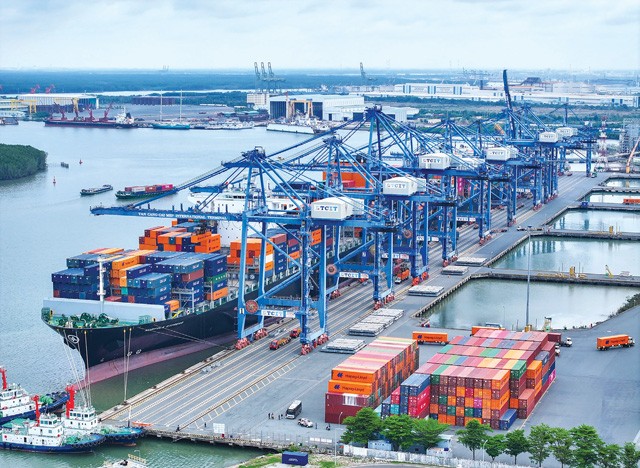
Vietnam’s economic performance in the first nine months of 2026 exhibited positive signs in the FDI sector, with registered capital standing at $50.36 billion, up 76.4 per cent year-on-year, while disbursed capital hit a five-year high of $21.07 billion, up 12.1 per cent. Global supply chain shifts, combined with Vietnam’s favorable geopolitical position, have made the country a magnet for major technology corporations in recent times, particularly in manufacturing and processing, high technology, and semiconductors.
According to Economist Dr. Nguyen Tri Hieu, Vietnam’s exports reached $434 billion in the first nine months of this year and could total $580 billion for the year as a whole. At that level, Vietnam would account for around 2 per cent of global exports. The country is moving beyond the first stage of development, characterized by contract manufacturing, toward the second and eventually the third stage, with domestic content rates in some industries having risen to 52 per cent.
Missing link
Nevertheless, FDI enterprises still account for large proportion of Vietnam’s total export turnover, at 77-80 per cent. The paradox is that despite the substantial inflow of foreign capital, relatively few Vietnamese companies have managed to enter the global supply chains of these corporate giants and become Tier 1 or Tier 2 suppliers.
Ms. Bui Thu Thuy, Deputy Director of the Foreign Investment Agency at the Ministry of Finance (MoF), acknowledged that the spillover of FDI into the domestic economy has long been a major policy objective but remains extremely difficult to achieve. “This is genuinely a very difficult problem,” she said. “Without stronger and more groundbreaking solutions, our economy will resemble an isolated island: FDI will flow in, but its benefits will not spread to the domestic economy.”
She cited a sobering example involving a project to connect Japanese and Vietnamese businesses with support from the Japan International Cooperation Agency (JICA). Despite three years of sustained effort by government agencies and organizations to facilitate partnerships, the initiative resulted in just 12 signed contracts. The reasons were practical: domestic companies had yet to meet stringent requirements for quality, delivery schedules, and sustainability.
Ms. Truong Thi Chi Binh, Vice Chairwoman of the Vietnam Association for Supporting Industries (VASI), argued that Vietnamese companies are not as incapable as the common perception that they cannot even manufacture a simple screw would suggest. Vietnam’s mechanical engineering sector performs very well, she said, but the real challenge lies in the nature of supply chains. She further highlighted a crucial distinction between FDI serving the domestic market and investment geared toward exports.
When Japanese motorcycle manufacturers entered Vietnam to sell to local consumers, high production volumes and the logistics costs associated with bulky components made localization essential. This helped establish Vietnam’s motorcycle support industries.
By contrast, export-oriented FDI, such as electronics manufacturing for mobile phones sold worldwide, operates differently. Multinational corporations have already optimized their global supply chains, and expensive, high-tech components can readily be imported into Vietnam for assembly before the finished products are exported. This leaves domestic companies with far fewer opportunities to participate.
Nevertheless, technical barriers are not insurmountable. To enter global supply chains, companies must demonstrate compliance with international requirements. “If global buyers do not trust you, they will never work with Vietnamese suppliers,” said Mr. Jackson Woo, Managing Director of SGS Vietnam. “Competitive pricing is a secondary consideration, not the top priority. Companies must put international standards into practice, from ISO 9000 to environmental, social, and governance (ESG) requirements. Supply chain transparency is now mandatory; it is no longer a business secret that companies can keep hidden.”

Without stronger and more groundbreaking solutions, our economy will resemble an isolated island: FDI will flow in, but its benefits will not spread to the domestic economy.

Pathways to progress
In response to these structural challenges, the Party and government have outlined a new direction through Resolution No. 50 and, more recently, Politburo Resolution No. 10, signaling a fundamental shift in approach: from passively attracting FDI to pursuing investment proactively and, importantly, selectively rather than at any cost.
Ms. Thuy said Resolution No. 280, which implements Politburo Resolution No. 10, sets a target of institutionalizing this new management approach by 2026-2027. The MoF is submitting amendments to the Law on Investment to the National Assembly, accompanied by an entirely new investment attraction framework.
Under the proposed approach, core economic centers such as Hanoi and Ho Chi Minh City would prioritize R&D, semiconductors, and high-tech projects, while surrounding areas would attract support industry investments. Crucially, the approach to investment incentives would also change fundamentally. “Instead of offering input-based incentives, as we did previously, we will shift toward cost-based support tied to the results of FDI enterprises in fulfilling their commitments to technology transfer and integrating Vietnamese companies into their supply chains,” Ms. Thuy explained.
She cited negotiations with Samsung in the semiconductor sector as an example, under which the government would offer exceptional incentives in exchange for strong commitments from the company to support domestic enterprises.
Beyond institutional reform, Ms. Binh argued that Vietnamese companies should move beyond competing for individual component orders and instead aim to manufacture complete component assemblies and even become original equipment manufacturers (OEMs). She also cautioned against underestimating assembly work. By mastering the assembly of finished products, domestic companies can gain the experience and capabilities needed to select and integrate lower-tier Vietnamese suppliers into their supply chains.
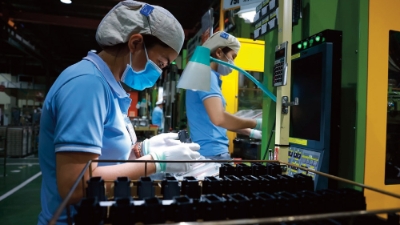
Alongside technology and manufacturing facilities, a highly-skilled workforce is another essential part of the solution. Ms. Nguyen Thu Ha, National Director of Executive Search and Selection at Talentnet, emphasized that rapid technological advances, particularly in AI, are reshaping the labor market. “Many major companies are now proactively developing their talent pipelines” Ms. Ha said. She also expressed hope that Vietnam would introduce large-scale, nationwide initiatives to attract overseas Vietnamese talent back to the country, offering a concerted effort to bring skilled professionals home.






 Google translate