


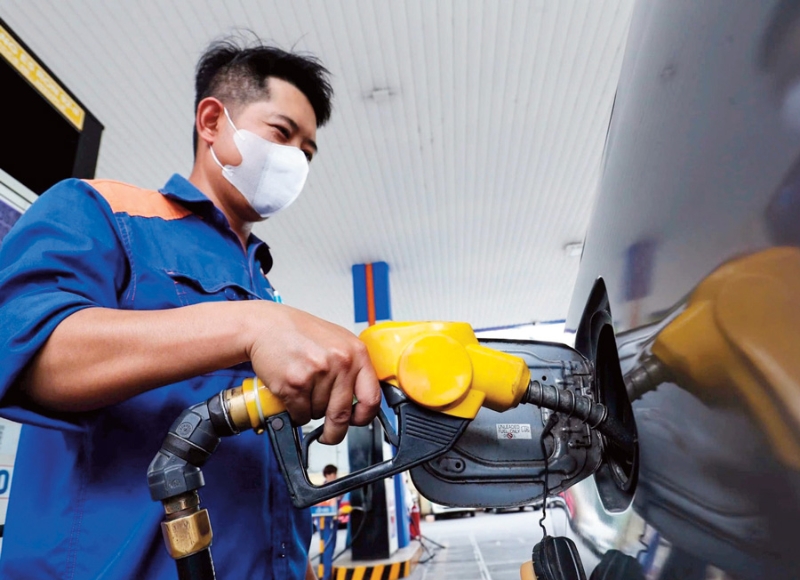
Geopolitical tensions in the Middle East have transformed into a fierce energy war. Attacks on energy infrastructure and the blockade of the Strait of Hormuz, which accounts for 20 per cent of global oil transport and 30 per cent of LNG flows, have pushed Brent crude prices to as high as $115.6 a barrel; nearly double compared to early 2026.
In Vietnam, the impact is no longer hypothetical but already visible in sharply rising figures. In March alone, diesel prices surged 57.4 per cent compared to the February average. This fuel price spike triggered a domino effect: asphalt prices jumped 31.77 per cent, cement rose 7.2 per cent, and other construction materials increased between 13 and 23 per cent. As a result, cost estimates for major transport infrastructure projects have climbed by about 8.09 per cent, placing enormous pressure on the State budget.
Strategic gap
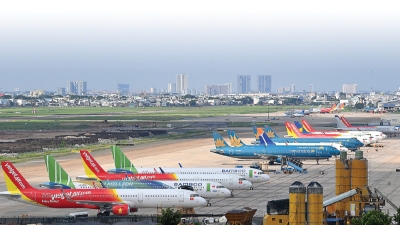
As oil prices rise, aviation is among the first and hardest-hit sectors. Mr. Vu Anh Tuan, Head of Strategy at Vietnam Airlines, said fuel typically accounts for 35-40 per cent of an airline’s operating costs. While crude oil prices have risen about 50 per cent, aviation fuel prices have more than doubled due to supply constraints. Fuel costs, which usually account for around 30 per cent of Vietnam Airlines’ cost structure, have now surged to 50 per cent, while low-cost carriers may face levels of 60-70 per cent.
Meanwhile, ensuring jet fuel supply has become a serious challenge. Vietnam’s two domestic refineries meet only 30-40 per cent of demand, with the remainder reliant upon imports from China, Thailand, and Singapore. During periods of heightened conflict, these partners prioritize domestic consumption, creating severe supply difficulties.
“With an initial projection of $85 a barrel for aviation fuel, the actual surge to $190 and stabilization at $230 has caused massive losses,” Mr. Tuan said. “Each additional $1 increase raises Vietnam Airlines’ annual costs by VND300 billion ($11.5 million). This year’s unplanned costs could reach VND20-30 trillion ($770-1.15 billion).”
He added that beyond costs, the sector is also facing weakened demand and financial strain. High oil prices and prolonged inflation are dampening travel demand and passenger sentiment. With 70 per cent of Vietnam Airlines’ costs denominated in US dollars, a stronger dollar further drives up expenses. The airline is caught between raising fares, risking reduced demand and tourism, or maintaining prices while facing heavy losses and operational challenges.
Similarly, Dr. Phung Ha, Chairman of the Vietnam Fertilizer Association, said the biggest impact of the Middle East conflict on the fertilizer industry stems from disruptions at the Strait of Hormuz, a critical route for energy and chemical raw materials. Rising input costs have quickly translated into domestic price increases. Fertilizer prices have risen 40-50 per cent, while input materials have increased even more sharply, with sulfur prices doubling or even rising 2.5-times. This poses risks not only to the fertilizer industry but also to the entire agricultural production chain, where fertilizers are essential for crop yields.
Energy investment must lead
Dr. Le Duy Binh, Managing Director of Economica Vietnam, said the greatest risk is the breakdown of market predictability. Geopolitical volatility in the Middle East has created a new form of “inflation tax” affecting both producers and consumers. “Vietnamese businesses already operate on thin margins,” he warned. “When energy costs - the essential input across all sectors - rise sharply, the competitiveness of exports are severely undermined.”
He also highlighted concerns about a growing “defensive mindset,” where investors delay expansion projects amid energy price instability, posing long-term risks to GDP growth. He proposed that the government implement risk-sharing mechanisms with businesses, not only through fuel tax policies but also by improving market transparency to enable better business planning.
Importantly, Dr. Binh emphasized that “greening” is no longer optional but a matter of survival. Extreme volatility in fossil fuel prices is a powerful driver for businesses to transition toward energy efficiency and renewable energy to enhance resilience against external shocks.
From a public finance perspective, Associate Professor Vu Sy Cuong, Chief Economist at the Institute of Technology and Finance Development under the Academy of Finance, said Vietnam is facing an “impossible trinity” in policy management: stabilizing energy prices, ensuring budget revenues, and controlling inflation.
He also stressed the impact of energy prices on inflation expectations. Though the CPI is currently under control at 3.3 per cent, persistently high fuel prices above $100 a barrel could become embedded in service costs, creating a new price baseline that is difficult to reverse.
Regarding investment structure, he warned that prioritizing transport infrastructure while neglecting energy infrastructure and national reserves is short-sighted. “We risk building roads for vehicles that have no fuel to run,” he said, calling for more flexible budget allocation, prioritizing strategic energy storage projects to create a buffer against economic shocks.
To navigate the current challenges, from a business perspective, Mr. Tuan proposed government diplomatic support to secure import supplies. He also called for domestic refineries (Dung Quat and Nghi Son) to operate at full capacity and prioritize fuel supply for Vietnam Airlines.
On financial policy, he suggested a 100 per cent exemption of environmental taxes and a 50 per cent reduction in aviation fees at least through the end of 2026, alongside the establishment of a jet fuel stabilization fund. He also emphasized the need for a clear legal framework enabling airlines to hedge fuel price and exchange rate risks. Additionally, domestic price caps, which are set more than a decade ago, are outdated, and Vietnam Airlines has proposed adjusting or removing them to align with international practices.
According to Dr. Ha, amid market volatility, the top priority is ensuring fertilizer supply for domestic agriculture. Businesses should maintain stable production, prioritize the domestic market, conserve raw materials, and accelerate the development of high-efficiency fertilizers to reduce costs.
From a trade and regulatory perspective, diversifying import sources beyond the Middle East and optimizing intermediary costs are essential to limit price pass-through. The government should also develop science and technology programs to create new products and reduce import dependence, while tightening controls on counterfeit fertilizers to protect farmers and improve market transparency.
In the long term, aligning fertilizer industry development with energy and food security strategies will provide a solid foundation for Vietnam to better withstand external shocks.




 Google translate