


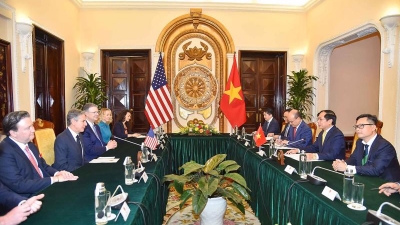
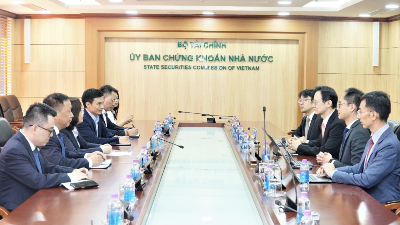
In their working session in Hanoi on January 16, Vietnam's Deputy Minister of Science and Technology Vu Hai Quan and U.S. Assistant Secretary of State Russell Headlee discussed the bilateral cooperation between the two countries in artificial intelligence (AI), digital infrastructure, cybersecurity, and the legal framework for digital transformation.
Deputy Minister Vu Hai Quan emphasized that national security is always a top priority for Vietnam in all development decisions. Vietnam is ready to continue exchanging and thoroughly researching issues of U.S. interest, based on transparency, harmonized interests, and sustainable development.
Vietnam is particularly eager to collaborate with leading U.S. AI corporations, encouraging investment in large-scale R&D centers in Vietnam. The young, skilled, diligent, and ambitious engineering workforce is a significant competitive advantage for Vietnam in attracting high-tech investment.
Deputy Minister Vu Hai Quan stated that the Vietnamese government identifies economic development based on science and technology, innovation, and digital transformation as a strategic, consistent direction.
He also agreed with the U.S. assessment of the limited presence of U.S. tech companies in Vietnam. He noted recent positive signals, especially from U.S. companies in the semiconductor field. Vietnam is currently finalizing important legislative projects such as the revised High Technology Law and the Digital Technology Industry Law, with strong incentives to attract high-tech R&D investment in Vietnam.
According to Mr. Russell Headlee, AI is a top priority in the U.S. digital policy, as evidenced by the U.S. government's announcement of the "U.S. AI Action Plan" on July 23, 2025. The U.S. is actively collaborating with international partners, governments, and the private sector to share perspectives, update new policy directions on AI, and promote the export of U.S. AI technology to global markets.
Mr. Russell Headlee highlighted Vietnam's pioneering role in the region, as the country early enacted a law on AI; while leading global tech companies like Google, Meta, and Amazon Web Services have shown strong interest in the Vietnamese market, viewing it as a potential destination for building infrastructure, developing services, and expanding business operations in the near future.
However, he candidly pointed out a disparity between the potential and the actual presence of U.S. tech companies in Vietnam, compared to some other countries in the region. The U.S. therefore hoped that the Vietnamese government would continue to enhance connectivity, support, and create more favorable conditions to promote extensive cooperation with the U.S. business community, particularly through improving the legal environment, establishing a transparent, stable, and predictable investment space
The U.S. side also recommended that Vietnam consider participating in the global standard framework for personal data protection, thereby facilitating safe data sharing and promoting the development of AI and new technologies.



 Google translate