


The global maritime trade history rarely witnesses a period where critical trade routes simultaneously fall into a state of red alert as they do now, stated Mr. Nguyen Hoai Chung, a member of the Executive Committee of the Vietnam Logistics Business Association (VLA).
Disrupted routes and export consequences
Mr. Chung notes that the current Middle East conflict is unprecedented, affecting three of the most crucial "choke points" in global trade simultaneously: the Strait of Hormuz, the Persian Gulf, and the Red Sea/Suez Canal. The severity of the current situation surpasses the previous Red Sea crisis, as the disruption now covers a broader scope, involves direct participation from military powers, and targets energy infrastructure in the Gulf region.
This situation not only causes simple delays but also creates a chain shock to the entire global supply chain, with Vietnam's logistics sector being one of the most directly impacted links. The two main maritime routes from Vietnam to the Middle East and Europe are facing different scenarios but share the same outcome: difficulty and increased costs.
For the Middle East route, the situation is at a "partial paralysis" level. The Strait of Hormuz, the only gateway to the Persian Gulf, is blocked, halting the flow of goods from Vietnam to major markets like the UAE, Qatar, Bahrain, Saudi Arabia, Kuwait, and Iraq almost immediately. Export goods are stuck at departure or transshipment ports. For shipments already at sea, shipping lines tend to offload goods at a suitable safe port, forcing shippers to bear enormous additional costs for storage or finding alternative transportation methods.
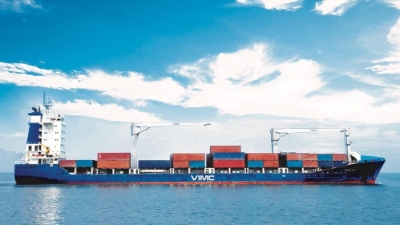
For the European route, although ships do not pass through the Strait of Hormuz, they are affected by panic and route changes. To ensure safety, Asia-Europe fleets are forced to reroute around the Cape of Good Hope in South Africa. This detour extends the voyage by 10 to 14 days each way. The result is skyrocketing freight rates, disrupted transport networks, causing port congestion in Europe, and particularly a crisis of empty containers at Asian ports, including Vietnam.
Cost pressure amid volatile freight rates
Market statistics reflect a harsh reality. According to data from the international logistics exchange Phaata, within just a month, sea freight rates have experienced remarkable fluctuations. Specifically, this week's (week 10) freight rate from Ho Chi Minh City to major ports in Northern Europe increased by 9% compared to the previous month, reaching $2,368/FEU.
However, the real shock lies in the Middle East route. The freight rate from HCM City to Dubai (UAE) recorded a dramatic increase of 388%, reaching $7,385/FEU. More worryingly, many shipping lines have announced a halt in accepting bookings to the Middle East due to excessive risks.
Mr. Chung predicts that the upcoming situation could be more severe than the container crisis during the Covid-19 pandemic in 2021. While in 2021, the container shortage was mainly due to trade imbalances, but shipping routes remained open, this time, the shipping routes are "physically closed," ships are stuck, and there is no clear roadmap for recovery.
In the next 1 to 2 months, Vietnamese export businesses will face three major fluctuations in time, equipment, and freight rates. In terms of time, voyages will be extended by at least 10 to 14 days each way. The disruption in ship schedules will lead to more severe port congestion in Europe.
Regarding equipment, the VLA representative believes that millions of TEUs being stuck on ships for at least 2 more weeks, possibly longer due to detours and port congestion, will cause a sudden drop in the number of empty containers returning to Asia. Notably, a large number of containers are currently "stuck" in the Gulf region, unable to return to Asia.
"In the next 3-4 weeks, many ports and warehouses in Asia, including Vietnam, will face a shortage of empty containers, especially refrigerated containers (which have a slow turnaround due to high technical requirements)," said Mr. Chung.
"As a result, the export activities of the seafood industry and other fresh food sectors such as fruits, vegetables, meat, and pharmaceuticals will be affected."
This will lead to soaring fuel and insurance costs, coupled with a shortage of space, pushing freight rates to Europe to skyrocket.
"In the worst-case scenario, if the Strait of Hormuz is completely closed and prolonged, the consequences will be severe. Goods will be stuck, hundreds of ships and millions of containers will be trapped in the Persian Gulf or at transshipment ports, incurring enormous storage and yard costs," said Mr. Chung.
Additionally, Vietnam risks losing a significant portion of the Middle East market due to the complete disruption of goods flow. All of Vietnam's exports to the UAE, Qatar, Kuwait, Bahrain, etc., will be completely halted as they cannot be transported through the Strait of Hormuz.
Particularly, an oil price shock will occur. With 20% of the world's oil passing through Hormuz, closing this strait will push fuel prices to record levels, leading to increased transport surcharges and domestic transportation costs. Many of Vietnam's key export sectors, such as textiles, footwear, and furniture, will face significant challenges as consumer demand declines, and importers will immediately suspend or cancel existing orders.
Diversification and quick adaptation
In the face of existential challenges, Mr. Chung and the VLA have proposed a seven-point solution roadmap for export businesses to proactively respond.
First, businesses need to immediately suspend new orders to this region to renegotiate optimal solutions.
Second, for shipments in transit, logistics units should be required to regularly update the status of affected shipments and provide optimal support solutions to minimize risks and additional costs.
Third, this is the time to renegotiate terms to share risks. Businesses should propose an automatic price adjustment mechanism when freight rates exceed thresholds, extend delivery times corresponding to delays due to conflict, and waive late delivery penalties for a certain period.
Fourth, to consider combining multimodal transport solutions such as Sea-Air, Sea-Rail; use safe transshipment hubs; split shipments across different services to spread the risk of missing ships. Particularly, businesses should consider the option of intermodal rail transport with the Trans-Asian-European railway through China and Kazakhstan, considered the optimal solution.
Fifth, proactively forecast and build adaptation plans to minimize risks, losses from incidents in international trade, transportation, and related issues; and prepare timely response plans to limit impacts on the supply chain and business operations.
Sixth, quickly promote the search for new customers/partners/markets to replace.
Seventh, regularly update market information, analyze, evaluate, and adjust plans when necessary; coordinate with industry associations and relevant authorities to receive updated information, guidance, and support to promptly respond to arising situations.



 Google translate