



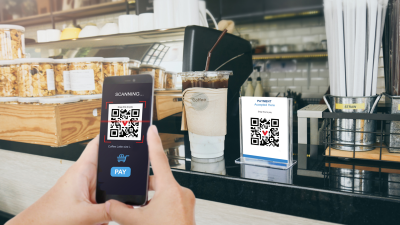
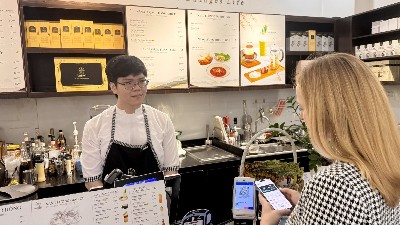
Cross-border QR code payments are emerging as a vital bridge connecting international tourists with Vietnam’s retail, service, and tourism sectors.
Speaking at a seminar titled “Promoting Cross-Border Payment via QR Code: A New Driver for Retail and Tourism” in Hanoi on September 25, hosted by Tap chi Kinh te Viet Nam/Vietnam Economic Times/VnEconomy in collaboration with the Payment Department of the State Bank of Vietnam (SBV) and the National Payment Corporation of Vietnam (NAPAS), officials highlighted the rapid evolution of digital payments nationwide.
Mr. Pham Tien Dung, Deputy Governor of the SBV, noted that cashless transactions reached over 21 billion operations worth more than VND260.6 quadrillion ($10 trillion) in the first eight months of 2026 - up 34.56 percent in volume and 13.26 percent in value year-on-year. Domestic QR code transactions alone totaled 311 million payments worth VND274.2 trillion ($10.5 billion).
Building on this solid domestic foundation, cross-border QR transactions recorded remarkable growth. NAPAS data showed that during the January-August period, transactions by tourists from Thailand, Laos, and Cambodia visiting Vietnam grew nearly eightfold in volume and sixfold in value compared to the same period in 2025. Conversely, Vietnamese outbound transactions in these three markets increased fivefold in volume and fourfold in value.
China has become a major connection corridor. NAPAS integrated with UnionPay International (UPI) in December 2025, Alipay in April 2026, and Weixin Pay in August 2026. By August 2026, transactions by Chinese tourists scanning VietQRGlobal codes in Vietnam quadrupled in value compared to April. NAPAS has now completed cross-border QR payment links with six regional countries, including two-way integration with Singapore and inbound connectivity for South Korean travelers.
A key advantage of this system is that international visitors can pay using their preferred home applications rather than adjusting to new methods. For local merchants, cross-border QR codes eliminate the need to invest in dedicated card-POS terminals. Direct system-to-system connections also reduce intermediate currency conversion steps, offering better foreign exchange rates for users.
Acceptance fees for VietQRGlobal are projected at approximately 1.5 percent per transaction - significantly lower than the 2.4 to 3 percent typical for international credit cards, offering merchants a 37.5 to 50 percent reduction in processing costs.
“Developing cross-border retail payments via QR code must be viewed broadly: from connecting payment infrastructure to connecting citizens and businesses, and from linking systems to supporting the flows of tourism, retail, trade, and services,” emphasized Deputy Governor Dung. “Infrastructure connection is merely the starting point; economic connection is the ultimate goal.”
Dr. Chu Van Lam, Permanent Vice President of the Vietnam Economic Association, and Chairman of the Editorial Board of Tap chi Kinh te Viet Nam / Vietnam Economic Times / VnEconomy, added that VietQRGlobal enhances the autonomy of national payment infrastructure while expanding trade and consumption channels with key markets.
Alongside expanding connectivity, transaction security remains essential. As of August 26, 2026, the SBV’s SIMO (System for Intelligent Monitoring and Oversight) risk prevention system issued alerts for over 5.1 million transactions, successfully halting nearly 1.7 million suspicious transfers worth over VND5.7 trillion ($219.4 million).
Moving forward, the SBV plans to shift focus from basic connectivity to driving effective usage, broadening merchant coverage, ensuring user safety, and strengthening systemic resilience.






 Google translate