


As part of activities in Vietnam commemorating the 250th anniversary of American independence, the US Embassy in Hanoi, the US Department of Agriculture (USDA), and the Sheraton Hanoi Hotel are holding the Great American BBQ Festival 2026 from September 17 to October 1. With the theme “From America’s Land and Sea to Vietnam’s Table,” this year’s festival celebrates the rich agricultural heritage of the US, highlighting the journey of high-quality American products from producers across the country to Vietnamese consumers.
Vietnam-US agricultural trade continues to grow, reflecting strong demand for safe, high-quality, and innovative food products. Assessing the prospects for bilateral cooperation, Mr. Mark Petry, Minister Counselor for Agricultural Affairs at the US Embassy, affirmed that Vietnam is a leading growth market for US agricultural exports.
Outstanding products
Data from US industry associations operating in Vietnam reveals outstanding business results, underscoring the strong position US food products hold among local consumers. The California walnut industry serves as a prime example of the effectiveness of trade promotion. After participating in a USDA-organized agricultural trade mission in 2024, the California Walnut Commission recognized the immense potential and promptly decided to open an official representative office in Vietnam in 2025. Shortly after establishing this presence, US walnuts rose to capture the leading market share in Vietnam, setting an export record of $7 million.
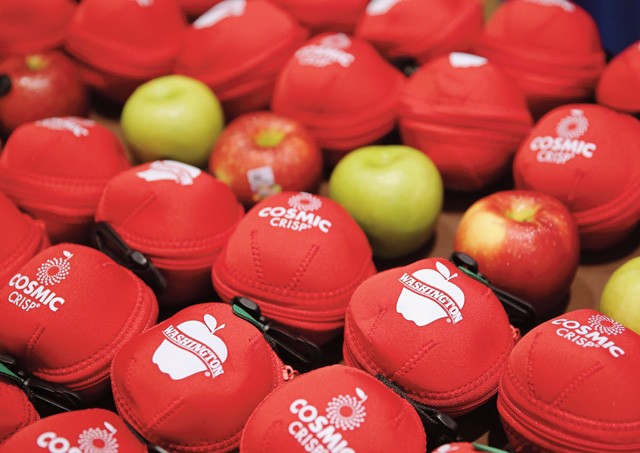
Ms. Duyen Le, Communication Manager (Vietnam) at the California Milk Advisory Board, US Highbush Blueberries, and Washington Apples, said fruit products generally face significant challenges when entering the Vietnamese market, so these organizations’ results have been truly impressive. In the early stages of market development, only about 50,000 boxes of Washington apples were exported to Vietnam annually. Today, that figure has surged to approximately 2 million boxes, making Vietnam one of the top key export markets for Washington apples.
Similarly, regarding US blueberries, despite facing an import tariff of around 15 per cent, which is higher than the rates applied to blueberries from certain countries with trade agreements, imports into Vietnam still posted 60 per cent year-on-year growth during the 2024-2025 period. “This underscores the strong trust and preference Vietnamese consumers have for the quality of US fruit,” Ms. Le said.

As regards agricultural commodities destined for industrial processing and livestock production, US soybeans continue to solidify their role as a cornerstone of the supply chain in Vietnam. Ms. Tran My Hanh, In-Country Representative at the US Soybean Export Council (USSEC), noted that a steady stream of trade missions organized over the past two years has enabled an increasing number of US exporters to access the Vietnamese market.
US whole soybeans currently hold a 44 per cent market share in Vietnam, while US soybeans supplied to the animal feed industry account for approximately 12 per cent. “This marks the second consecutive year that the USSEC has achieved record market shares in Vietnam,” Ms. Hanh said.
Furthermore, the factors that distinguish US agricultural products from their competitors are their scale, technical specifications, and consistent quality. Regarding potatoes and poultry, according to Ms. Phuong Dang, In-Country Representative for the USA Poultry and Egg Export Council, Potatoes USA, and California Walnuts, fresh potatoes can only be harvested once a year in the central highlands’ city of Da Lat and certain northern provinces. In contrast, US potatoes offer a year-round solution with a diverse product range.
US chicken is also rated highest for quality in Vietnam, and the country has risen to become the eighth-largest global export market for US chicken.
In the premium food and seafood segments, newer associations are also finding significant room for growth, driven by the rapid expansion of Vietnam’s middle class. Ms. Stephanie Pan, Managing Director of SMH International, representing California Prunes, Food Export, the Northeast USA Seafood Program, and Dairy Farmers of Wisconsin, affirmed Vietnam is a market with immense potential, driven by impressive GDP growth. As incomes rise, consumers are increasingly willing to pay a premium for safe, nutritious, and high-quality products.
The strategy involves precisely targeting the right market segments for each product line. North American seafood such as lobster and squid is harvested from the pristine waters off the coast of the US northeast and adhere to strict sustainability standards. “Moving forward, we plan to collaborate with high-end restaurant chains to bring these products closer to diners,” Ms. Pan said. “Meanwhile, for California honey and Wisconsin cheese, we aim to expand our network of importers, ramp up experiential activities, and organize trips for Vietnamese buyers to visit the US facilities. This will allow them to witness the harvesting and production processes first-hand and fully appreciate the superior quality.”

Vietnam is currently one of the top growth markets for US agricultural exports, and we are confident that this positive trend will continue.

Meanwhile, Vietnam also holds substantial potential for exports to the US in items such as coffee, spices, and tropical fruit. According to a report from the Ministry of Agriculture and Environment released on September 16, the US was Vietnam’s second-largest export market for agricultural, forestry, and fisheries products in the first eight months of 2026, with value reaching $9.4 billion, or 19.1 per cent of total export turnover. To maintain this momentum, the USDA plans to organize a large-scale agricultural trade mission to Ho Chi Minh City in November.
Driving force for the future
Mr. Petry expressed strong optimism regarding the prospects for bilateral cooperation in both the near and long term. “Vietnam is currently one of the top growth markets for US agricultural exports, and we are confident that this positive trend will continue,” he said. “Consequently, we are eager to support that growth momentum while encouraging market-opening policies, ensuring transparency and promoting agricultural trade based on science-based standards,” he said.
According to the USDA, the list of US products exported to Vietnam is increasingly diverse, from commodities like soybeans and corn to livestock products such as meat and dairy, as well as fresh fruit, tree nuts, seafood, cotton, timber, and, notably, bio-based materials. All these product categories hold significant growth potential in the Vietnamese market. Conversely, Vietnam is a trade partner with immense potential that has already achieved great success in the US market. “We anticipate that Vietnam’s key products such as cashews, tropical fruit, coffee, spices, and other agricultural goods will maintain their growth momentum and continue to succeed in the US,” Mr. Petry said. “This presents a tremendous opportunity for Vietnamese agricultural producers and processing enterprises alike.”
To further advance this relationship and assist businesses and associations from both countries in introducing more products to each other’s markets, the USDA is focusing on two core initiatives. The first involves establishing direct trade connections, helping US enterprises identify the right contacts and partnership channels, and guiding them through the fundamentals of export operations. The second entails supporting businesses already operating in Vietnam by ensuring transparent market access and backing their efforts to reach and win over local consumers.
Specifically, to maintain this momentum, the USDA plans to organize a US agricultural trade mission to Vietnam in November, larger in scale than previous delegations, with a stop in Ho Chi Minh City aimed at significantly boosting export volumes. “I expect that US agricultural exports to Vietnam will continue to grow robustly, driven by Vietnam’s overall economic expansion, particularly the boom in the food and beverage (F&B) and food processing sectors as well as the rapid growth of retail and supermarket networks,” Mr. Petry noted. “US agricultural exports will continue to capitalize on this growth momentum to develop in tandem with Vietnam’s economy.”





 Google translate