


Authorities of central Da Nang city broke ground on two major infrastructure projects on August 25, with a combined investment of nearly VND4.3 trillion ($163 million), aiming to ease traffic congestion in the city center, improve flood drainage and strengthen connectivity with the southern areas of the city.
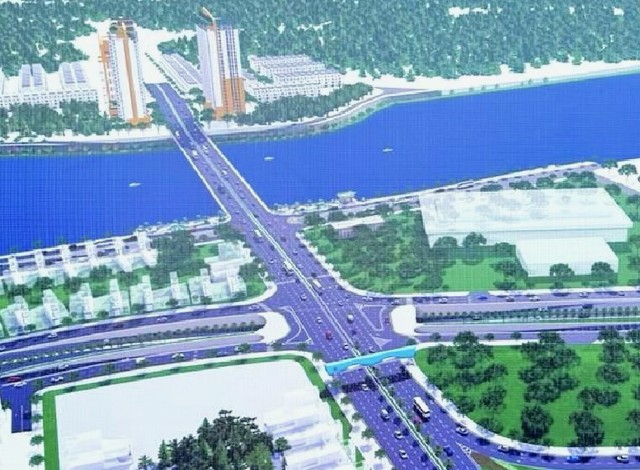
The first project, the Le Thanh Nghi – Cach Mang Thang Tam – Thang Long – Hoa Xuan Bridge approach interchange complex, has a total investment of nearly VND1.8 trillion.
The project includes underpasses on Cach Mang Thang Tam and Thang Long streets, expansion of Le Thanh Nghi Street and construction of a new bridge structure downstream from the existing Hoa Xuan Bridge. Construction is expected to take 730 days.
Once completed, the project is expected to ease rush-hour congestion along Cach Mang Thang Tam Street, a major route carrying freight traffic to and from Tien Sa Port, Da Nang Industrial Park and Tho Quang Fisheries Industrial Park, while also serving a large residential population in the Hoa Xuan eco-urban area.
The second project, the Integrated Climate-Resilient Development Project, has an investment of more than VND2.7 trillion. It is expected to improve flood drainage, reduce flooding, enhance inland waterway transport and strengthen connectivity across southern Da Nang. Dredging the Truong Giang, together with the Han and Co Co rivers, could also create a continuous inland waterway from Cua Han to Cua Lo, opening new opportunities for tourism and trade and supporting the city's socio-economic development.



 Google translate