


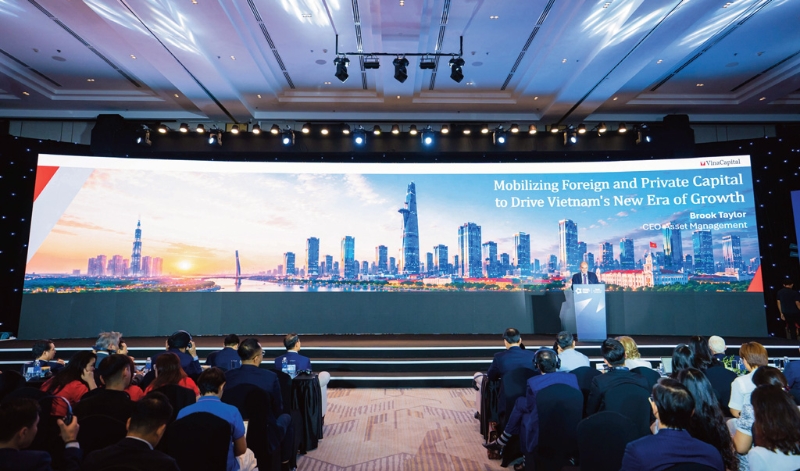
Vietnam has already achieved remarkable success. Over the last three decades, the country has transformed itself into one of Asia’s, and the world’s, most dynamic economies. But the next stage of development will demand better growth: growth that is more productive, more resilient, and more inclusive. Mobilizing private capital is not just about filling a funding gap. It is about upgrading the way the economy works.
Reasons to mobilize private capital
The first reason to mobilize private capital is the sheer scale of what lies ahead. Vietnam faces an estimated $1.5 trillion funding gap over the coming years to support infrastructure development and industrialization. The government’s own estimates indicate that public finances alone cannot carry this burden. If Vietnam relies primarily on State budgets and bank credit, growth will slow and risks will accumulate. Private capital is therefore not optional, it is essential.
Second, private capital brings discipline. Countries that rely more heavily on private and foreign investment tend to allocate resources more efficiently. Vietnam’s localization rate is approximately one-third, meaning the country still has significant work to do in supporting industrialization and building out supply chains. Vietnam’s labor productivity remains roughly half that of Thailand’s, something the International Monetary Fund (IMF) and multiple economists have indicated should be significantly higher. This challenge can be addressed, in part, by domestic and foreign private sector enterprises, which tend to focus on productivity-enhancing investments and projects.
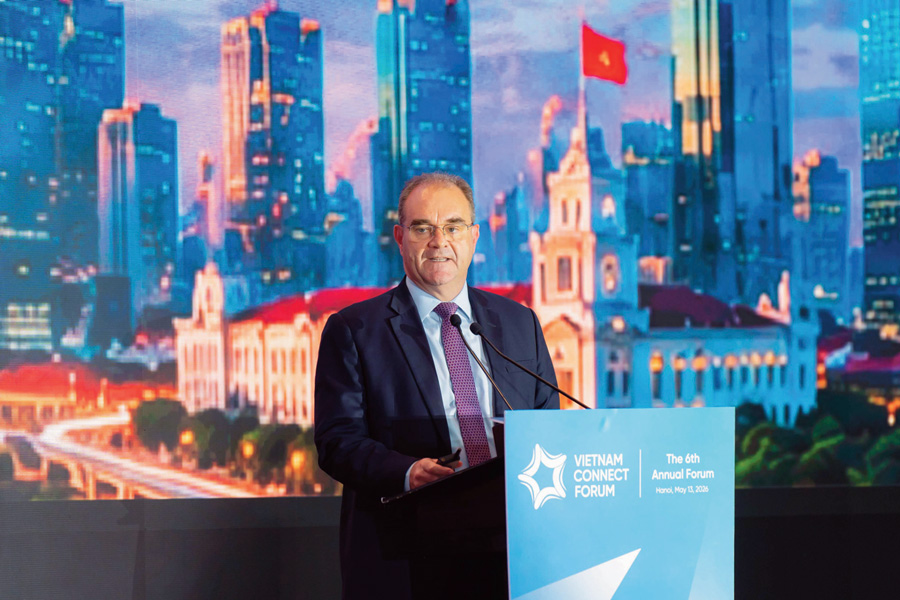
Third, mobilizing capital can help Vietnam accelerate its economic advantage. I wrote a book, “Vietnam: Asia’s Rising Star”, about how Vietnam is following the East Asian development model that created the original Asian Tigers. Economies such as South Korea, Japan, and Taiwan (China) benefited from strong external support and global integration at the right moment in history. In the decades following World War II, the US supported and encouraged economic development in these countries.
Vietnam is also at such a moment, though the dynamic is somewhat different. Today, FDI diversification is replacing direct external support, while supply chain diversification, geopolitical realignment, and strong global investor interest are creating a historic opportunity. Private capital can help Vietnam move faster than public capital alone allows.
Finally, diversifying funding sources increases economic stability. Economies that are overly dependent on bank lending are more vulnerable to interest rate shocks and inflation risks. A diversified system - combining banks, capital markets, long-term institutional investors, and foreign capital - creates resilience.
Such systems allow governments to preserve fiscal capacity and provide a buffer for future economic interventions when necessary. They also allow for better market optimization, enabling governments to steer funding toward priority areas such as housing.
Even governments in advanced economies like Singapore and the US play an active role in the housing sector, alongside private capital, to ensure citizens are better able to afford homes.
How to mobilize
I would like to focus on three areas where policy execution matters most in attracting capital. All of them relate to creating a stable and predictable investment environment.
Creating the conditions
First and foremost is confidence. Investors are willing to accept risk. What they cannot accept is uncertainty. Stable and predictable policy is the foundation of all long-term investment. This means adopting international regulatory best practices, improving transparency, and maintaining consistent enforcement.
The government clearly recognizes this, as reflected in recent reforms, including Politburo Resolution No. 68 supporting private sector development. Steps such as adopting Basel III standards and maintaining prudent loan-to-deposit ratios also enhance financial stability.
Next is ease of doing business. Vietnam has competed successfully with peers such as China in attracting manufacturing investment. But competition is intensifying. Despite considerable progress, many foreign investors still cite difficulties around licensing, land use, and dispute resolution. Maintaining reform momentum in these areas will be critical.
Finally, macro-economic stability is equally important. Inflation control, financial system soundness, and prudent debt management send powerful signals to investors. Vietnam’s continued alignment with global standards, including Basel III for banking and improved loan-to-deposit ratios, reinforces trust in the system. The government has done an excellent job sustaining growth amid global uncertainty.
In short, capital flows where it feels safe, and stays for decades, not just years.
Deepen and professionalize capital markets
The second pillar is capital market development. Vietnam’s overreliance on bank credit constrains growth and increases systemic risk. Deepening capital markets is essential to reducing that risk and unlocking growth.
One key goal should be achieving, and sustaining, an investment-grade sovereign rating. This would send a powerful signal of stability and reliability to global investors, dramatically lowering the cost of capital and opening access to vast pools of global funding. Many pension funds, insurance companies, and long-term asset managers cannot invest in markets below investment grade.
Equally important is the development of private sector pension funds. These funds do more than provide retirement security for citizens. They institutionalize stock and bond markets, provide long-term funding for corporate bonds, and align economic growth with household wealth creation.
Together, deeper financial markets and pension systems reduce dependence on rapid credit growth and improve financial stability.
The newly-launched International Financial Center (IFC) in Vietnam, of which VinaCapital is a founding member, will also play a key role in attracting foreign capital and lowering the cost of debt. Its rapid development reflects the government’s commitment to reform and urgency.
Together with an investment-grade rating, the IFC can help lower Vietnam’s cost of debt and enable the country to compete more effectively with regional peers.
Physical infrastructure development
The third and final pillar I want to highlight is physical infrastructure. We are all aware of the long list of infrastructure projects underway, or soon to begin, including airports, seaports, highways, and railway lines around the country. But infrastructure is not just about building roads and power plants. It is about unlocking productivity.
Vietnam’s logistics costs, as a percentage of GDP, remain high compared to regional peers. Reducing these costs directly improves export competitiveness and domestic efficiency.
Better transport infrastructure allows factories to spread more evenly across the country, supporting regional development, reducing congestion, and tapping into underutilized labor pools. This also connects directly with workforce mobility, housing affordability, and urban planning.
Today, FDI diversification is replacing direct external support, while supply chain diversification, geopolitical realignment, and strong global investor interest are creating a historic opportunity. Private capital can help Vietnam move faster than public capital alone allows.
Energy infrastructure deserves special attention. Reliable, affordable energy is the backbone of industrialization and, increasingly, of a digital future. Given Vietnam’s abundance of renewable energy resources, and in light of changing global dynamics, including developments in the Middle East, the country is uniquely positioned to attract data center investment.
Transit-oriented development (TOD), proper suburban planning, and integrated housing and transport policies will help ensure that growth is sustainable, not just fast.
In short, infrastructure is one of the areas where domestic and foreign private capital can deliver some of the highest economic multipliers, if structured correctly.
The next phase of Vietnam’s development will not be defined by how fast capital comes into the country, but by how wisely it is mobilized.







 Google translate