


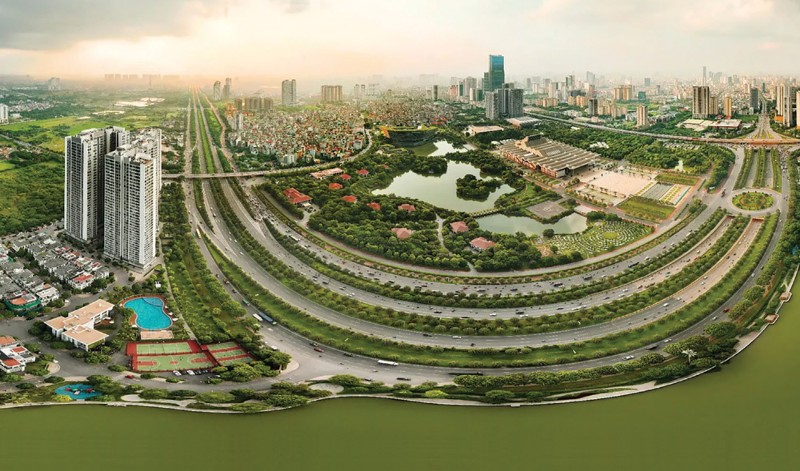
The rapid pace of urbanization brings increasing pressure points: prolonged traffic congestion, ever-widening distances between home and work, a shortage of quality public spaces, and the erosion of the living experience in high-density urban environments. According to Savills’ analysis, the challenge for modern megacities is no longer simply about “moving faster” but about helping people “experience life better while commuting.” In this context, the new generation of Transit-Oriented Development (TOD) is beginning to shift its focus from infrastructure to people and from transportation to urban quality of life.
In many countries around the world, TOD is not simply seen as a transportation solution. It is a method of reorganizing urban space, creating conditions for the formation of new economic centers, and promoting investment and real estate development in a more sustainable direction. In Vietnam, the model is also considered a planning tool to optimize land use and guide urban development as cities become increasingly congested.
International experience
It is no coincidence that leading megacities such as Tokyo, Singapore, London, and Hong Kong (China) consider TOD a central solution to urban planning challenges.
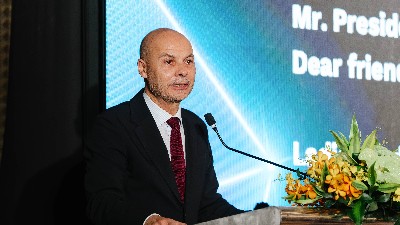
Mr. Neil MacGregor, CEO of Savills Vietnam, said that, globally, successful TOD models often act as catalysts for the restructuring of entire urban areas. “When public transportation is integrated with commerce, public spaces, offices, housing, and living amenities, the value created lies not only in real estate but also in the potential to form new economic and community centers for the city,” he said. “In the long term, TOD can change how people live, work, and interact with the city. This is also an inevitable development trend for major cities, as the challenge is no longer just expanding infrastructure but improving quality of life and optimizing urban operational efficiency.”
According to Savills, TOD has undergone several stages of evolution worldwide. In the first stage, TOD 1.0, train stations were simply physical transit points where people arrived and departed. The space around the station was almost completely separate from urban life. As population pressure and commercial demand increased, cities began expanding the function of train stations. The subsequent stage, TOD 2.0, marked a strong shift toward an integrated model, with buildings and amenities gradually appearing within walking distance of stations.
Bangkok is a prime example, with its elevated BTS rail network serving not merely as transportation infrastructure but as a core axis directly connected to shopping, service, and amenity complexes via pedestrian bridges, creating dynamic and seamless economic activity along urban corridors.
From there, TOD evolved into TOD 3.0, in which the train station became the central connection point of an entire multifunctional ecosystem. In Hong Kong (China), integrated complexes of offices, hotels, retail, and public spaces are seamlessly organized around train stations and linked by a multilevel skywalk system. People can live, work, shop, and commute almost entirely within the same self-contained urban ecosystem.
As megacities entered a new era of competition focused on quality of life, TOD continued to evolve into TOD 4.0. Instead of maximizing building density, the new generation of developments began prioritizing human experience, green space, and sustainability. Tokyo, with projects such as Azabudai Hills, demonstrates how nature can be brought back into the city through “vertical forests,” open plazas, and human-centered pedestrian networks that reduce carbon emissions and rebalance the living experience in a high-density environment.


When public transportation is integrated with commerce, public spaces, offices, housing, and living amenities, the value created lies not only in real estate but also in the potential to form new economic and community centers for the city.
Today, TOD 5.0 aims to create deep connections among multimodal transportation, global commerce, local culture, and living spaces that balance body, mind, and spirit. It is a place where people do not simply pass through, but want to stay, interact, and make it part of their urban lifestyle.
Globally, Tokyo remains one of the most successful examples of advanced TOD. There, train stations are not merely transit hubs. Instead, they have been transformed into compact urban centers that integrate housing, commerce, offices, cultural facilities, and public spaces, optimizing daily life for Tokyo residents.
In London, developments such as King’s Cross and Battersea Power Station demonstrate how cities can transform areas surrounding transportation infrastructure into major commercial, cultural, and public destinations.
Meanwhile, in Singapore, Jewel Changi Airport and ION Orchard are prime examples of developments that integrate transportation with retail, services, and urban experiences, helping maintain high visitor traffic while creating sustained demand across the surrounding area.
“In fact, many successful international developments have followed the same logic: using infrastructure as a foundation while prioritizing user experience and urban functionality as long-term competitive advantages,” Mr. MacGregor said.
Lessons for Vietnam
Among Vietnam’s largest cities, Ho Chi Minh City is undergoing its most significant transformation in decades, driven by its ambition to become a megacity with an international financial center, a leading innovation hub, and a regional gateway by 2030.
A series of strategic infrastructure projects is therefore being accelerated simultaneously, including Long Thanh International Airport, the North-South high-speed railway, the metro network, ring roads, interregional expressways, and transportation links connecting the southern region and Mekong Delta. Under the plan, Ho Chi Minh City’s future metro network will comprise 12 lines stretching more than 600 km, serving as the backbone of the city’s new urban development structure. Meanwhile, Long Thanh International Airport is expected to serve 25 million passengers annually during its initial phase, expanding international connectivity for the southern economic region.
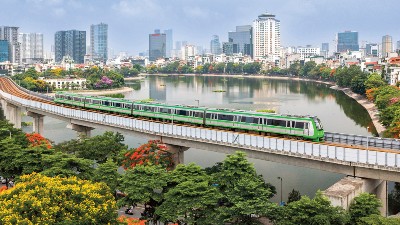
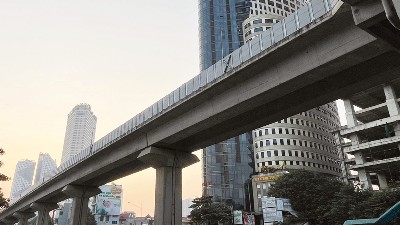
Meanwhile, the Hanoi People’s Committee held a breaking ground ceremony on June 22 for five new metro lines in what is regarded as the capital’s largest-ever metro investment initiative. It is the first time Hanoi has launched five metro lines simultaneously - Lines 1, 2, 8, 10, and 14 - with combined investment exceeding VND1,300 trillion ($50 billion). The initiative marks a shift from developing individual lines to building a comprehensive, large-scale public transportation network while creating new space for urban development.
All five metro lines are scheduled for completion by 2030. If delivered on schedule, the project will mark a major milestone in Hanoi’s infrastructure development, bringing the capital closer to its ambition of becoming a modern, smart city with one of the region’s leading public transportation systems.
According to Mr. Matt Western, UK Trade Envoy to Vietnam, Thailand, Cambodia, and Laos, Vietnam has an opportunity to shape its urban future as the economy continues to grow strongly and urbanization accelerates. With about 40 per cent of the population now living in urban areas, the need for a development model that simultaneously addresses transportation challenges, improves quality of life, and creates new growth drivers is becoming increasingly urgent.
“TOD should not be viewed merely as a transportation infrastructure project, but rather as multifunctional urban centers integrating housing, commerce, services, tourism, and community spaces,” he said. “These developments would not only make travel easier for residents but also create new economic growth poles, enhancing the city’s attractiveness to residents, businesses, and investors.”
To realize that potential, Mr. Western said Vietnam should prioritize improving planning, promoting the efficient use of land around train stations, and reforming the legal framework to facilitate the development of multimodal transportation hubs. In addition, TOD projects should be designed to seamlessly connect urban rail, buses, suburban transportation, and infrastructure for cyclists and pedestrians. When people can reach a station within a 10-15 minute walk, the system becomes significantly more attractive and successful.
“The success of TOD projects largely depends on public-private partnerships, in which green finance and green bonds will play a crucial role in mobilizing investment,” he said. “With experience delivering major infrastructure projects such as the Elizabeth Line and Jubilee Line, along with strengths in planning, legal frameworks, and green finance, the UK is ready to partner with Vietnam in developing green, smart, and sustainable TOD models that help create more livable cities and new engines of economic growth.”
When public transportation is integrated with commerce, public spaces, offices, housing, and living amenities, the value created lies not only in real estate but also in the potential to form new economic and community centers for the city.



 Google translate