


Transit-Oriented Development (TOD) has been successfully implemented in many major cities around the world, delivering clear benefits by reducing dependence on private vehicles, lowering carbon emissions, and boosting economic productivity. More importantly, cities that have adopted TOD have not only improved quality of life but also generated sustainable real estate value, attracted investment, and stimulated local economic development.
According to Dr. Chua Yang Liang, Head of Research and Consultancy for Southeast Asia at JLL, the term “Transit-Oriented Development” was formally coined by American urban designer Peter Calthorpe in his landmark 1993 book, “The Next American Metropolis.” He proposed the model as a structured and evidence-based response to the growing problem of automobile-dependent urban sprawl across the US. The core idea is simple yet transformative: locate housing, retail, and community amenities within comfortable walking distance of public transit stations, and design entire neighborhoods around people rather than motor vehicles. By the 2000s, American town centers had retained their traditional functions while undergoing a fundamental transformation in architecture and urban planning. Many are now anchored by multimodal transit hubs, where Mass Rapid Transit (MRT) lines intersect with buses, taxis, and cycling infrastructure.
In Asia, however, the concept of TOD emerged much earlier in densely-populated cities such as Singapore and Hong Kong (China). According to Japan’s Urban Renaissance Agency, one of the earliest examples dates back to around 1910 in the Kansai region of Osaka, where Hankyu Railway, then one of Japan’s largest railway operators, successfully integrated commercial and office developments around its terminal stations. The concept was later introduced to Tokyo by Hankyu Railway in 1920.
In recent years, major cities in Vietnam, Indonesia, and Malaysia have also been developing their own versions of TOD to accommodate rapid urbanization as well as expanding modern public transport networks. Each city has adapted the model to suit its own cultural, demographic, and market conditions.
Direction of TOD in Vietnam
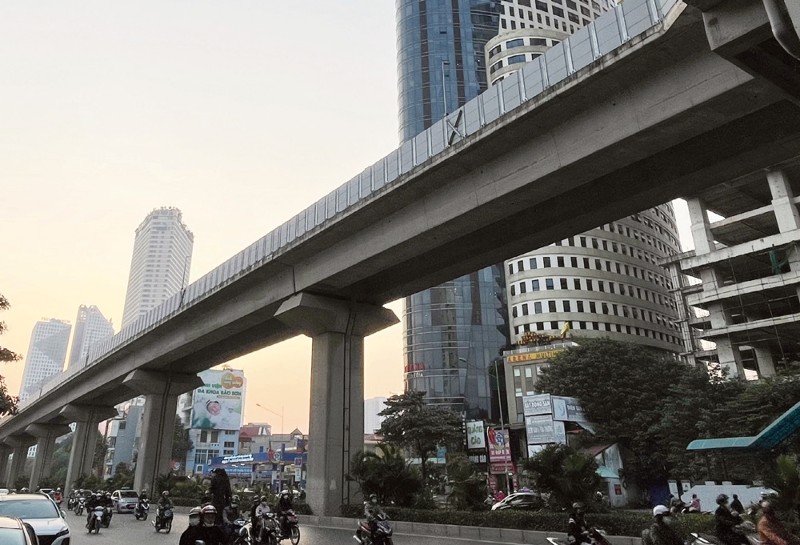
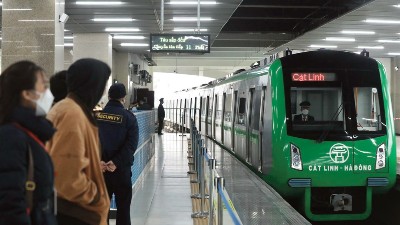
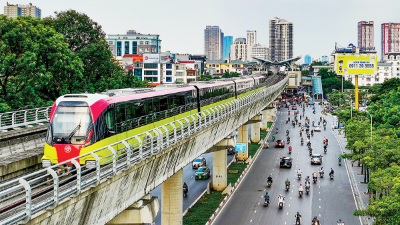
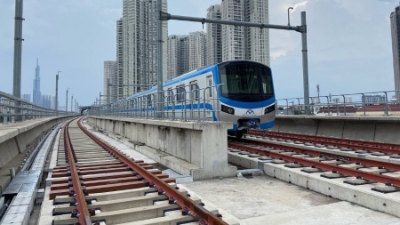
In Vietnam, the TOD concept, defined as urban development centered around public transit stations within a one-kilometer walking radius, initially failed to gain widespread traction. Residents of the country’s major cities traditionally prioritized road access to city centers by private vehicles over public transportation options. However, this perception has shifted significantly in recent years, driven by the long-delayed metro systems that officially began operations in November 2021 in Hanoi and December 2024 in Ho Chi Minh City.
During more than a decade of metro construction, Vietnam’s two largest cities witnessed vibrant real estate activity, with numerous developments emerging along urban railway corridors.
According to JLL Vietnam, projects located within a ten-minute walk of metro stations now account for 14-16 per cent of total commercial real estate supply and 4-9 per cent of residential supply in the two markets. These figures highlight the growing importance of transit-linked developments within the overall real estate landscape of Vietnam’s two largest cities.
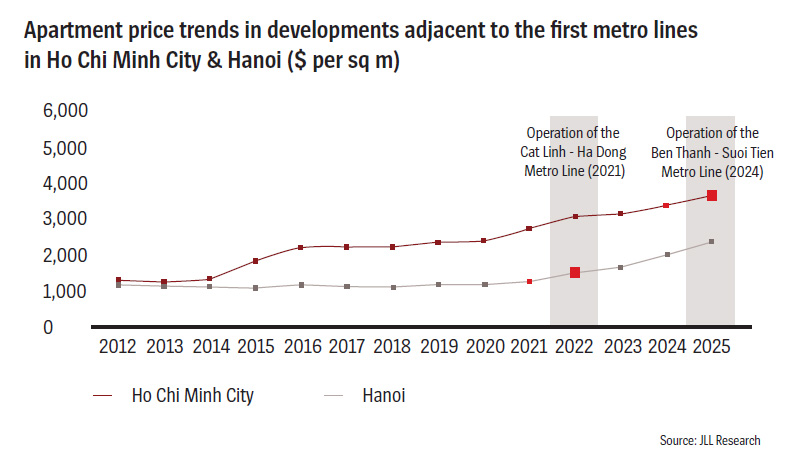
Properties adjacent to metro stations have also recorded notable price appreciation since metro operations began. On average, prices increased by approximately $200-250 per sq m over one year, equivalent to an annual growth rate of around 8 per cent; double the 4 per cent market average recorded in Ho Chi Minh City in 2025. This premium clearly demonstrates the added value generated by TOD projects compared with conventional real estate developments.
The contrast has been even more pronounced in Hanoi. According to JLL, metro-adjacent projects recorded price growth of 19 per cent, compared with the overall market average of just 12 per cent in 2022. This exceptional 19 per cent increase is particularly notable given the broader challenges facing the real estate market during the period.
The market’s positive response to metro-oriented developments has strengthened policymakers’ confidence in accelerating TOD implementation. Observations indicate that TOD has attracted significant interest from both authorities and developers since 2023, particularly following the passage of National Assembly Resolution No. 98/2023/QH15, which authorized the pilot implementation of transit-oriented urban development in Ho Chi Minh City. Stakeholders across the board, including developers, homebuyers, and government agencies, have increasingly recognized the transformative potential of the TOD model.
As a result, TOD has become a central pillar of urban planning and project marketing strategies. It is no longer viewed merely as a real estate trend but as an important policy instrument for guiding sustainable urban growth. Encouraging TOD serves a dual purpose: creating vital transport infrastructure while also establishing a “third place” - a shared social environment where people can gather, interact, and build strong community connections.
Since 2025, the Vietnamese Government has adopted TOD as a solution to reduce population concentration in inner-city districts. This policy shift, together with the emergence of integrated urban developments along ring roads, has created new momentum that promises to improve the ring road network while promoting balanced urban expansion in all directions. The change also aligns with a broader trend that has emerged over the past decade: large-scale integrated townships. Real estate developers have increasingly embraced comprehensive approaches to integrated urban development, seeking to overcome locational disadvantages by creating self-contained commercial and recreational amenities.
Looking ahead, TOD applications in Vietnam are expected to expand beyond rail systems to include road-based public transportation, such as Bus Rapid Transit (BRT).
Four fundamental pillars
Based on our observations of the real estate market, successful TOD projects should be built upon four fundamental pillars: connectivity, non-motorized transportation, amenities, and mixed-use real estate development. Each of these pillars plays a critical and complementary role in creating a complete and sustainable TOD ecosystem.
Today, most developers primarily focus on creating direct physical connections between their projects and public transit stations. Unfortunately, many overlook, or have yet to fully capitalize on, the opportunity to enhance connectivity through green spaces and non-motorized transport infrastructure.
Unlike conventional real estate development, TOD requires that developers expand their role by introducing dedicated operational teams that function much like shopping mall management operators, but at the scale of an entire urban district. Their objective is to actively cultivate pedestrian traffic, encourage community participation through cultural and social events, and create meaningful public experiences.
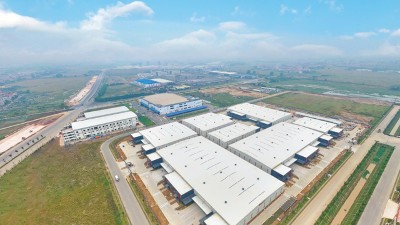
Most TOD projects currently planned in Ho Chi Minh City and Hanoi are located in suburban areas with substantial land reserves, positioning them for the development of large-scale, high-density urban districts with diverse property types. Developers therefore need to carefully consider the optimal balance between residential and commercial components.
These townships should also incorporate strategic amenities capable of attracting pedestrian traffic from transit stations into the development itself, rather than serving only project residents. This requires a different planning and management approach, in which public and commercial spaces are designed to attract and serve both residents and visitors from outside the development.
As developers gradually learn to strike a balance between investment in hard infrastructure and community activation, the expansion and evolution of TOD urban areas will become more sustainable, more equitable, and significantly more livable.
After just three decades of modern development, Vietnam’s real estate industry must now quickly master the complex art of place-making. Ultimately, the success of integrated TOD communities will depend on their ability to create neighborhoods with genuine identity and vibrant urban life, balancing investment in physical infrastructure with sustained community building. Achieving that balance will enable cities to grow in ways that are more sustainable, equitable, and livable, and will define the next chapter of Vietnam’s urban transformation.
(*) Ms. Le Thi Huyen Trang, Country Head and Head of Research and Consulting at JLL Vietnam.





 Google translate