


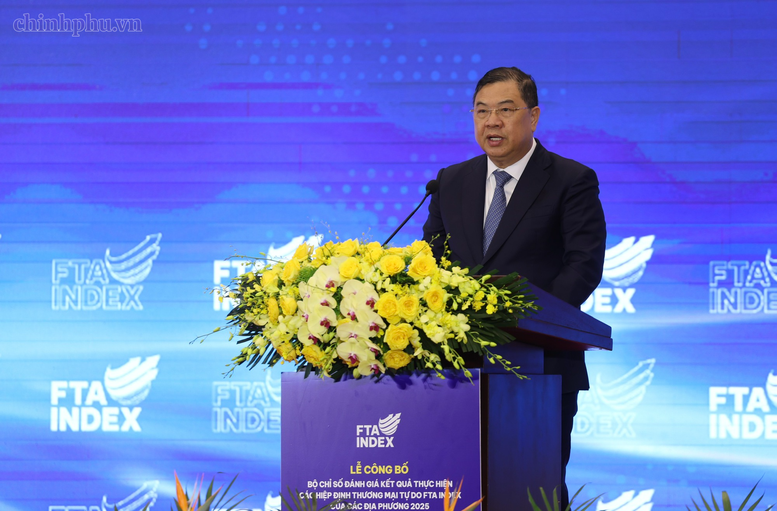
Integration must go beyond agreements and commitments, materialized and quantified into tangible results and products. It should not only open up development space for specific sectors, fields, and regions but also contribute to enhancing national competitiveness and standing.
Permanent Deputy Prime Minister Pham Gia Tuc made the remarks at the ceremony held on August 18 to announce the results of the 2025 Provincial Free Trade Agreement Implementation Index (FTA Index 2025), reported the Government News.
On that spirit, he emphasized that the FTA Index should be viewed not merely as a sectoral index, but as a vital tool for governing international economic integration.
“By reflecting feedback from businesses and the implementation results of local authorities, the index must clearly identify high-performing areas and existing limitations. It should pinpoint whether bottlenecks lie in institutions, procedures, information, infrastructure, human resource quality, or inter-agency coordination,” said Mr. Tuc.
“More importantly, every finding must be linked to a specific solution, a responsible agency, and a definite deadline for rectification.”
Based on the 2025 FTA Index results, he requested that all levels, sectors, and localities focus on three core tasks.
First, view FTA implementation as an integral part of socio-economic development strategies. It should be a key indicator for evaluating the governance capacity and integration performance of localities, rather than being the sole responsibility of the industry, trade, or diplomatic sectors. Each locality needs to incorporate FTA implementation into its socio-economic management programs, tied to the accountability of its leaders. They must develop post-announcement action plans for the FTA Index, targeting major bottlenecks for definitive resolution. At the same time, FTA implementation should be linked with selective investment attraction, digital and green transformation, high-quality human resource training, and the capacity building of small and medium-sized enterprises (SMEs).
Second, central ministries and sectors must continue to refine institutions, simplify administrative procedures, and promote data sharing.
The Permanent Deputy PM called for the development of a synchronized and accessible FTA information system, gradually incorporating Artificial Intelligence (AI) to assist businesses in searching for commitments, rules of origin, market standards, and risk warnings. Management agencies need to shift decisively from providing general information to offering support services tailored to the specific needs of individual businesses, industries, and localities.
He also requested the Ministry of Industry and Trade (MoIT) to continue negotiating and signing "new-generation" FTAs with countries and territories, including negotiations with the Southern Common Market (MERCOSUR). Simultaneously, the ministry must work with relevant agencies to further refine the FTA Index to ensure it remains stable, transparent, and capable of being used for comparison and benchmarking.
Third, the business community must be the center and the primary subject of the FTA implementation and utilization process. While the State is responsible for creating an enabling environment and removing institutional barriers, businesses must proactively innovate technology, improve management quality, build brands, and meet increasingly high market demands regarding green standards, labor standards, and traceability. Industry associations must promote their role in connecting and leading collaborative ecosystems to help Vietnamese enterprises integrate more deeply into regional and global value chains.
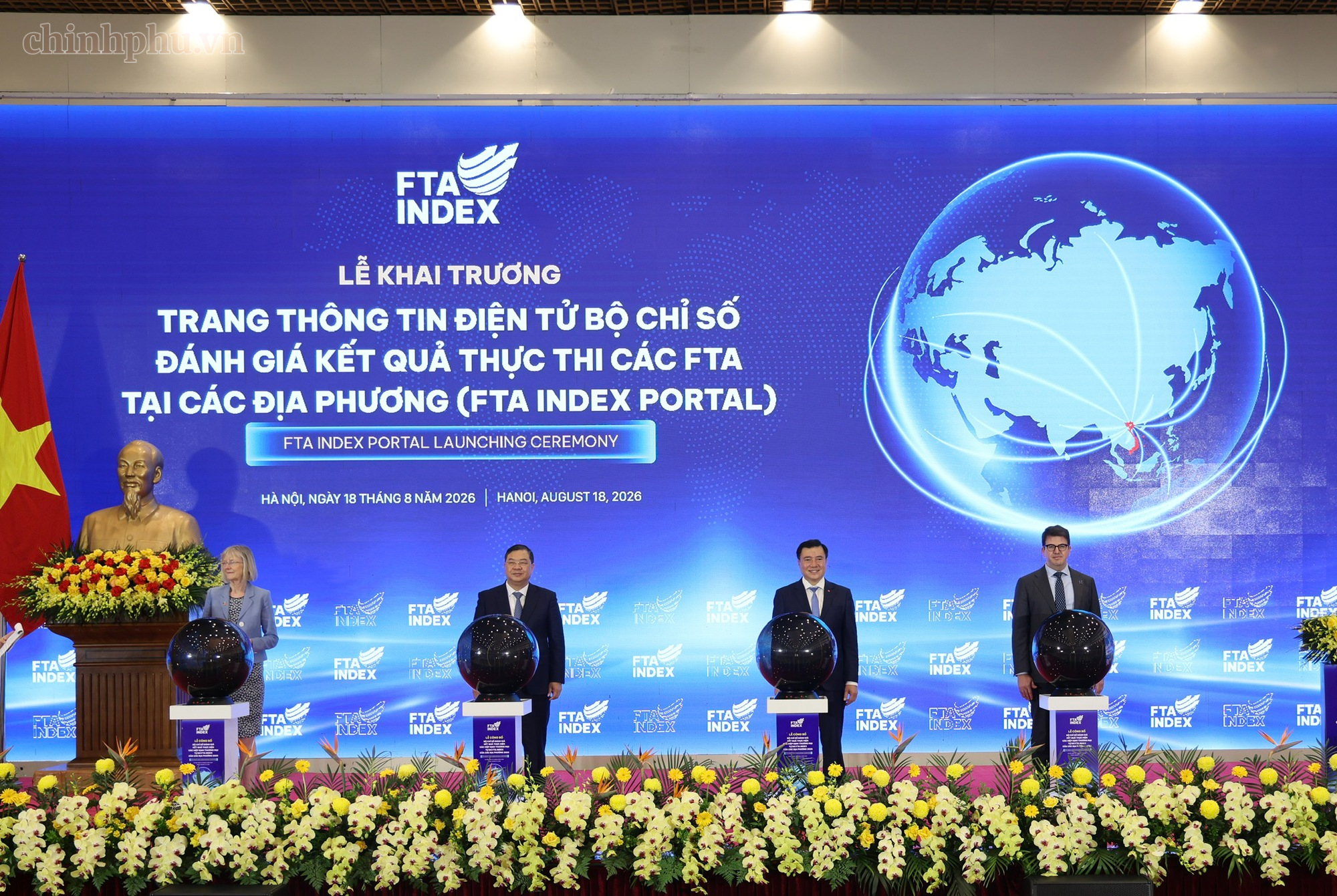
FTA Index 2025
According to Deputy Minister of MoIT Nguyen Sinh Nhat Tan, after nearly four decades of Doi Moi (Renewal) and more than 20 years of proactive international economic integration, Vietnam has established a vast FTA network. With 17 FTAs currently in effect—covering more than 80% of global GDP—this serves as a vital foundation for expanding markets, attracting investment, promoting institutional reform, and elevating the country’s global standing.
According to the DM, the advantages provided by FTAs will not automatically translate into economic growth without strong organizational capacity and effective coordination between the Central Government, local authorities, and the business community.
In 2024, the MoIT collaborated with various ministries, sectors, and localities to develop and publish the FTA Index on a national scale for the first time.
The FTA Index 2025 has been further refined in terms of evaluation methodology, survey scope, and data quality. As of December 30, 2025, the survey recorded feedback from 4,266 import-export enterprises across 34 provinces and cities.
Survey results indicate that information regarding FTAs is becoming increasingly clear. The proportion of businesses unaware of "new-generation" FTAs has dropped to below 10%. In addition to traditional press, television, and conferences, digital platforms and social media have become increasingly vital information channels.
The quality of guidance provided to businesses regarding FTA regulations has also seen marked improvement. The rate of businesses receiving regular guidance on rules of origin increased by 15.9%, while guidance on preferential tariffs rose by 16% compared to 2024.




 Google translate