



The World Bank’s June 2025 report, “Vietnam 2045 - Growing Greener: Pathways to a Resilient and Sustainable Future”, estimated that Vietnam has some 1.7 million green jobs but the workforce with the right skills remains critically insufficient. While demand for skilled workers in industry, energy, and infrastructure is expected to rise by up to 30 per cent by 2050, unskilled workers in agriculture may decline by 20-30 per cent. This structural shift requires large-scale training efforts, for which the current system is not yet prepared.
In practice, World Bank analysis for 2023 and 2024 shows that green jobs accounted for only about 3.6 per cent of the workforce, even though 41 per cent of jobs have the potential to be “greened”. But only 20 per cent of workers currently possess the necessary skills, reflecting the slow growth of the labor market relative to the speed of business transformation and the rising demands of international markets.
In response, one practical model aimed at narrowing this gap was a five-day field visit to Singapore in 2025 for the winning students of the GEFE 2024 Student Business Challenge. Initiated by EuroCham Vietnam under the 2024 Green Economy Forum and Expo (GEFE), the program offered a small-scale but highly-effective approach to bridging the green skills gap.
“These students spent five immersive days among humanitarian logisticians, renewable energy experts, bankers, and sustainability strategists,” said Ms. Pauline Dutertre, GEFE/GEF Project Manager and Head of MarCom at EuroCham. “The program not only takes students abroad to study but also places them at the heart of real-world decisions shaping Asia’s green transition.”
Where green skills meet reality
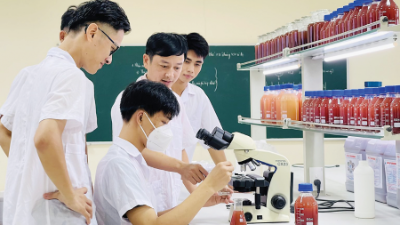
Students engaged with experts across renewable energy, sustainable logistics, green finance, and environmental, social, and governance (ESG) strategy. They participated in simulations that challenged them to balance environmental risks against economic benefits - critical skills in today’s green labor market - under the guidance of international specialists.
Ms. Le Mai Quyen, a fourth-year student at RMIT University, said the experience completely changed her perspective on sustainability. “I used to think sustainability was mainly about technology or big policy,” she said. “But the simulations showed me that it is really about people - how we coordinate, negotiate, and make small decisions that lead to big outcomes.”
The simulations exposed students to real business scenarios, from balancing profit with environmental risk to evaluating the impact of infrastructure investment on communities. “A project may look attractive on paper,” Ms. Quyen explained, “but when you consider long-term risks like pollution and health impacts, the short-term benefits may not be worth it.”
For students like Ms. Quyen, who grew up in central Vietnam, a region frequently hit by natural disasters, sustainability is tangible and immediate. “We prepare for storms by stocking food, reinforcing homes, and moving valuables, yet we still feel overwhelmed,” she said. “Sustainability is not theory; it is a lived reality.”
At EDP Renewables APAC’s Singapore headquarters, students were inspired directly by renewable energy specialists. “The students’ curiosity is exactly what the energy transition needs,” Ms. Sara Franzese, Head of Renewables Generation Assets, emphasized. “They are co-designers and the talent pipeline that can drive change.” She added that what impressed her most was not just their technical understanding, but their awareness of Vietnam’s energy challenges, from grid limitations to regional development disparities. “When students bring local perspectives to the international stage, they help us make our roadmaps more robust and relevant,” she said.
Similarly, third-year VinUniversity student Duong Hai Phong reflected that the environment isn’t something distant or abstract. “It exists in the small details around us and affects us directly and indirectly,” he said. He highlighted logistics, a sector often overlooked in sustainability, as a major opportunity for Vietnam’s climate progress, stressing that every small step, from individual decisions to collective action, contributes to the green transition.
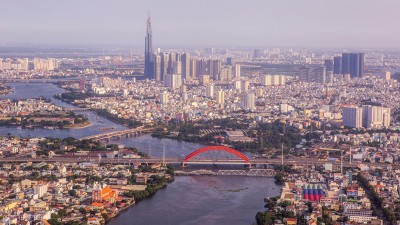
One of the most challenging exercises, led by Ms. Diana Tang, Director of Sustainable Finance at ING Bank Asia Pacific, placed students in a hazardous waste management scenario in Ho Chi Minh City. They had to weigh community safety, environmental risks, regulatory pressure, and business incentives, mirroring real-world corporate decisions. Ms. Tang was particularly struck by the students’ proactive mindset and sense of ownership. “It wasn’t just a yes-or-no debate,” she said. “It was, ‘let us do it, empower us.’ This entrepreneurial spirit and accountability really stood out.”
Ms. Tang also warned that capital and technology alone are not enough. Skilled, ESG-aware personnel are essential for companies to survive in the evolving global supply chain. “Without green skills, businesses risk losing market share to better-prepared economies,” she said.
Building talent for sustainability
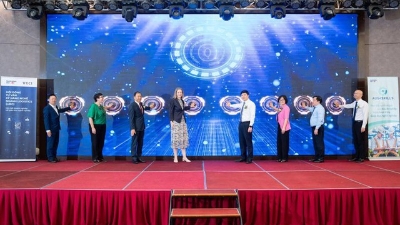
Continuing on from GEFE 2024, a recent panel discussion at the Green Economy Forum (GEF) 2025 in Hanoi entitled “Green Skills for Vietnam’s Sustainable Growth” brought together businesses, training experts, and international organizations to address workforce challenges in the green transition.
Experts agreed that demand for green skills in Vietnam is rising faster than supply. Only 3-5 per cent of the workforce currently holds green jobs, while major industries must meet strict European and international sustainability standards. The gap is compounded by a shortage of practical experience and a lack of integration of sustainability into daily work.
One key reason, according to GIZ and Manpower representatives, is the slow pace of curriculum updates relative to rapidly-evolving business needs. Students often graduate with skills misaligned with market demands.
Given this, upskilling the current workforce is the most effective short-term solution. Many of the workers in 2050 are already in the workforce, meaning that relying solely on new graduates is insufficient. Companies need to retrain existing staff in energy management, emissions measurement, sustainable procurement, and clean operations. Short-term training programs and technology-assisted solutions can help employees adapt more quickly. Green skills are essential not only for technical staff but also for finance, operations, and supply chain personnel.
Experts also stressed the decisive role of government policy. National standards for green skills, recognition mechanisms for both new and existing workers, and financial incentives for corporate investment in green training are vital. When labor markets and training systems operate in alignment, the skills gap can be significantly reduced.
Ultimately, green skills must be seen as a competitive advantage rather than a compliance requirement. When sustainability becomes embedded across all departments, companies can improve energy efficiency, reduce operational costs, increase productivity, and gain deeper access to international supply chains.
Vietnam’s ambition for a green economy is strong, yet workforce skill development has not kept pace. Coordinated action between businesses, educational institutions, and government is essential. Green skills will determine Vietnam’s competitiveness in the years ahead and its ability to maintain a strong position in global supply chains. Programs like GEFE/GEF not only guide students toward green careers but also directly and effectively help bridge the green skills gap by connecting academia, business, and hands-on experience.
Reflecting on the journey, Ms. Dutertre noted that the Singapore trip was just one chapter in a larger story, offering a glimpse of the future Vietnam is striving to build. Vietnam’s ability to compete, attract investment, and withstand climate shocks will depend on whether it can close the green skills gap. The decisions made today will shape not just the next five years but the next generation.
“Watching the students grow from the competition to the study trip made one thing clear,” she said. “They represent the spirit of Vietnam’s future - curious, thoughtful, ambitious, and ready. Their voices, combined with the expertise of leaders like Ms. Diana Tang, make a compelling case. Vietnam’s green transition is not only possible but achievable if the country invests boldly in its people.”



 Google translate