


At a secondary school in Hanoi’s Hoang Mai ward, a history teacher cautiously navigates the AI wave sweeping through her and other classrooms. She knows the technology’s potential, but she’s not entirely convinced it’s ready for her students. “I use AI now and then,” she told Vietnam Economic Times / VnEconomy. “Mostly to make lessons more engaging, or to design little interactive games. But the tools still have too many flaws, the content isn’t always accurate, and it doesn’t quite fit our actual curriculum. So it’s hard to rely on AI for serious teaching.”
Her students, however, are enthusiastically embracing the technology, sometimes a little too much. “Many use AI to answer questions or prepare class presentations, but they blindly trust the results,” she noted. “That often leads to shallow or even misleading understanding. At their age, they simply don’t have the skills as yet to evaluate and filter information, so dependence on AI comes easily.”
AI is no longer just another digital tool. In education, it’s being hailed as a catalyst for transformation, promising to reshape both teaching quality and school management. As one of the eleven strategic technologies identified under Decision No. 1131/QD-TTg, dated June 12, AI is currently being actively researched for integration into teaching and learning throughout Vietnam’s education system.
AI enters the classroom
The Politburo issued Resolution No. 71-NQ/TW on August 22, setting a national goal of universalizing digital and AI technologies in the management and organization of education at all levels. The resolution emphasized promoting the use of AI to innovate teaching, learning, assessment, and evaluation methods, while also fostering the development of digital education models, AI education, and governance over smart education.
The Vietnam Education Publishing House has completed a full set of AI education textbooks for students from Grade to 12, designed around a knowledge framework suited to Vietnamese students’ learning capacity, incorporating local psychology and cultural elements to make the content approachable. Alongside theoretical lessons, the books include a diverse range of practical exercises tailored to different regional learning conditions.
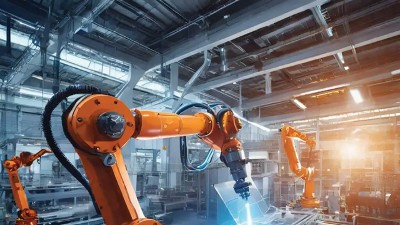
Professor Chu Duc Trinh, Rector of the University of Engineering and Technology at the Vietnam National University (VNU-UET), told Vietnam Economic Times / VnEconomy that the application of AI in industry today can be imagined as an equation: “x + AI”. When combined with any field, AI has the potential to enhance operational efficiency and workplace productivity.
According to the Professor, integrating AI into teaching is an inexorable and necessary trend. “AI doesn’t just help students absorb textbook knowledge faster; it also broadens their understanding across many areas of society,” he said. However, he cautioned that students, especially in primary and secondary school, need proper guidance, as AI-generated output can be accurate and useful but also illusory or based on unverified sources at times. “The introduction of AI into education must be carried out carefully and systematically, at a pace that’s neither too slow to miss opportunities nor too fast to invite risks,” he stressed.
AI today is already capable of resolving most problems at the general education level, which explains why many students are quick to turn to it for help. Yet Professor Trinh warned that overreliance on AI could cause students to lose sight of the true purpose of education. “Schools must help students realize that the real value of learning lies in the process of thinking, discovery, and practice, not just in producing correct answers.”
Therefore, AI should be introduced selectively rather than indiscriminately across all subjects. Students still need time to develop critical thinking, accumulate knowledge, and learn how to use these tools properly. “Take writing, for example,” he said. “AI can help correct sentences, fix grammar, suggest writing styles, or add background information, but it cannot replace emotion, creativity, or the writer’s personal voice. Writing is an expression of the soul, something no machine can fully replicate.”
Smarter education
One area where AI can already make an immediate impact is in school management, according to Professor Trinh, from the primary to university level. It can help optimize tasks such as scheduling, student management, teaching quality assessment, and administrative operations. “With Vietnam’s growing computing infrastructure and existing technological capabilities, schools can start adopting the ‘smart school management’ model right now,” he believes.
However, introducing new technology, especially AI, will be accompanied by major changes. Some traditional processes could be phased out, while new management challenges will emerge. “Schools must therefore be mentally and structurally prepared to embrace innovation and move towards a leaner, more modern governance model,” he added.
The initiative to bring AI into education is not solely the responsibility of the Ministry of Education and Training. At a press conference in September, Mr. Ho Duc Thang, Director of the National Institute of Digital Technology and Digital Transformation at the Ministry of Science and Technology, said the draft Law on AI identifies the popularization of the technology as a nationwide goal, integrating it comprehensively into the education system.
Importantly, for primary education, AI adoption will come with strict safeguards. Mr. Thang emphasized that a dedicated list of AI tools will be carefully reviewed for safety and ethics before being introduced into classrooms.
With growing investment in infrastructure, continuous improvements in digital readiness, and AI curricula under rapid development, many experts believe that in just a few years AI will become adopted widely across Vietnam’s entire education system. Yet even then, they emphasize, caution must remain at the core, so that innovation truly leads to lasting progress in education.



 Google translate