


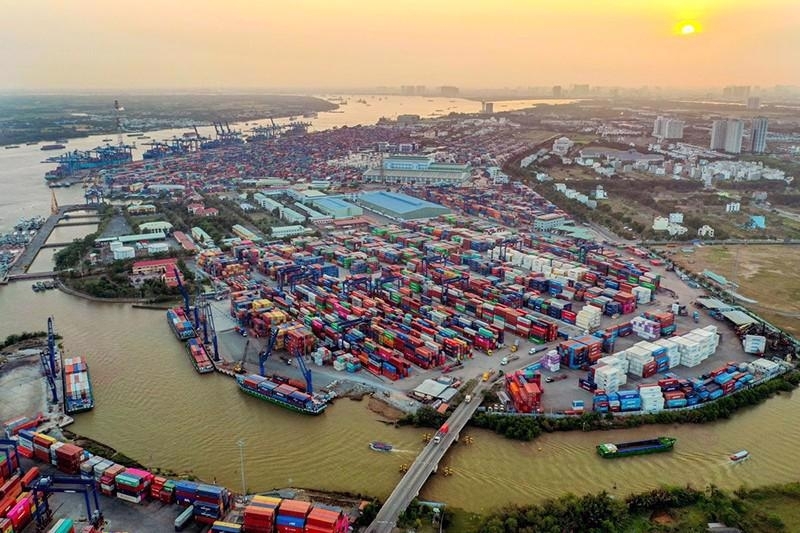
Ho Chi Minh City has officially released a large-scale investment attraction list for the 2026–2030 period, focusing on spearhead sectors with a heavy emphasis on logistics, according to the Government News.
To realize the vision of transforming the city into a regional and international logistics hub, experts suggest that the city must prioritize the exploitation of industrial belts linked to deep-water ports. Key strategies include developing the Can Gio International Transshipment Port and a synchronized logistics system integrated with Free Trade Zones (FTZs). This approach aims to create a "closed-loop" supply chain, enhancing competitiveness and enabling deeper participation in the global supply chain.
According to Mr. Pham Binh An, Deputy Director of the HCMC Institute for Development Studies, the city is expanding its urban space following a "multi-center megacity" model. In this framework, industrial, logistics, and service poles are interconnected to form a continuous value chain.
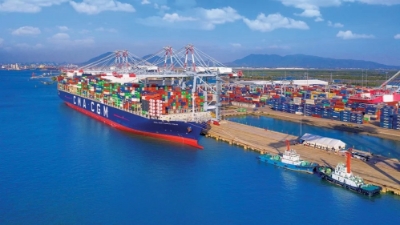
On April 17, Gemadept Corporation and its strategic partner, the CMA CGM Group (France), broke ground on Phase 2 of the Gemalink deep-water port. With a total investment of approximately VND6 trillion ($228 million), Phase 2 is expected to be operational by the fourth quarter of 2027. Once both phases are completed, the port will feature a total berth length of over 1.4 km and a capacity exceeding 3 million TEUs per year, meeting the rising demand for cargo throughput.
Furthermore, on the upcoming April 30 holiday, HCMC will commence two landmark logistics projects.
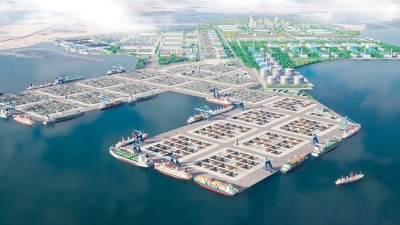
Cai Mep Ha General and Container Port, with an investment of VND50.8 trillion (over $1.9 billion), is designed as a gateway and international transshipment port to serve long-haul maritime routes, boost regional logistics, and generate significant revenue for the Southern Key Economic Region.
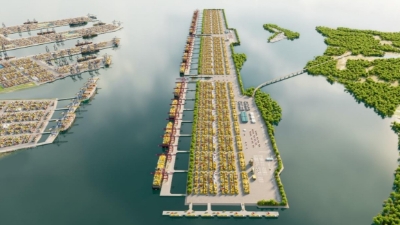
Can Gio International Transshipment Port, with an investment of over VND128.8 trillion (nearly $5 billion), has its design capacity projected to reach 4.8 million TEUs by 2030 and 16.9 million TEUs by 2047.
Concentrating resources on port infrastructure is considered a vital strategy, as HCMC remains Vietnam’s primary growth engine, contributing more than 23% to the national GRDP.
Mr. Nguyen Van Duoc, Chairman of the People's Committee, emphasized that by aligning with the maritime economy, HCMC’s master plan will establish a modern Cai Mep – Can Gio port system. This will serve as the primary logistics hub for both the city and the entire Southern region.
 Google translate