


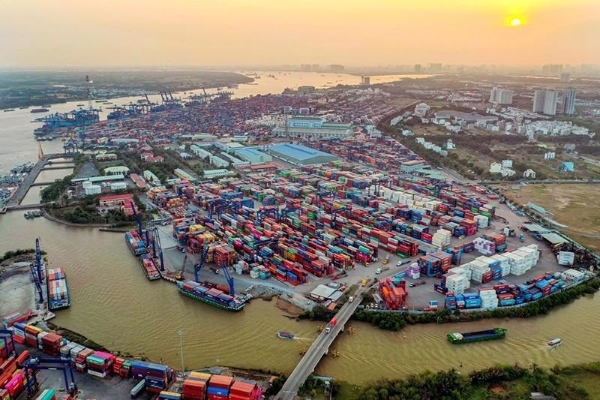
The ongoing conflict in the Middle East is exerting significant pressure on the import-export and logistics activities of businesses in Ho Chi Minh City, particularly as international shipping routes undergo major adjustments.
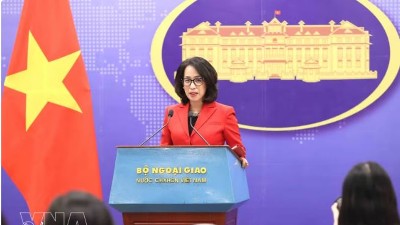
Speaking at a socio-economic press conference on March 5, Ms. Nguyen Le Thien Thanh, representing the HCMC Department of Industry and Trade, stated that the US market currently accounts for approximately 23% of the city’s total export turnover. A large portion of goods destined for this market is transported via maritime routes passing through the Middle East before reaching the US East Coast.
Due to disruptions in several shipping lanes, cargo transit times have increased by 7 to 10 days, leading to a substantial rise in logistics costs for enterprises.
According to the Management Board of HCMC Export Processing Zones and Industrial Parks (Hepza), at least eight key manufacturing and export sectors in the city are being affected to varying degrees by the developments in the Middle East.
Among these, the electronics and components industry is experiencing a pronounced impact due to its heavy reliance on global supply chains. Several businesses have reported a risk of shortages in chips and semiconductors imported from Europe as transport routes through the Red Sea are disrupted. In cases where companies have switched to air freight, logistics expenses have soared, subsequently driving up product prices.
The textile and footwear industries are also facing the risk of delivery delays to the European market. Some enterprises expressed concerns regarding the potential cancellation of summer orders if they cannot meet the delivery schedules stipulated in their contracts.
The logistics and transportation sector is considered the hardest hit. According to Hepza, many shipping lines have cancelled voyages or rerouted around the Cape of Good Hope (South Africa). This diversion extends transit times by an additional 3 to 4 weeks.
These adjustments have triggered higher freight rates and the imposition of various surcharges, such as war risk fees and diversion surcharges. Furthermore, the longer voyages have extended container turnaround cycles, resulting in a shortage of empty containers at ports in HCMC.
In response to these complex developments, representatives from the Department of Industry and Trade and Hepza stated that they are closely monitoring the operations of affected businesses, especially those dependent on raw materials or markets in the Middle East region.
Authorities are also coordinating with various departments to implement recommendations from the Ministry of Industry and Trade. Additionally, they are providing support to businesses regarding administrative procedures for import-export, the issuance of Certificates of Origin (C/O), and other trade-related formalities.

 Google translate