


The global shift toward Small Modular Reactor (SMR) technology is accelerating rapidly to meet the growing demand for 24/7 baseload electricity driven by the expansion of AI infrastructure and heavy industry, offering valuable lessons for Vietnam on both deployment models and investment attraction mechanisms.
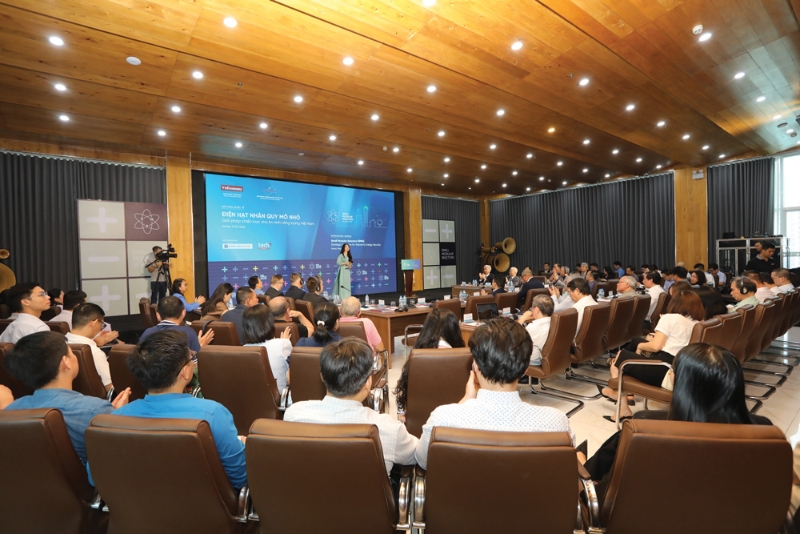
At the international seminar entitled “Small Modular Reactors: Strategic Solutions for Vietnam’s Energy Security,” representatives from businesses and international organizations shared vivid insights into the global transition toward next-generation nuclear energy. Drawing on the real-world deployment of SMR technology in pioneering countries, international experts provided in-depth analyses of operational challenges and risk-sharing financing models, while offering important recommendations for Vietnam’s nuclear energy development roadmap.
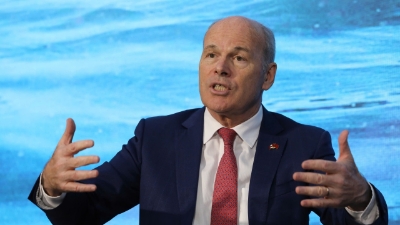
Speaking at the seminar, Mr. Dmitry Aleksandrovich Raspopin, Director, Country Office in Vietnam, the State Atomic Energy Corporation ROSATOM, said the corporation is currently developing both land-based SMR projects and floating nuclear power plants, all of which comply with the highest safety standards. Rosatom currently holds 88 per cent of the global nuclear power plant export market. Of the 25 large-scale nuclear power plant construction projects currently underway worldwide in multiple countries, 22 are being implemented by Rosatom.
Lessons from pioneering countries
Regarding SMR technology, Mr. Raspopin introduced the RITM-200 reactor series. Russia has already deployed four icebreaker ships equipped with RITM-200 reactors and is continuing the construction of three additional vessels, alongside upgraded floating nuclear power units.
It is also supplying energy solutions for the first SMR project in Yakutia, Russia, using RITM-200N reactor technology. The project features a fuel cycle of up to six years and a lifespan of 60 years, and is intended to power tin, gold, and other mineral mining operations.
Rosatom expanded into international markets through its first SMR export agreement, signed with Uzbekistan in 2024. Under the project timeline, equipment manufacturing and construction of the first SMR units in the country began in 2025, aiming to strengthen energy security and support broad-based economic development. “Rosatom has addressed international clients’ concerns by offering turnkey project delivery while minimizing infrastructure requirements through the outsourcing of lifecycle functions,” he noted.
Practical lessons from several pioneering countries are also shaping the next era of nuclear deployment. Ms. Susie Ho, Director of Canada’s Laurentis Energy Partners, highlighted Poland as a case in point, where Orlen Synthos Green Energy (OSGE) is actively planning the deployment of 24 BWRX-300 reactors across six locations. OSGE demonstrates that combining industrial off-takers, digital demand, and a network strategy based on standardized reactors is a workable formula for project success.
These SMRs are being located at industrial hubs such as Wloclawek, adjacent to chemical plants, supplying high-temperature steam for chemical production, hydrogen generation, and district heating, thereby enhancing energy security and price stability. OSGE has established a dedicated taskforce with the Polish Data Center Association. Poland’s data center sector could require up to 1,000 MW of capacity by 2034, as hyper-scalers such as Google, Amazon, and Microsoft increasingly demand clean, 24/7 electricity.

Rosatom has addressed international clients’ concerns by offering turnkey project delivery while minimizing infrastructure requirements through the outsourcing of lifecycle functions.
In Sweden, after four decades of gradual nuclear phase-out policies, the country has reversed course entirely and now targets 2,500 MW of new nuclear capacity by 2045.
Meanwhile, Canada is leading in nuclear deployment models by prioritizing projects at existing sites to create a replicable blueprint for future expansion. By leveraging existing regulatory and environmental approvals at Darlington, Ontario, this approach avoids the uncertainties associated with greenfield development while focusing on site readiness and sequential risk reduction.
Adding to the discussion on the local development benefits of SMR technology, Ms. Breann Whitby, Acting Director of Nuclear Policy at Crown Investments Corporation of Saskatchewan, emphasized that SMRs are not merely an energy solution but also a core engine for achieving key socio-economic goals under Saskatchewan’s growth plan. Summarizing the transformative value of SMR technology, Mr. Raspopin noted that SMRs offer distinct advantages in addressing modern energy challenges. Beyond electricity generation, SMRs can support district heating and cooling, power data storage and processing centers, and replace conventional power plants.
From a planning perspective, the compact design of SMRs and the optimization of emergency planning zones enable deployment without disrupting urban infrastructure development. The technology is particularly well suited for small-scale grids and remote regions facing logistical challenges.
Technical and operational barriers
Despite the clear advantages of SMRs, experts believe several challenges continue to slow the sector’s development. According to Ms. Ho, five core risks are delaying nuclear deployment before the industry reaches full maturity, requiring deeper global collaboration, strategic partnerships, and innovative procurement models.
The first challenge is the erosion of institutional capability. After decades of disruption, the global nuclear sector has lost much of its practical construction expertise. Countries must therefore rebuild capabilities and transition from single-unit projects to multi-unit deployment strategies.
The second challenge is supply chain readiness, which Ms. Ho described as one of the toughest obstacles. Suppliers must meet strict nuclear quality assurance (Nuclear QA) standards to manufacture components or deliver services, requiring costly investments in systems such as ISO 9001.
The third challenge is workforce. The nuclear industry is facing an intensifying global competition for talent, from project managers and engineers to skilled welders. With experienced professionals retiring and younger talent drawn to other sectors, countries must begin serious workforce planning today to secure labor capacity for the next three decades.
The fourth challenge is competition for resources with the AI industry. Nuclear projects are increasingly competing with Big Tech firms for high-tech materials and equipment, while the rapid expansion of AI data centers has pushed copper and high-voltage component prices to their highest levels in 40 years.
The fifth challenge is regulatory fragmentation. According to Ms. Ho, global reactor deployment will require harmonized licensing requirements and regulatory processes across jurisdictions.
International financing models
Beyond these five risks, financing remains the largest barrier to new nuclear projects. Nuclear power requires massive upfront investment, while return on investment (ROI) often taking decades to materialize. “This creates a ‘bankability gap,’ making investors reluctant to finance projects that may face construction risks for up to ten years before generating revenue,” Ms. Ho emphasized.
To close this gap, international markets have increasingly adopted sophisticated risk-sharing mechanisms rather than relying solely on traditional government funding, centered around three key financing tools.
The first is the Regulated Asset-Based (RAB) model, used in the Sizewell C project in the UK. This mechanism allows developers to recover part of project costs from electricity consumers during construction instead of waiting until operations begin, reducing the weighted average cost of capital (WACC) and potentially saving UK consumers up to £80 billion ($110 billion) over the project’s lifecycle.
The second is the Concurrent Cost Recovery (CCR) model, applied in Ontario. It enables developers to recover borrowing costs as they arise, preventing interest accumulation during long construction periods and helping keep project costs manageable.
The third is the use of long-term Power Purchase Agreements (PPAs). Hyper-scalers such as Microsoft, Google, Meta, and Amazon have increasingly become direct backers of nuclear projects by signing long-term electricity purchase contracts, providing stable cash flow that helps unlock commercial bank financing.
For Vietnam, the lesson is increasingly clear. “Vietnam does not need to shoulder this financial burden alone,” Ms. Ho said. “By adopting appropriate financing mechanisms, the country can align the interests of the government, consumers, and global investors, transforming large capital needs into manageable long-term economic guarantees,” Ms. Ho said.
The era of nuclear implementation has officially begun, and countries are racing to take the lead. “Vietnam should move beyond exploratory discussions and begin building the infrastructure needed to strengthen its position,” she believes. “The future belongs to nuclear energy, and this is a strategic opportunity for Vietnam.”







 Google translate