


Which areas of nuclear science do you believe hold the greatest potential to support Vietnam’s sustainable development over the next 10 to 20 years?
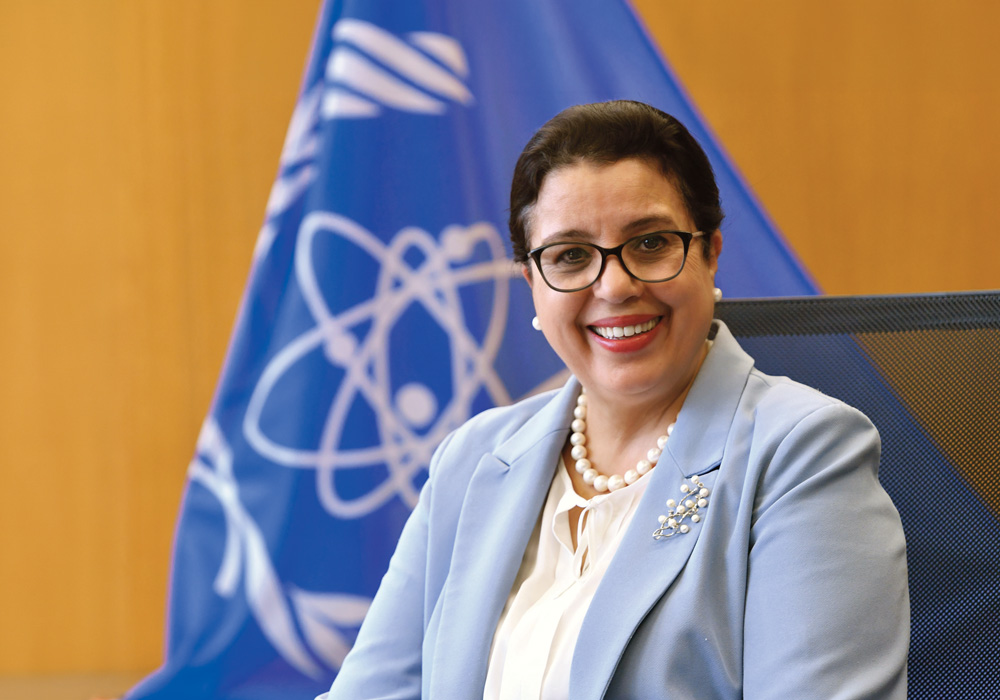
Vietnam has already developed strong capabilities in several areas where nuclear science and technology can make a significant contribution to sustainable development.
One of the most important is food and agriculture, which is closely linked to food security. Vietnam has successfully developed some of the world’s best rice varieties, demonstrating how nuclear science and technology, through the Vietnam Atomic Energy Institute (VINATOM), can support agricultural innovation and strengthen food security.
Another key area is industry. Technologies such as radioisotopes, radiotracers, and non-destructive testing help ensure the safety and reliability of critical infrastructure, including bridges, hospitals, schools, and industrial facilities. Vietnam already possesses considerable expertise in these applications.
Healthcare is equally important. Nuclear technologies play a vital role in the early diagnosis and treatment of non-communicable diseases such as cancer and cardiovascular diseases. Nuclear medicine, radiotherapy, and dosimetry are essential for ensuring patients receive precise and effective radiation treatment. These technologies will remain indispensable for many decades to come.
To sustain progress across all these sectors, human capital is critical. As the Minister of Science and Technology has emphasized, Vietnam needs to inspire and train a new generation of scientists and engineers in nuclear science and technology. The country has already established a solid foundation for developing future experts, and the IAEA is committed to supporting Vietnam through capacity building and technical cooperation.
Going forward, the IAEA will continue to work alongside Vietnam in advancing nuclear applications for food security, healthcare, water management, ocean health, and environmental monitoring. These are all essential pillars of sustainable development, and VINATOM already has the expertise needed to expand their impact.
As Vietnam prepares to restart its nuclear power program, what should be the country’s top priority to ensure it is developed safely, effectively, and with public confidence?
The decision to pursue nuclear power is entirely Vietnam’s sovereign choice, and the IAEA stands ready to support the country throughout that journey, just as we have done with many other member countries.
The first and most important priority is developing a highly-skilled workforce. Vietnam will need not only nuclear engineers but also specialists in nuclear safety, nuclear security, radiation protection, communication, and other supporting disciplines.
Public communication is another crucial element. People need clear, transparent information about why nuclear power is safe, secure, and beneficial. Building public confidence requires both technical excellence and effective communication.
Once Vietnam has confirmed its roadmap, the IAEA will continue working closely with the government to strengthen institutional capacity and develop the human resources necessary for a safe and successful nuclear power program. Ultimately, human capacity remains the cornerstone of long-term success.
Vietnam is among the countries most vulnerable to climate change. How can nuclear and isotopic techniques help it adapt and strengthen climate resilience?
Climate change is a reality, and its impacts are becoming increasingly evident across agriculture, water resources, marine ecosystems, and many other sectors. Addressing these challenges requires science, innovation, and practical solutions, and nuclear science has an important role to play.
Take agriculture as an example. Nuclear techniques can help develop crop varieties that are more resilient to harsh environmental conditions and require less water. Sterile insect techniques can protect crops from pests, while irradiation technologies help preserve food and reduce post-harvest losses.
Vietnam has already developed strong expertise in many of these areas. In fact, whenever I speak internationally about food irradiation, I often encourage people to visit Vietnam and see its achievements firsthand.
Beyond agriculture, nuclear and isotopic techniques also support research on ocean acidification, water resource management, and environmental monitoring. Vietnam already possesses the necessary knowledge and technical capacity. The next step is to expand these successful applications on a broader scale.
As Vietnam expands its international cooperation in nuclear science and technology, what role do you see the country playing in advancing regional collaboration?
Vietnam has already demonstrated regional leadership in this area. For several years, it has worked closely with the IAEA to support neighboring countries such as Laos and Cambodia, particularly in healthcare, through tripartite cooperation programs.
Vietnam is also an active participant in the Regional Cooperative Agreement (RCA), which brings together more than 20 countries across Asia and the Pacific to exchange knowledge, share best practices, and jointly develop regional programs.
Through these mechanisms, Vietnam is both contributing its expertise and learning from the experiences of other countries. I believe it will continue to play an increasingly important role in strengthening regional cooperation in nuclear science and technology.
What advantages does Vietnam have compared with other countries in the region in developing nuclear power successfully?
As I mentioned earlier, developing nuclear power is a decision for Vietnam to make, and the IAEA’s role is to support that decision.
Vietnam is not starting from scratch. Several countries in the region already operate nuclear power plants, providing valuable experience and opportunities for regional cooperation and knowledge sharing.
The IAEA will continue supporting Vietnam by facilitating access to international expertise and helping the country benefit from lessons learned by others.
What are the IAEA’s priorities in supporting Vietnam’s nuclear power development?
Our priority is capacity building. Developing nuclear power requires a highly-qualified workforce capable of ensuring safe, secure, and reliable operations.
This includes expertise in reactor operation, nuclear fuel management, radioactive waste management, nuclear safety, and nuclear security. Every aspect of the program depends on having well-trained professionals.
The IAEA is ready to support Vietnam through training, technical assistance, and knowledge transfer. At the same time, organizations such as VARANS are also well positioned to strengthen the country’s regulatory framework for nuclear safety and security.
The IAEA has extensive global experience, Vietnam has a strong foundation and a clear commitment, and together we will continue working to ensure the country’s nuclear program develops safely and successfully.







 Google translate