


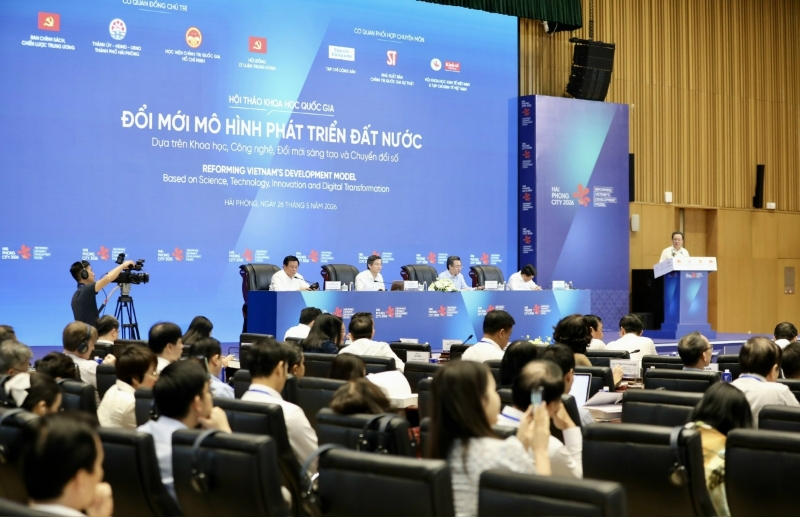
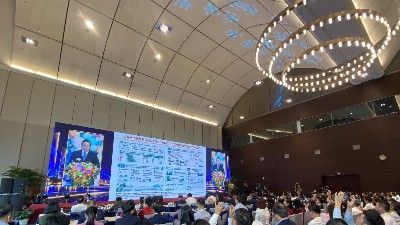
A national scientific conference on reforming Vietnam’s development model took place on May 26 in the northern port city of Hai Phong.
The event was co-hosted by the Central Commission for Policy and Strategy, and the Ho Chi Minh National Academy of Politics, the Central Theoretical Council, and the Hai Phong City Party Committee, with the Communist Review; the National Political Publishing House Truth; the Vietnam Economic Association, and Vietnam Economic Times / VnEconomy acting as coordinators.
With the theme "Reforming the country's development model based on science, technology, innovation, and digital transformation," the conference aims to provide arguments for a project titled "Reforming the country's development model based on science, technology, innovation, and digital transformation," which will be submitted to the upcoming third plenum of the 14th Party Central Committee.
At the same time, it clarifies the Party's guidelines and policies on the country's development model over 40 years of Doi Moi (Economic Renewal) policy that was initiated in December 1986 by the 6th National Congress of the Communist Party of Vietnam, and the documents of the 14th Party Congress on reforming the country's development model based on science, technology, innovation, and digital transformation, as well as the experiences of exemplary localities across the country in reforming development models; establishing new models, and good practices in the fields of economic, cultural, social, environmental development, ensuring national defense, security, foreign affairs, and international integration...
In his opening speech, Dr. Nguyen Thanh Nghi, Member of the Politburo, Secretary of the Central Party Committee, and Chairman of the Central Commission for Policy and Strategy, emphasized that this conference holds special significance in the context of the entire Party, people, and army implementing the Resolution of the 14th Party Congress, aiming for Vietnam to become a developed, high-income country by 2045.
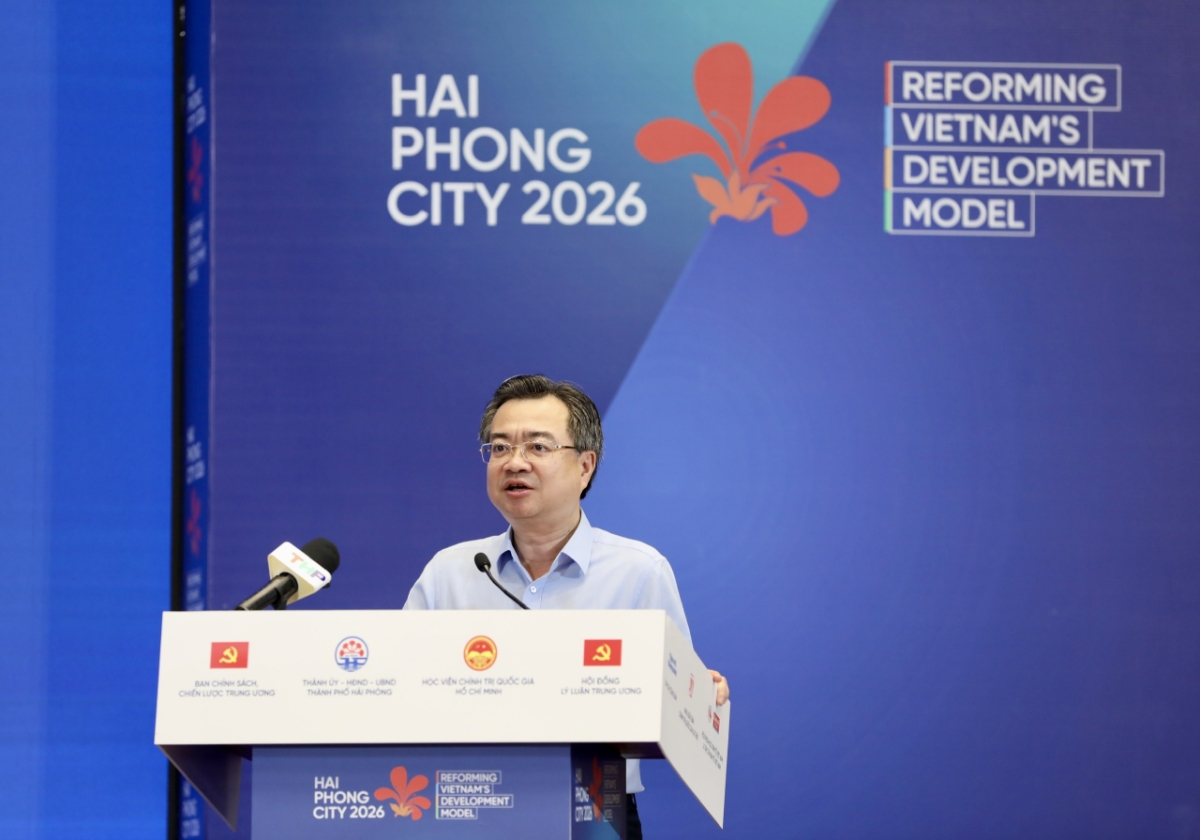
According to Dr. Nguyen Thanh Nghi, the Central Commission for Policy and Strategy is currently leading the development of a project titled "Reforming the national development model based on science, technology, innovation, and digital transformation" that will be submitted to the 14th Party Central Committee. Therefore, the conference is organized to create a forum for leaders, managers, experts, scientists, and the business community to exchange and contribute theoretical and practical arguments to serve strategic advisory work and refine the project.
The conference consists of two main sessions: 1. Presentation session including reports on the following topics: - Major orientations for reforming the country's development model based on science, technology, innovation, and digital transformation by 2045. - Theoretical foundations and international experiences on reforming the country's development model based on science, technology, innovation, and digital transformation and policy implications for Vietnam. - Reforming a development model to build Hai Phong into a "Civilized - Happy" city - a typical model of socialism in the new era. - Developing human resources to reform the development model based on science, technology, innovation, and digital transformation: International experiences and recommendations for Vietnam. - Recommendations for Vietnam in the process of reforming the growth model based on science, technology, innovation, and digital transformation. 2. Discussion session: Addressing, analyzing, evaluating, and suggesting strategic solutions for reforming the country's development model based on science, technology, innovation, and digital transformation. The discussion session features the participation of experts and scientists in the fields of economics, society, environment, science, technology, culture, national defense - security, foreign affairs, and international integration, national governance, representatives of international organizations (World Bank in Vietnam (WB), United Nations Development Program (UNDP), International Labor Organization (ILO)...), and representatives of ministries, sectors, localities, and the Vietnam Economic Association.
 Google translate