


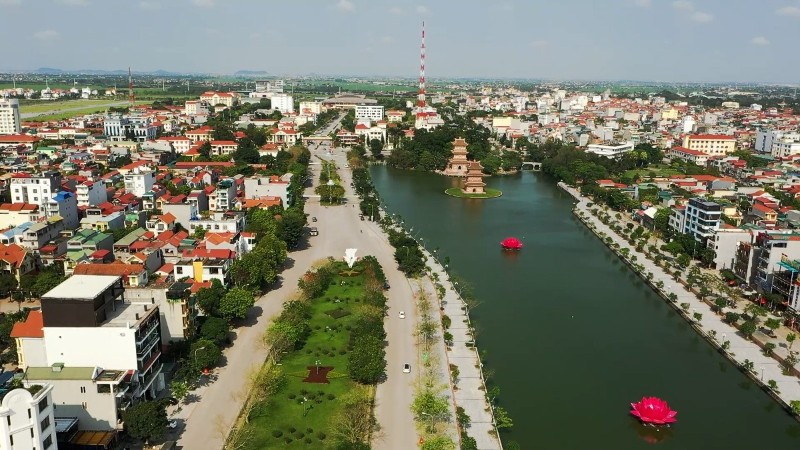
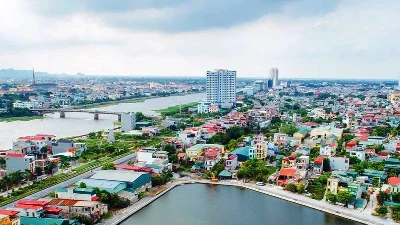
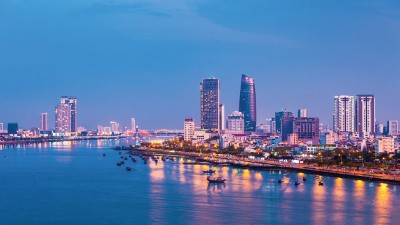
The People’s Committee of northern Ninh Binh Province has approved its Urban Development Program through 2030, setting the goal of becoming a centrally governed municipality before 2030, with the vision of a “millennial heritage city and creative city.”
City status targeted by 2027
The roadmap outlines several key milestones over the coming years. By 2027, the province aims to complete the remaining requirements for Ninh Binh to achieve Grade-I urban status and establish a city-level administrative unit, while raising its urbanization rate to at least 45%.
By 2030, the urbanization rate is expected to reach approximately 60.1%. The province’s urban system is planned to include six Grade-II urban areas and 36 Grade-III urban areas, with the goal of having 50% of wards meet Grade-II urban development standards.
The development framework will follow the model of “one growth axis, two development poles, three urban centers, four economic zones, and five economic corridors.”
International airport planned for Ninh Binh
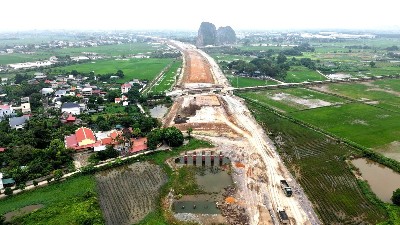
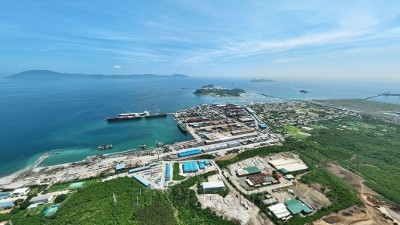
The program identifies transportation and strategic infrastructure as key drivers of urban expansion. Major proposals include the construction of Ninh Binh International Airport, a deep-water seaport within the Ninh Co Economic Zone, and railway stations at Phu Ly, Hoa Lu, and Nam Dinh on Vietnam’s future North-South high-speed railway.
These projects are designed to integrate with expressways, interregional highways, and the province’s key transport corridors.
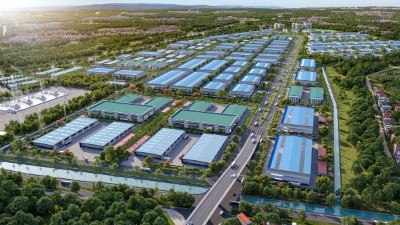
Ninh Binh also plans to develop transit-oriented development (TOD) zones around high-speed railway stations and major transport routes. Priority infrastructure projects include the Hoa Lu-Nam Dinh route, the Thanh Liem-Cao Bo route, East-West transport links, and a route connecting Hoa Lu with the province’s north-south Corridor 07.
Under the plan, TOD development is expected to improve land-use efficiency and generate additional resources for urban growth.
Marine economy to become new growth driver
In the eastern part of the province, the marine economy has been identified as a new engine of growth. Ninh Binh plans to expand the Ninh Co Economic Zone into a comprehensive, multi-sector coastal economic hub centered on seaport and logistics services.
The province also intends to develop coastal urban areas, tourism services, eco-tourism and resort destinations, as well as aquaculture and seafood processing industries. Coastal development will be linked with Xuan Thuy National Park and other ecotourism attractions in the region.
To achieve these objectives, the program calls for the combined use of state budget funding, central government support, official development assistance (ODA), concessional loans, public-private partnership (PPP) investment, and private-sector capital.
The urban economy is expected to contribute around 85% of the province’s Gross Regional Domestic Product (GRDP) by 2030.
However, these goals remain planning targets, and their realization will depend on project implementation, capital mobilization, and the province’s ability to meet urban development criteria at each stage.



 Google translate