


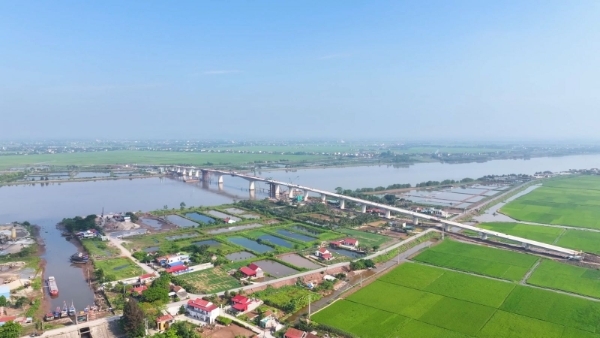
The Ninh Binh Provincial People's Committee in northern Vietnam recently held a meeting to review a report on the urban subdivision planning for the areas flanking the Day River. The project covers a research area of approximately 6,670 ha.
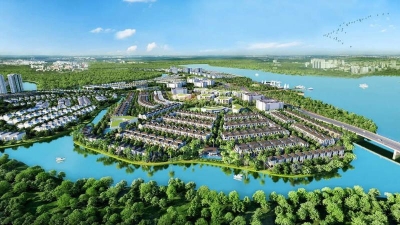
The vision for the project is to transform the Day River into an "ecological-cultural-economic boulevard." This corridor is designed to integrate urban development, agriculture, industry, fisheries, and tourism through a continuous system of open spaces along both riverbanks.
During the conference, Japanese experts presented planning proposals and ideas for the urban subdivision spanning from the National Highway 37C overpass to the North-South Expressway (CT01) overpass.
According to the report, the Day River currently serves as a vital North-South axis for Ninh Binh, passing through key production hubs, urban centers, tourist attractions, and major national transport routes. These conditions are ideal for establishing a "Riverside Economic-Ecological Corridor."
Under the plan, the northern region of the river will focus on urban, industrial, and logistics roles, while the southern region will prioritize agriculture, fisheries, and exports, creating a multi-sector economic value chain along the river.
The planning is expected to enhance the quality of life for local residents, attract investment, and balance economic growth with ecological preservation.
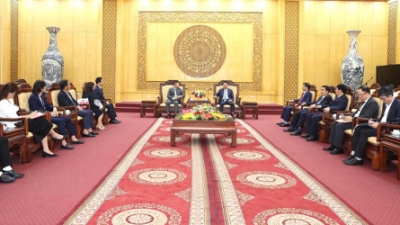
At the meeting, delegates contributed feedback on technical requirements, emphasizing the need for precise calculations regarding seasonal water level fluctuations and flood drainage capacity. Discussions also covered dike elevations, landscape arrangements, and the seamless integration of urban transport with regional and inter-regional networks.
In his concluding remarks, Chairman of the Provincial People's Committee, Tran Huy Tuan outlined key directions for further study. He emphasized that the province is committed to green, sustainable, smart, and modern urban development. This growth must be closely linked to "heritage cities," utilizing the Trang An World Heritage site and the Day River space as the primary cultural landscapes.
The Chairman also requested that the planning respect the existing landscape of the riverbanks while protecting and promoting local historical and cultural values to ensure smooth connectivity across the region.
 Google translate