


As Vietnam’s manufacturing sector continues to attract multinational capital, the challenge for many foreign investors is no longer whether to enter the country but how to navigate a regulatory and operational landscape that varies significantly by locality.
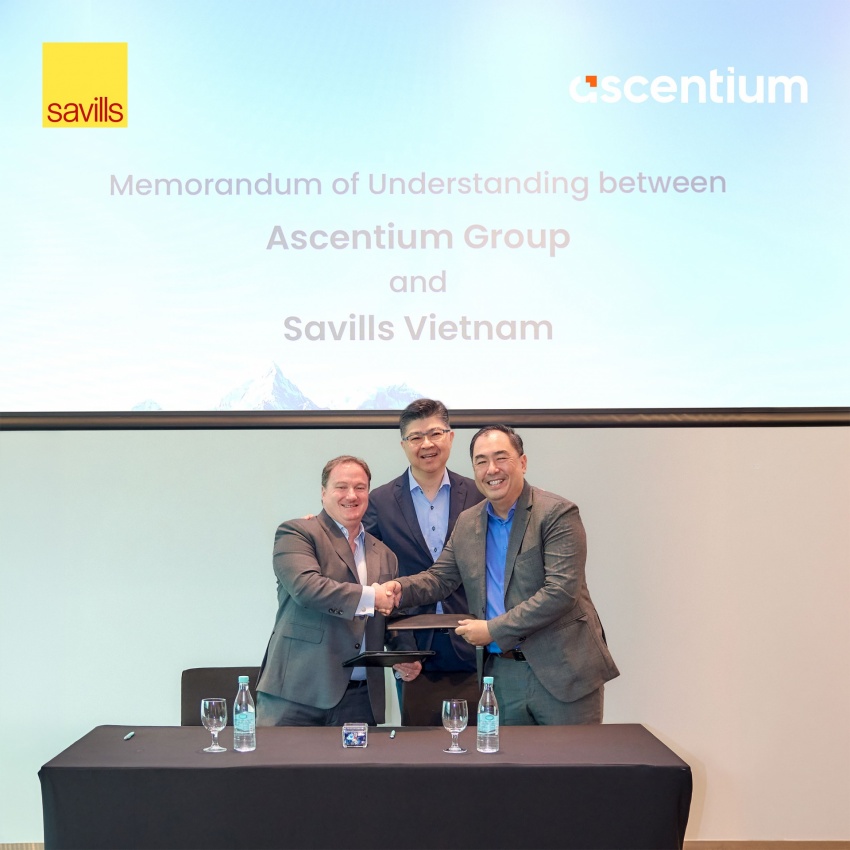
Speaking after signing two Memoranda of Understanding (MoUs), with real estate company Savills and the Vietnam China Business Council, leaders of the Ascentium Group and its Vietnam arm outlined how integrated administrative support, combined with the country’s demographic and geographic advantages, is shaping the next wave of manufacturing investment.
Building a full-service ecosystem
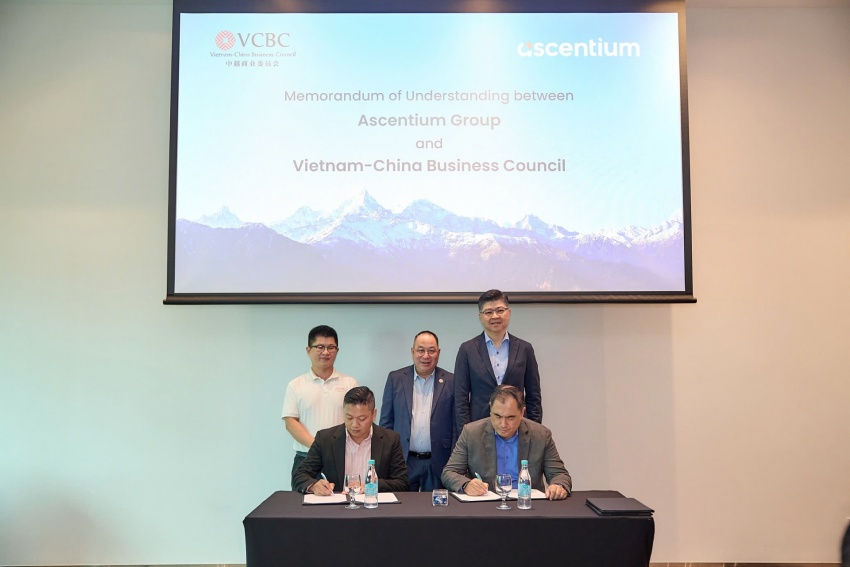
Mr. Lennard Yong, Group CEO of Ascentium, said the two MoUs reflect a deliberate growth strategy centered on serving multinational manufacturers from entry to operation. “One of the primary considerations when multinational companies enter Vietnam is manufacturing,” he said. “Partnering with a real estate company that focuses on industrial property makes sense because we serve the same client base. Savills helps companies find industrial real estate and factory premises, while Ascentium handles financial administration, hiring workers, securing factory licenses, and liaising with local government authorities.”
The partnership with the Vietnam China Business Council reflects a parallel trend: the relocation of Chinese manufacturing to Vietnam over the past five years.
“Manufacturing hubs such as Shenzhen and Dongguan are only about 24 hours by truck from northern Vietnam,” Mr. Yong noted. “Depending on a factory’s location, it is often just one or two hours to Hai Phong Port, a deep-water seaport from where goods are exported worldwide.”
Ascentium itself operates as an administration company rather than a property company, helping foreign investors navigate rules that often catch newcomers off guard.
“Foreign companies entering Vietnam often don’t fully understand local laws and regulations,” he explained. “Salary levels are determined by provincial governments, and social security contributions, medical taxes, and regulatory requirements vary from locality to locality.”
American or Chinese companies, he added, frequently assume the market operates uniformly, without realizing these regional distinctions. Ascentium’s role is to handle payroll, accounting, and corporate setup so investors can focus on factory operations without compliance issues. The company currently operates across 27 countries and territories, with a US team and 13 offices in China supporting businesses expanding into ASEAN destinations including Vietnam, Malaysia, and Indonesia.
Mr. Yong pointed to a fundamental shift in why manufacturers choose Vietnam. “Ten or 20 years ago, most manufacturers came to Vietnam after simply comparing factory worker wages against Mexico, China, and Indonesia,” he said. “Today, the average age in Vietnam is 34-35, and the country has many universities producing highly-educated graduates.”
As the workforce becomes more skilled, wage expectations rise accordingly, and companies increasingly build out industrial ecosystems that leverage this quality rather than chase the lowest cost. “Ascentium’s role is to introduce Vietnam with an updated value proposition, focusing not just on cost but on the broader ecosystem, workforce quality, education, and a loyal, young workforce,” he said.
On how FDI and domestic enterprises can grow together, Mr. Yong pointed to government policy covering around ten high-value sectors, including the Vietnam International Financial Center (VIFC), semiconductors, microelectronics, AI, renewable energy, financial services, pharmaceuticals, and green industries.
“This policy framework encourages Vietnamese corporations to invest alongside foreign capital, creating an environment where both sides jointly build the industrial ecosystem,” he said, adding that employees trained at foreign companies often carry that knowledge into local companies, elevating the broader domestic economy over time.
Ascentium’s confidence in the market is reflected in its own expansion. “Within ASEAN, we view Vietnam as the top economy for foreign investment, followed by Indonesia and Thailand,” Mr. Yong said. Over the past three years, the company’s local headcount has doubled from 75 to 150 employees, with full offices now operating in Ho Chi Minh City, Da Nang, and Hanoi.
Drawing on data from supporting around 60,000 companies globally, Mr. Yong outlined three structural strengths behind Vietnam’s ranking: forward-thinking governance focused on structured planning and economic stability; favorable demographics, with most of the population born after 1990 and a strong pipeline of professional and technical graduates; and strategic geography, with flat terrain and extensive river and delta networks that simplify large-scale manufacturing construction compared to mountainous regional hubs.
On economic stability specifically, he pointed to the planned VIFC as a major step forward. “Plans to offer initial zero tax rates followed by discounted tax brackets for individuals and corporations will actively attract FDI, venture capital, and private equity firms,” he said.
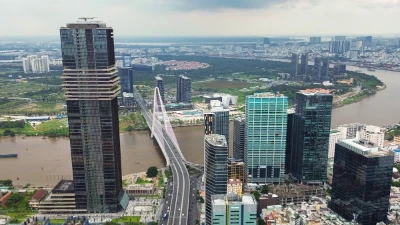
Currently, many regional investment decisions are finalized in Singapore or Hong Kong (China) before capital flows into Vietnam. A functioning local financial center, supported by free capital flow, flexible foreign exchange frameworks, and transparent dividend repatriation, would allow those decisions to be made directly from Ho Chi Minh City.
One-stop-solution, from licensing to payroll
Mr. Jack Nguyen, CEO of Ascentium Vietnam, said the company’s recent rebrand under its global parent name is a strategic move. “Now we take on the name of our group parent company, which is a global, multi-country company,” he said. “That will help us go to market with more confidence and credibility when we speak to clients,” while also raising its profile in Vietnam.
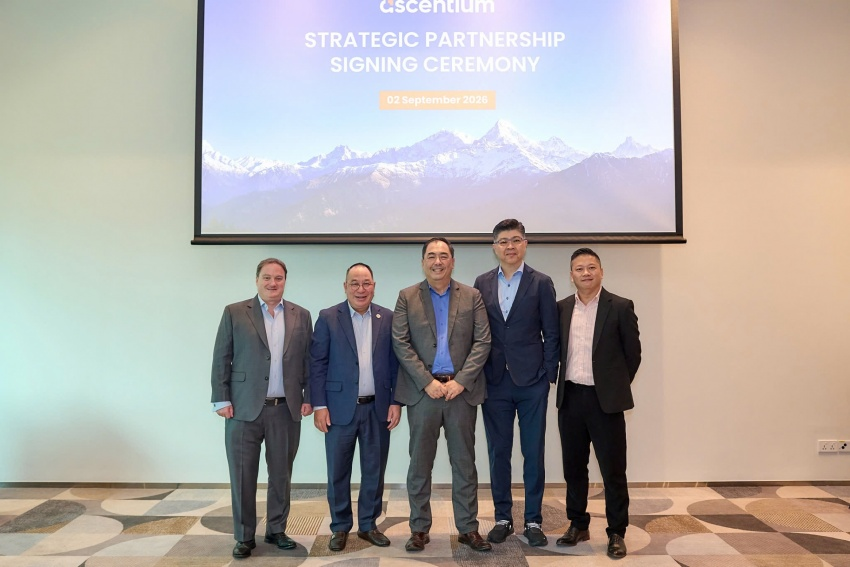
Describing the breadth of services on offer, Mr. Nguyen said market entry remains the company’s core focus. “We help foreign manufacturers set up in Vietnam” through market research, licensing, and incorporation, he explained, alongside compliance and human resources support. “We like to think of ourselves as a one-stop-solution for manufacturers and other foreign investors coming into Vietnam.”
As manufacturing spreads beyond traditional hubs such as Bac Ninh and Binh Duong, Mr. Nguyen said location decisions hinge on several factors. “They need to look at what they are manufacturing and where they can find the right labor supply to support hiring and production,” he said, noting that the south’s larger population offers greater labor availability. Government incentives are another consideration, with current policy prioritizing high-tech and green companies for strong tax benefits, alongside the strength of the local supply chain ecosystem for a given sector.
On Vietnam’s shift toward higher-value investment, Mr. Nguyen pointed to sustained investment in vocational and engineering education. “There has been a lot of investment in schooling, vocational training, and engineering education to develop the right skill sets for Vietnamese technicians and engineers to work in these high-tech manufacturing companies,” he said, calling it “a very good priority.”
He described the company’s internal workflow as fully integrated across three phases: market entry teams handle licensing and incorporation, after which compliance, accounting, tax, and payroll functions take over. “It’s the first phase, the second phase, and the third phase. It’s all integrated,” he said.
Looking ahead, Mr. Nguyen said Ascentium Vietnam’s scale reflects its confidence in the market’s trajectory. “Ascentium Vietnam is now one of the biggest, if not the biggest, corporate service providers in Vietnam,” he said. “We are investing in Vietnam because we believe there will be continuous growth over the next five, ten, and 15 years, especially with GDP growth at around 10 per cent a year.”
That trajectory, he added, will create substantial opportunities for the company to serve clients both new to Vietnam and already established in the market.


 Google translate