


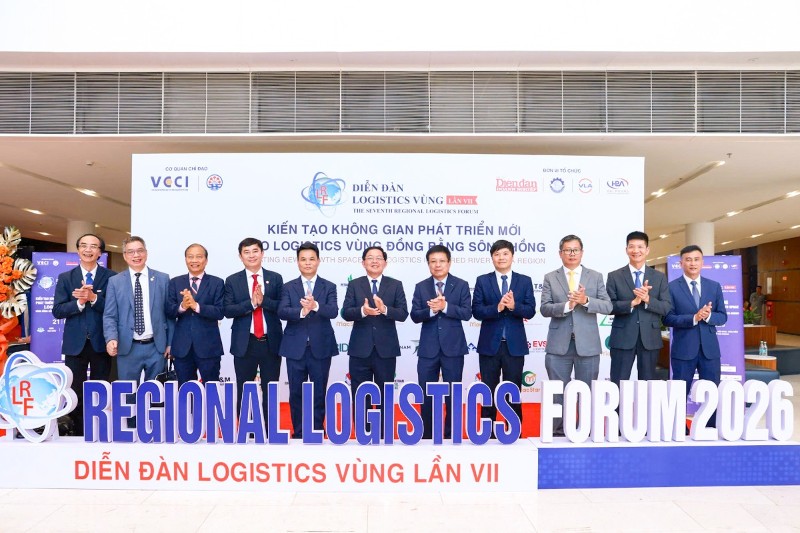
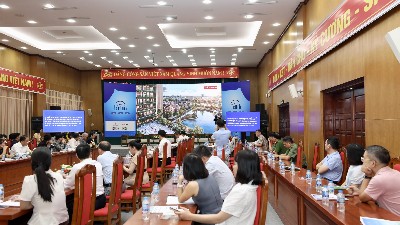
The 7th Regional Logistics Forum 2026, jointly organised by the Hai Phong People’s Committee and the Vietnam Chamber of Commerce and Industry (VCCI) on September 21, focused on the theme “Creating a New Development Space for Logistics in the Red River Delta.”
Speaking at the forum, Deputy Prime Minister Ho Quoc Dung said that as trade volumes and supply chains continue to expand, logistics is no longer simply a supporting service but an important component of economic infrastructure, directly affecting the competitiveness of goods, businesses and the wider economy.
Vietnam’s logistics sector is growing by an average of 14–16% annually and contributes around 4.5–5% of GDP. Logistics costs have fallen from more than 20% of GDP in 2014 to about 16% today. The country currently has more than 34,000 logistics enterprises.
However, freight transport remains heavily dependent on road transport, while multimodal connectivity is still limited. In the Red River Delta, logistics land remains constrained, warehousing facilities are fragmented, and connections with inland container depots and other modes of transport have yet to meet demand.
The Deputy Prime Minister called for a shift from development based on administrative boundaries toward an approach centred on economic spaces, economic corridors and supply chains. Hai Phong, as an international maritime gateway and a major logistics hub in northern Vietnam, has an important role to play, particularly through Lach Huyen Port, Nam Do Son, the Dinh Vu–Cat Hai Economic Zone and the Free Trade Zone.
Under Vietnam’s Logistics Services Development Strategy for 2025–2035, with a vision to 2050, the country aims to maintain average logistics-sector growth of 12–15% annually, gradually reduce logistics costs to around 12–15% of GDP, and raise the sector’s value-added contribution to 5–7% of GDP. The strategy also prioritises digital and green transformation and the development of modern logistics centres.


 Google translate