


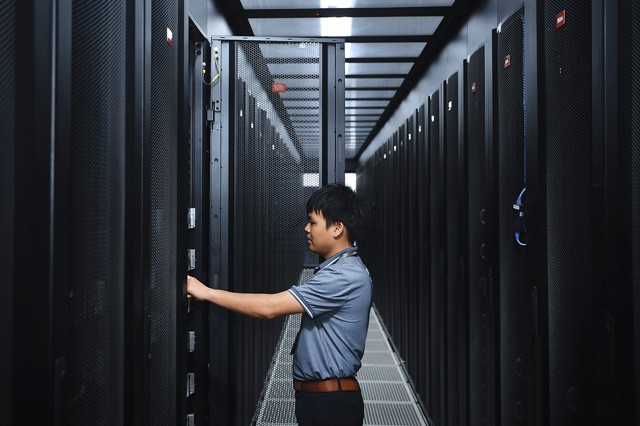
Vietnam is entering a new phase of FDI attraction, as longstanding advantages in labor and costs are no longer sufficient to draw high-tech projects. The next wave of FDI is expected to focus more on sectors with high technology and value-added content, such as semiconductors, biotechnology, digital transformation, AI, and data centers.
For this to happen, experts believe that alongside infrastructure, human resources, and technology, Vietnam needs to develop a complete industrial ecosystem encompassing R&D, education, services, domestic suppliers, and support enterprises.
High-tech FDI wave
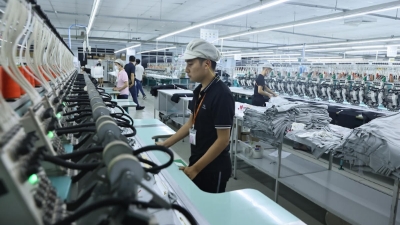
Over the course of many decades, Vietnam established itself as an attractive manufacturing destination in Asia thanks to its accessibility, connectivity, and labor advantages. However, as FDI enters a new phase, these advantages are gradually becoming insufficient.
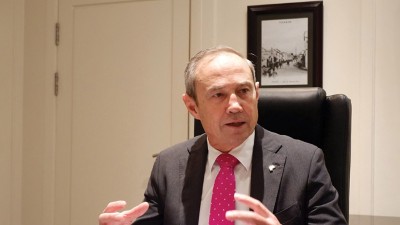
According to Mr. Björn Koslowski, Deputy Chief Representative of the Delegation of German Industry and Commerce in Vietnam (AHK Vietnam), Vietnam’s investment attraction story is no longer centered solely around labor cost competitiveness, but is shifting toward factors such as productivity, technology adoption, infrastructure quality, access to skilled workers, and the ability to build domestic supply chains. “In other words, attracting investment is only the first step,” he said.
Mr. Marcel Klingemann, General Director of the LPKF Vietnam LLC, said the country has spent around 25 years attracting FDI, beginning with the first waves of investment into Binh Duong and Dong Nai provinces near Ho Chi Minh City before expanding into northern provinces, with labor advantages serving as the primary foundation.
However, he continued, Vietnam is now undergoing a significant shift as the government places greater emphasis on innovation and technology. He said Politburo Resolution No. 57-NQ/TW formed part of the country’s direction for identifying the technologies and industries that should be prioritized in the next phase.
Vietnam has already made initial progress in attracting several high-tech industries, particularly in the north, he went on. The next wave of FDI is expected to focus more on sectors with high technology and value-added content, such as semiconductors, biotechnology, digital transformation, AI, and data centers. Semiconductors are particularly notable, as Vietnam is seeking to move beyond assembly and packaging into higher-value stages of the production chain.
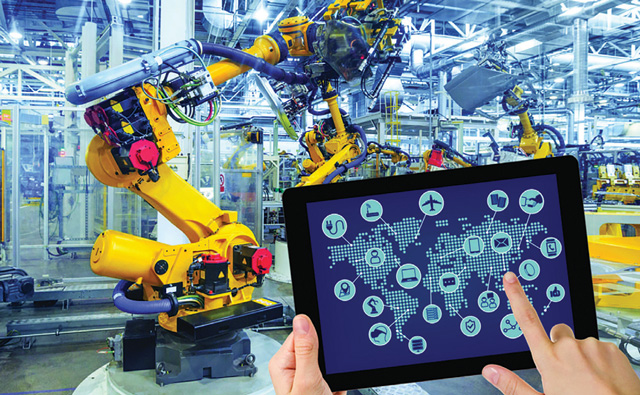
However, Mr. Klingemann also pointed to existing gaps, saying they are not merely individual challenges for businesses but reflect broader structural issues. “Looking at the overall structure of the Vietnamese economy, you can see that labor-intensive industries still account for a very large share, while there is yet to be many manufacturing- and technology-intensive industries located here,” he said. In his view, this is one of the weaknesses Vietnam needs to address if it wants to attract more high-tech investment in this next wave.
Beyond traditional IPs
Changing investor requirements are also reshaping the industrial park (IP) model. According to Ms. Phung Thi Thanh Loan, Senior Leasing Manager, Industrial & Logistic Services, at CBRE Vietnam, the country is in a transitional phase. Some leading IP developers have invested in technical infrastructure and are ready to accommodate high-tech investors, with sites prepared to standards suitable for semiconductor and other high-tech projects.
These developers are not simply providing industrial land but are also helping investors manage risks, particularly given the stringent requirements of high-tech industries. For example, power supply must not only be sufficient in volume but also reliable and stable. Other requirements include utilities, services, and sustainability standards. Meanwhile, conventional IPs are still upgrading their infrastructure to improve utility reliability and meet environmental, social, and governance (ESG) requirements.
According to Mr. Thomas Rooney, Director of Pacific Land Vietnam, the shift goes beyond upgrading individual IPs. The market is moving from a conventional IP model toward “innovation ecosystems.”
Previously, land, infrastructure, costs, and logistics could be the main criteria investors considered when choosing a location. For high-tech projects, however, these factors are no longer enough. “Companies need an overall ecosystem where workers can live, and where businesses can find skilled labor from nearby universities,” Mr. Rooney said. IPs are no longer simply places to locate factories. They need to connect manufacturing, research, talent, services, and daily life.
Mr. Klingemann said local and central authorities need a clear vision of the ecosystems they want to build, including whether to attract education, healthcare, and other support services. “When we talk about high-tech, high-value industries, it is not simply about selling land; there are many services that need to be provided around it,” he explained. This also creates new requirements for planning. As higher-value industries develop, industrial land may no longer account for the majority of space as it does in traditional IPs. More space may need to be allocated to commercial and service functions and other elements of the ecosystem.
Strengthening domestic supply chains

Low labor costs may initially attract investors to Vietnam, but it is the capabilities and supply chain ecosystem that will keep them here.

If infrastructure and ecosystems are conditions for attracting investors, the capabilities of domestic businesses will determine how much value Vietnam can retain from high-tech FDI. Mr. Klingemann said one of Vietnam’s top priorities should therefore be improving localization rates and increasing domestic content in manufacturing. When high-tech companies establish operations in Vietnam, they need to be able to leverage local suppliers.
Ms. Loan shared this view, noting that Vietnam still imports many high-value components. For high-tech industries, this dependence creates a risk for investors, so Vietnam needs to offer more supplier options domestically.
One important direction is to strengthen the technical capabilities of small and medium-sized enterprises (SMEs), particularly through education and technology transfer, so that Vietnamese companies can gradually become Tier 1 and Tier 2 suppliers to high-tech corporations. “Low labor costs may initially attract investors to Vietnam, but it is the capabilities and supply chain ecosystem that will keep them here,” she said.
This is also why the talent challenge cannot be separated from the supply chain challenge. According to Mr. Klingemann, if Vietnam wants to move toward high-tech industries, it needs to invest more in education and talent, particularly technical skills developed through universities. At the same time, it should focus more deeply on selected industries rather than spreading resources too thinly, thereby strengthening its ability to compete with Thailand, Indonesia, and other countries in the region.
Experts emphasize that the next FDI wave is not simply about how many more projects or how much more capital Vietnam can attract. The larger question is whether the country can build a sufficiently complete ecosystem for those projects to grow, expand, and become more deeply integrated with the domestic economy. This will require simultaneous changes across multiple levels, from IP planning, infrastructure, and energy to education, talent, investment incentives, and the capabilities of domestic businesses.
“As FDI gradually shifts from labor-intensive industries toward semiconductors, AI, biotechnology, data centers, and other high-tech sectors, Vietnam’s advantages also need to be redefined,” Mr. Koslowski said. He emphasized that Vietnam needs to become a place where factories can find talent, suppliers, R&D capabilities, and an ecosystem with the capacity to support long-term growth.
![[Interactive]: Economic overview - September 2026](https://premedia.vneconomy.vn/files/uploads/2026/10/06/9e0f403040dd4384ad690004bc1911ab-124594.png?w=400&h=225&mode=crop)


 Google translate