


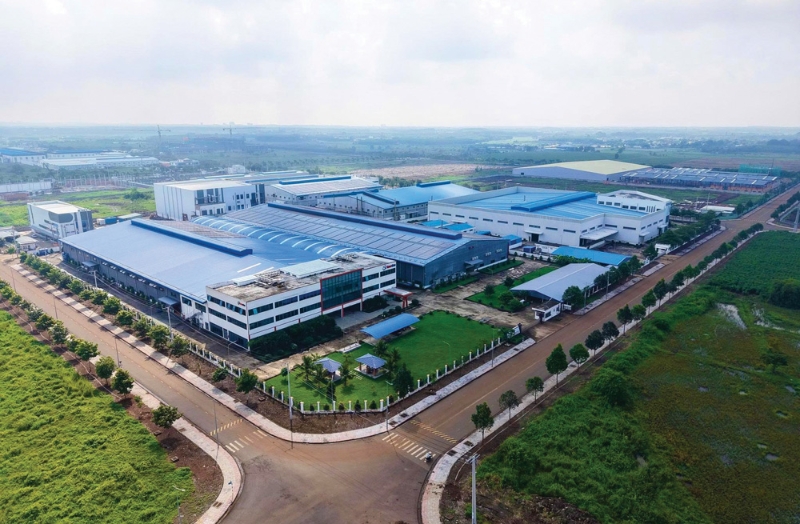
The latest report from the Ministry of Construction indicates that Vietnam’s industrial real estate market maintained its positive momentum in the opening quarter of 2026, with both rental prices and occupancy rates remaining high. In northern Vietnam, industrial land rents ranged from $90 to $250 per sq m per lease term, with occupancy rates above 80 per cent. Rents in the central region stood at $70 to $120 per sq m, while those in southern Vietnam ranged from $185 to over $280 per sq m, with occupancy exceeding 90 per cent.
Nationwide, rents for ready-built factories and warehouses also edged upwards. Data from DTJ Industrial showed that industrial real estate rents increased by 3-6 per cent year-on-year in the first quarter.
Rising supply, rising rents
According to JLL, the market is expanding in both scale and value. Northern Vietnam currently has nearly 13,000 ha of industrial land across more than 70 operational industrial parks, with new supply in the first quarter exceeding 100 ha. Occupancy stood at 82 per cent, and the cumulative leased area rose to 10,400 ha, up 5 per cent year-on-year. Leading developers, including Kinh Bac City, Deep C, Viglacera, Rox iPark, and VSIP, account for nearly half of developed land.
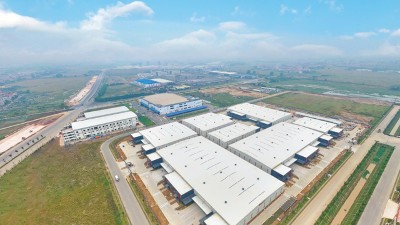
The ready-built factory segment reached more than 3.6 million sq m across 91 projects, up 14 per cent compared with a year earlier. New supply in the first quarter totaled 159,000 sq m, while occupancy stood at 87 per cent, with leasing activity concentrated in Bac Ninh province and Hai Phong in Vietnam’s north. Rental rates ranged from $4 to $7.1 per sq m per month, reflecting a 4 per cent increase year-on-year.
Modern ready-built warehouses in the north reached a total supply of 2.2 million sq m, representing a 1.7-fold increase year-on-year. The market recorded an additional 162,000 sq m of new warehouse space in the first quarter, including the entry of South Korea’s JIEL Group through the JEIL Logistics Hai Phong project. Average rents climbed to $5.1 per sq m per month, up 10 per cent year-on-year and marking the strongest growth among the three segments.
In the south, the ready-built warehouse segment also posted a positive start to the year. Nearly 50,000 sq m of new supply entered the market in the first quarter, primarily in Dong Nai province, bringing total supply to some 2.5 million sq m. Rental levels rose 0.5 per cent quarter-on-quarter, to $5.07 per sq m per month. Growth was mainly driven by high-quality projects with strong occupancy, while most of the market remained stable or adopted flexible pricing strategies to optimize leasing performance.
Demand continues to come from a diverse range of tenants, including manufacturers, retailers, and e-commerce companies serving both the domestic and export markets. However, occupiers are becoming more selective, prioritizing logistics facilities with strong connectivity, completed infrastructure, and high operating standards in order to optimize costs and improve supply chain efficiency. This shift reflects a growing focus on quality assets and strategic locations, particularly in established industrial parks linked to Ho Chi Minh City and key seaports.
Strategic manufacturing and logistics hub
Despite the global uncertainties, Vietnam remains a strategic destination for manufacturing and logistics. Industrial real estate activity continues to be supported by stable macro-economic conditions, expanding FDI, and ongoing improvements in infrastructure.
Ms. Nguyen Hong Van, Head of Transactions at JLL Vietnam, said geopolitical tensions have not weakened the market but have created short-term pressure through rising logistics costs, which in turn are influencing site selection decisions. Locations with well-developed infrastructure and strong connectivity are increasingly favored, while ready-built industrial properties are emerging as a cost-efficient solution.
Vietnam’s industrial and logistics market is also benefiting from global supply chain diversification and a sustained shift toward ready-built facilities. Investors from South Korea, Singapore, China, Japan, and Europe continue to expand operations, particularly in electronics, semiconductors, automotive components, and high-tech industries. “The availability of diverse real estate solutions, from industrial land to ready-built and build-to-suit facilities, allows manufacturers to enter the market at different scales and expand over time,” Ms. Van said.
According to Mr. Nguyen Quoc Khanh, Chairman of DTJ, several structural drivers are reinforcing market growth. Newly-registered FDI surged in the first quarter of 2026, with capital continuing to flow into manufacturing and processing.
At the same time, Vietnam is piloting next-generation free economic and trade zone models designed to attract high-quality investment through institutional innovation rather than traditional tax incentives. The Hung Yen Free Economic Zone, with a planned scale of 30,538 ha and total investment of $18 billion, has been approved at the provincial level and is moving toward submission to the central government. In Hai Phong, its free trade zone has entered the implementation phase, with a focus on integrating port, logistics, and industrial ecosystems.
Public investment in infrastructure is also accelerating. Major projects such as Ring Roads 4 and 5 in the Hanoi region, Gia Binh Airport, and the Hanoi - Ha Long high-speed railway are expected to strengthen supply chains in the Red River Delta and stimulate industrial real estate demand.
Infrastructure reshaping the market
Mr. John Campbell, Director of Industrial Services at Savills Vietnam, noted that with approximately 234 large-scale projects underway and total investment estimated at VND3,400 trillion ($130.8 billion), the country is entering a new phase of infrastructure-led growth. Key developments such as Long Thanh International Airport, metro systems in Hanoi and Ho Chi Minh City, and more than 380 km of newly-operational North-South expressways are opening new economic corridors and supporting the formation of integrated supply chain ecosystems.
Infrastructure development continues to play a central role in Vietnam’s industrial transformation. In the north, sectors such as electronics, semiconductors, and high-value manufacturing are being driven by sustained investment in seaports, expressways, and logistics networks. In the south, large-scale infrastructure projects are expected to reshape freight flows and support new development corridors, while improved transport links will strengthen interregional connectivity and the efficiency of goods movement.
Mr. Campbell said the market’s growth momentum is expected to strengthen over the course of 2026. Infrastructure rollout will open up new industrial clusters, while policies supporting high-value industries are likely to attract additional quality investment. At the same time, Vietnam’s digital capacity is expanding with the development of large-scale data centers, reinforcing the country’s competitive position as it shifts toward more advanced manufacturing and technology-driven supply chains.
The core of this transformation, he noted, lies in scaling up while improving quality, supported by alignment across infrastructure, technology, human capital, and policy. Future growth is expected to come from high-value industries that depend on stable energy supply, modern industrial and distribution systems, and integrated digital infrastructure.
Looking ahead, JLL expects rental rates in northern Vietnam to rise by 4-6 per cent annually, particularly in areas near seaports, airports, and major expressways. Occupancy is projected to remain high, with industrial land above 80 per cent, while factory and warehouse occupancy should improve from late 2026 as new supply is absorbed.

After years driven by rapid supply expansion, rising land prices, and strong manufacturing growth, the market is shifting from scale to quality, shaped by infrastructure upgrades, supply chain restructuring, improved products, and greater focus on operational efficiency.
The transition toward value optimization reflects stronger emphasis on sustainability and higher-quality solutions. Supported by Vietnam’s manufacturing base, expanding trade links, and continued appeal among foreign investors, demand for industrial land and ready-built assets remains solid, particularly in southern Vietnam, where occupiers increasingly prioritize resilience, efficiency, and strategic locations.
Within the Southern Key Economic Region, comprising Ho Chi Minh City, Tay Ninh, and Dong Nai, industrial land supply has reached 36,400 ha across 161 projects, alongside 6.6 million sq m of ready-built factories and 6.65 million sq m of warehouses. Over the past decade, land supply has increased by more than 80 per cent, while prices have risen over 120 per cent. Ready-built warehouses and factories have also recorded strong supply and rental growth.
By 2036, industrial land supply in the southern region is expected to reach at least 58,557 ha, with ready-built factory and warehouse supply projected at 7.76 million sq m and 7.31 million sq m, respectively. This pipeline will reinforce the region’s role as a key manufacturing and logistics hub.
The next phase of growth will be defined by quality rather than quantity, with infrastructure, product standards, operational efficiency, and sustainability playing a greater role. Demand is increasingly focused on well-planned assets, modern facilities, and locations that support both production efficiency and supply chain resilience.




 Google translate