


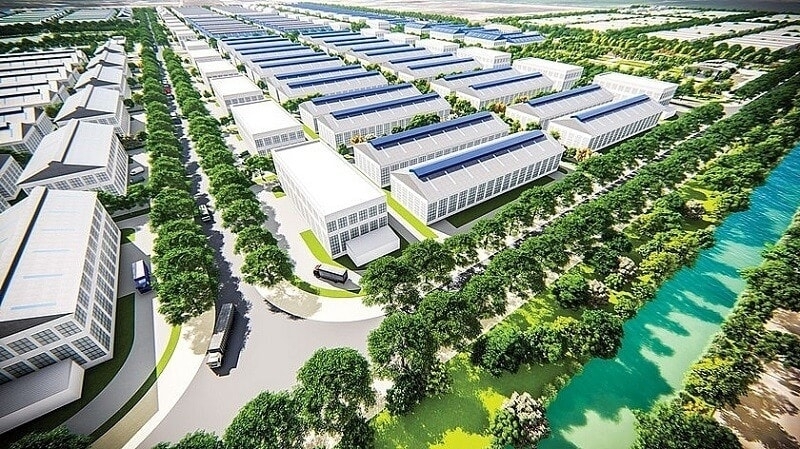
After navigating a period of global trade uncertainty and tariff-related headwinds, 2025 marked a turning point. Industrial land, ready-built factories (RBFs), and logistics assets are no longer expanding simply to accommodate volume demand. Rather, the market is being reshaped by the requirements of scale, efficiency, sustainability, and long-term competitiveness.
Research from market consultants converge on a clear message: Vietnam is moving beyond its role as a low-cost manufacturing base and positioning itself as a regional hub for higher-value, more capital-intensive production. This evolution is redefining industrial real estate demand across the country’s key economic zones.
Stronger macro foundation
Vietnam’s macro-economic performance in 2025 has created a solid foundation for industrial real estate demand. According to JLL, GDP grew 8 per cent year-on-year; the fastest rate in ASEAN, with authorities targeting double-digit growth in the 2026-2030 period. This momentum has been supported by resilient domestic demand, a rebound in global manufacturing orders, and improving export conditions.
JLL also reported that registered FDI totaled $38.4 billion last year, while disbursed capital hit $27.6 billion; the highest level in five years and up 9 per cent year-on-year. Manufacturing and processing remained the dominant recipients, reflecting Vietnam’s entrenched role in global supply chains.
Trade performance further underpinned industrial activity. According to the National Statistics Office (NSO) under the Ministry of Finance, total import-export turnover stood at $762.44 billion in the first ten months of 2025, up 17.4 per cent year-on-year. Exports rose to $391 billion, driven by electronics, computers, machinery, and other high-value manufactured goods, while imports climbed 18.6 per cent, reflecting strong demand for machinery, components, and production inputs. Vietnam recorded a trade surplus of $19.56 billion in the ten-month period, underscoring its strengthening role within regional and global production networks.
Public investment has reinforced this macro stability. JLL pointed to the government’s prioritization of large-scale infrastructure projects, including Long Thanh International Airport in the southern region, Ring Road 3 in Ho Chi Minh City, expressway corridors linking key localities, and major port upgrades. These projects are easing logistics friction, expanding the practical reach of industrial parks, and reshaping location strategies for manufacturers and logistics operators.
Institutional reforms have also improved investor confidence. JLL highlighted ongoing efforts to streamline local administration, implement new legal frameworks on land and data, and strengthen national infrastructure planning. Together, these measures enhance transparency, predictability, and long-term investment visibility, which are critical factors for capital-intensive industrial projects.
Industrial and logistics real estate has emerged as one of the most direct beneficiaries within this macro-economic context. While occupiers have become more disciplined and selective, demand for modern industrial space remains structurally strong, particularly for assets aligned with long-term production strategies.
More selective market
Despite a sharp increase in supply, Vietnam’s industrial property market continued to demonstrate resilience in 2025. Savills estimates that total operating industrial park land nationwide reached 38,200 ha in the second half of 2025, with the Southern Economic Zone (SEZ) accounting for 67 per cent and the Northern Economic Zone (NEZ) 33 per cent. Overall occupancy remained high, at 88 per cent, up from 86 per cent a year earlier, indicating that demand has broadly kept pace with new supply.
Average industrial land prices reached $175 per sq m per lease term nationwide. The northern region remained approximately 27 per cent cheaper than the south, reflecting differences in infrastructure maturity, tenant mix, and proximity to ports and consumption centers. JLL similarly reported that industrial land rents in key southern markets ranged from $100 to $310 per sq m per lease cycle, even as new land entered the market.
Ready-built products continued to outperform. Savills reports that national RBF and warehouse supply expanded to 17.1 million sq m, up 13 per cent year-on-year, with the south accounting for 70 per cent of total stock. Overall occupancy climbed to 89 per cent, a sharp improvement from 80 per cent in 2024, while average national rents reached $4.7 per sq m per month.
Cushman & Wakefield’s Q4 2025 Industrial MarketBeat reinforced this trend, particularly in the southern region, where the recovery has become more visible across both the land and ready-built segments. Total RBF supply in the region reached approximately 6.6 million sq m, with occupancy consistently above 90 per cent across core and satellite markets.
Net absorption in the fourth quarter alone exceeded 73,000 sq m, driven largely by multinational manufacturers in precision engineering, fabricated metals, construction materials, and consumer-related production, many of which favored ready-built facilities to shorten setup timelines and limit upfront capital expenditure. “After a period of adjustment driven by tariff pressures and global trade uncertainty, southern Vietnam’s industrial market is clearly entering a recovery phase,” said Ms. Doan Chuong, Senior Manager, Industrial Leasing, at Cushman & Wakefield Vietnam.
While occupiers remain cautious in the short term, demand fundamentals are strengthening, particularly for well-located industrial land, ready-built factories, and modern logistics facilities that enable faster market entry and operational efficiency. “This renewed activity reflects how manufacturers are recalibrating supply chains, prioritizing flexibility, cost optimization, and ESG [environmental, social, and governance] compliance, and positioning Vietnam as a long-term production and logistics hub within regional and global networks,” Ms. Chuong added.
Logistics assets in the south remained tight, especially in core locations. Cushman & Wakefield noted that ready-built warehouse (RBW) occupancy in Ho Chi Minh City approached full capacity, pushing demand outward into Dong Nai and Tay Ninh provinces, where developers are increasingly positioning modern warehouse projects along expressway corridors and near cross-border trade routes. This spillover is reinforcing the role of secondary markets within southern Vietnam’s logistics ecosystem, particularly as transport infrastructure improves.
A similar pattern is unfolding in northern Vietnam, albeit at a different stage of the cycle. Cushman & Wakefield reported that as of the end of the fourth quarter of 2025, total accumulated RBF supply in the north reached approximately 5.29 million sq m, up more than 22 per cent year-on-year, reflecting an aggressive wave of new project launches in Hai Phong, Bac Ninh, and emerging satellite provinces such as Ninh Binh and Phu Tho. Despite the surge in supply, absorption remained robust, with net take-up of nearly 190,000 sq m in the fourth quarter, a 47.6 per cent increase compared with the same period of 2024.
Regional RBF occupancy in northern Vietnam climbed to 86 per cent, confirming that demand has kept pace with new completions. Hanoi continued to record near 100 per cent occupancy due to land scarcity, while surrounding industrial hubs such as Hung Yen (95 per cent), Ninh Binh (90 per cent), and Hai Phong (87 per cent) benefited from tenant decentralization and improving transport links. Average RBF rents held steady at around $5 per sq m per month, suggesting a balanced market where strong demand is being met by timely new supply.
The northern logistics market also showed notable improvement. Total RBW supply reached approximately 3.58 million sq m, with occupancy rising sharply to 83 per cent as of the end of the fourth quarter. Demand was concentrated around Hai Phong’s port-led logistics clusters and key expressway nodes, driven by electronics manufacturers, support industries, and third-party logistics operators serving export-oriented supply chains.
“We are seeing a more selective phase of decision-making from occupiers,” said Mr. Thuan Nguyen, Director of Leasing, Cushman & Wakefield Vietnam. “Beyond pricing, investors are prioritizing locations that offer long-term scalability, infrastructure certainty, and regulatory clarity. Provinces with large land banks and improving connectivity are therefore well positioned to benefit as manufacturers plan not only for initial market entry but for expansion over the next five to ten years.”
Across both regions, occupier behavior is clearly evolving. Cushman & Wakefield observed that tenants are placing greater emphasis on infrastructure certainty, ESG compliance, digital readiness, and expansion flexibility, rather than purely on rental costs. This shift is prompting developers to upgrade technical specifications, introduce automation-ready layouts, and integrate greener design standards into industrial parks and ready-built products, accelerating the market’s move away from commoditized industrial space towards higher-quality, future-ready assets.
From cost advantage to capability
Beyond cyclical recovery, the most significant change is structural. A Savills whitepaper argues that Vietnam is transitioning from labor-intensive, low-margin manufacturing towards larger, more advanced, and more capital-intensive production. “This year isn’t just about new investment; it’s about the scale and quality investors demand,” said Mr. John Campbell, Head of Industrial Services at Savills Vietnam. “Vietnam is entering a phase where capability matters as much as cost.”
This shift is clearly reflected in regional dynamics. In the NEZ, Savills reported that newly-registered manufacturing FDI stood at approximately $4.3 billion in the first ten months of 2025, accounting for 55 per cent of national manufacturing FDI. Bac Ninh led, with $1.1 billion, followed by Hai Phong with $820 million, driven largely by electronics, electrical equipment, and fabricated metal projects.
Northern industrial land occupancy averaged 86 per cent, up from 78 per cent a year earlier, while average land prices reached $141 per sq m per lease term. RBF and warehouse supply totaled 4.5 million sq m, with occupancy at 80 per cent and average rents around $5 per sq m per month. The region benefits from larger land banks and competitive pricing, as well as strong export connectivity through ports such as Lach Huyen.
The SEZ, meanwhile, remains Vietnam’s most mature and diversified industrial base. Savills estimated that the south accounted for approximately $2.9 billion, or 36 per cent, of newly-registered manufacturing FDI in the first ten months of 2025, led by fabricated metals, electrical equipment, textiles, and consumer-related manufacturing. Industrial land occupancy reached 90 per cent, while average land prices climbed to $193 per sq m per lease term, with Ho Chi Minh City recording the highest levels.
Infrastructure continues to reinforce these regional roles. In the north, port expansion at Lach Huyen, combined with expressway and Ring Road development, is strengthening export-oriented manufacturing and high-tech investment. In the south, Cai Mep-Thi Vai remains one of Southeast Asia’s most important deep-water port complexes, while the upcoming Long Thanh International Airport is expected to further integrate manufacturing, logistics, and high-value supply chains.
“The NEZ continues to benefit from Vietnam’s most synchronized port - expressway - airport network, and new investments are set to deepen that strength,” said Mr. Matthew Powell, Director of Savills Hanoi. “With the expansion of Lach Huyen Port and Ring Road 4 moving forward, the region is solidifying the infrastructure that underpins its high-tech and logistics competitiveness. These upgrades may be quieter than those in the SEZ, but they reinforce a clear advantage: dependable, scalable connectivity.”
As global manufacturers recalibrate supply chains for the next decade, Vietnam’s ability to deliver not just land and buildings but future-ready industrial environments will determine its competitive edge. With fundamentals strengthening and the shift to scale gaining momentum, the country’s industrial property market appears well positioned to sustain growth well beyond 2025.






 Google translate