Vietnam’s residential real estate market is expected to see positive shifts in the second quarter of 2026, with new supply increasing significantly compared to the beginning of the year.
Ho Chi Minh City has authorized districts to renovate old apartments built before 1975. Figures from the city’s Department of Construction show that it has 474 old apartment blocks of such vintage, but many lack investment for renovating or rebuilding. The city aims to complete renovations this year.
Capital needs are increasing in many economic sectors in Vietnam but businesses continue to have difficulties with access as banks have restricted credit. Needs in the real estate sector are the highest, and 80-85 per cent of capital in real estate businesses come from loans.
The Phu Yen Provincial People’s Committee has requested that the consulting unit soon complete a proposal for an urban development area along the two banks of the Ba River. An area of more than 22,000 ha in the south-central province will receive investment in the construction of highlight projects such as islands, symbolic bridges, eco-tourism, a health rehabilitation center, a wildlife sanctuary, and golf villas.
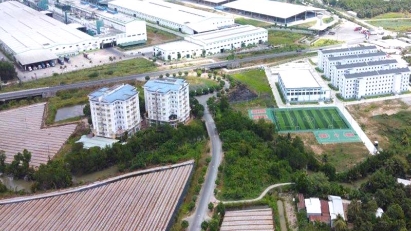
The Binh Thuan Provincial People’s Committee has approved a housing development plan for the 2021-2025 period that focuses on social housing and housing for workers at industrial parks. The south-central province is striving to have an average housing area of 27 sq m per person by 2025.
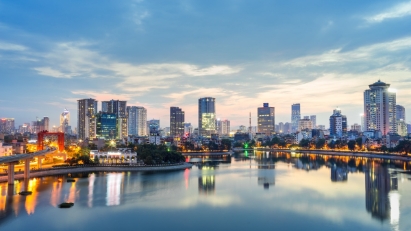
Analysts at Savills Hanoi believe that the solid recovery of Vietnam’s economy has aided the recovery of Hanoi’s commercial real estate market. Grade A office rents now stand at a ten-year high.
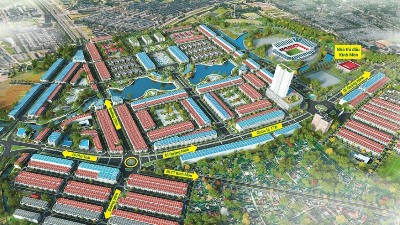
The objective of planning for the Cam Lam New Urban Area on nearly 55,000 ha in south-central Khanh Hoa province is to develop an airport urban area in combination with a global financial-intelligence and innovation center, and to build the world’s leading entertainment and shopping center and paradise resort. The population in the Cam Lam New Urban Area is tipped to be 320,000 by 2030 and 770,000 by 2045.