


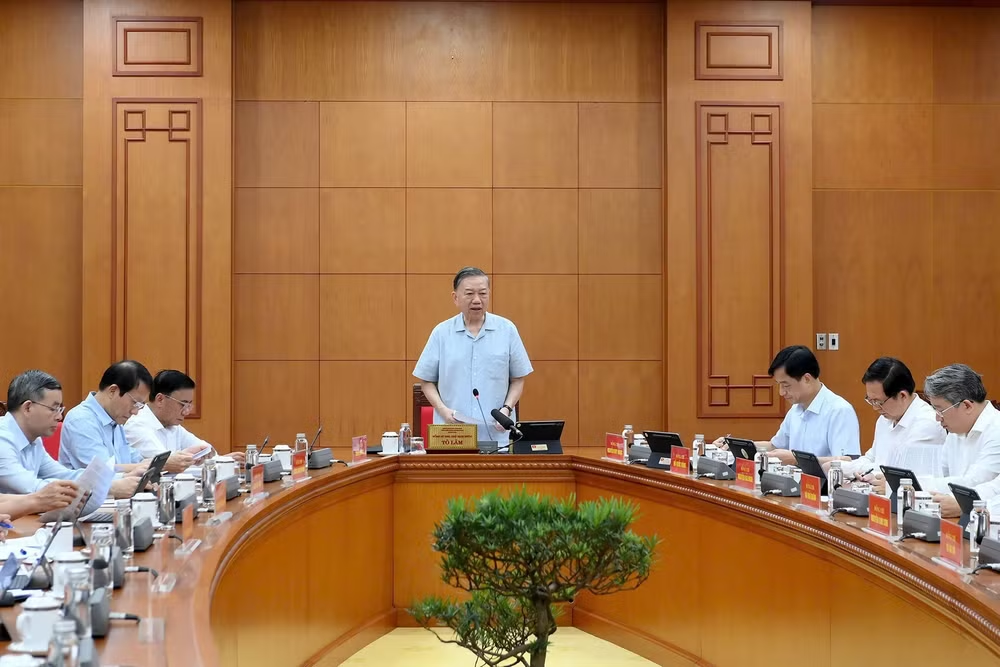
Quantum technology must be closely linked with national security, national data protection, the semiconductor industry, artificial intelligence (AI), space technology, and other strategic technological sectors, stated Party General Secretary and President To Lam.
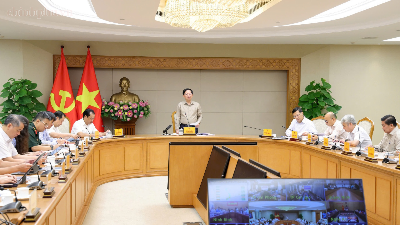
He made the statement while chairing a meeting of the Standing Board of the Central Steering Committee for Science, Technology, Innovation, and Digital Transformation on May 21. The session focused on the project "Research, Application, and Development of Quantum Technology for Socio-Economic Development, National Defense, and Security."
"If these objectives are decoupled, quantum technology could easily become an expensive research program that fails to translate into actual national power," said the top leader who also serves as Head of the Steering Committee.
The General Secretary and President noted that quantum technology is a nascent, complex, and rapidly evolving field. It is directly linked to science and technology, national security, strategic industrial digital transformation, and the long-term competitiveness of the nation.
The leader emphasized the need for deeper, more systematic, and more strategic research to finalize the quantum technology development project for the upcoming period. This initiative must serve national development goals while remaining anchored in strategic autonomy.
He stressed the necessity of a unified perception: quantum technology is a matter of national strategy, not merely a subject of scientific research. Its development must be integrated into the implementation of Politburo Resolution 55 and the national development strategy in the new era.
He noted that Vietnam must select a path suitable for its practical conditions, step-by-step building substantive capacity in areas where the country can participate and master the technology. Top priority must be given to national security and digital sovereignty, ensuring proactive defense "from early on and from afar."
Furthermore, he called for international cooperation in the quantum field to be strong, selective, and substantive. The goal of such partnerships should be to enhance Vietnam’s self-reliance and avoid forming new technological dependencies.
Establishing a quantum innovation ecosystem
The General Secretary and President directed that investment must be focused and impactful, avoiding fragmented or scattered resource allocation. This involves establishing strong research centers, key laboratories, and elite research groups, along with an effective coordination mechanism between research institutes, universities, enterprises, and defense-security agencies.
He placed particular emphasis on the role of human resources and the innovation ecosystem. He called for a national training program for quantum technology personnel, including special mechanisms to attract and utilize talent. This includes building strong domestic research groups and attracting overseas Vietnamese scientists to contribute to the nation's quantum capabilities.
Alongside promoting basic research, Mr. Lam urged the formation of a "quantum innovation ecosystem" involving the State, research institutes, universities, businesses, and defense-security units. He called for mechanisms that encourage the private sector to participate in the research, application, and commercialization of quantum technologies.
 Google translate