


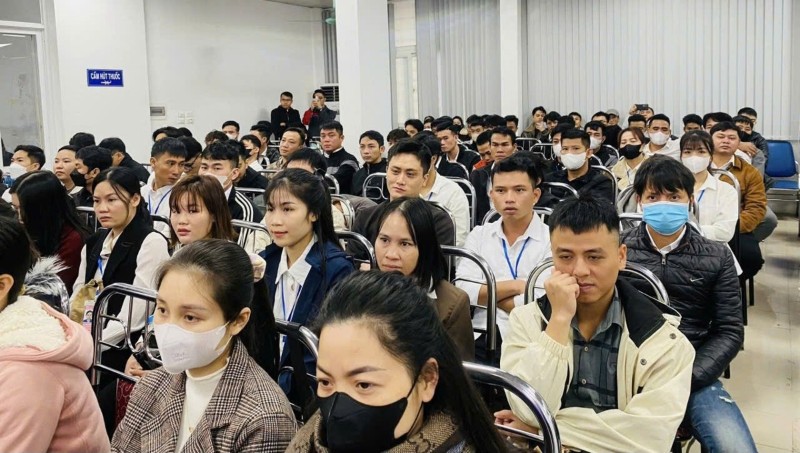
The program, under which Vietnamese workers will be sent to South Korea for seasonal employment, has helped create jobs for local workers, provided opportunities to learn advanced agricultural techniques, technologies, and production experience, and increased workers' incomes, according to the Ministry of Home Affairs of Vietnam.
Workers' actual earnings, including overtime pay, can reach between VND45 million and 60 million per month (approximately $1,740 - 2,300). After deducting expenses for accommodation, meals, personal living costs, and insurance, workers can save between VND30 million and 45 million ($1,160 – 1,740) per month.
After completing contracts lasting from 3 to 8 months, each worker can accumulate savings ranging from VND100 million to 320 million ($3,870 – 12,400). That represents a significant financial resource for rural workers, people living in remote and mountainous areas, particularly those from poor households and ethnic minority communities, noted the ministry.
In addition, while working in South Korea, workers gain access to modern high-tech agricultural cultivation methods and production processes. These skills and experiences can be applied upon returning home, contributing to local socio-economic development, sustainable poverty reduction efforts, and social welfare improvement.
In a report on the implementation of Government Resolution No. 59/NQ-CP, which continues the pilot program for sending Vietnamese workers to South Korea for seasonal employment through cooperation between local authorities of the two countries, the Ministry stated that more than 18,700 workers have participated in the program so far.
Most workers were sent to South Korea during 2025 and 2026. In the first ten months of 2026 alone, 9,218 workers departed under the program, accounting for 49.1% of the total number of workers who traveled during the implementation period of Resolution 59.
Due to population aging and a low birth rate, South Korea currently has a strong demand for foreign workers to address domestic labor shortages, especially in seasonal employment sectors. In 2026, South Korea increased its quota for accepting foreign seasonal workers to 117,113 positions, a 22% increase compared to the quota allocated in 2025.




 Google translate