


According to forecasts from the Centre for Economics and Business Research and the International Monetary Fund, Vietnam’s GDP is projected to expand from approximately $450-490 billion at present to around $1.41 trillion by 2039. This trajectory would place the country among the world’s 25 largest economies, provided it maintains sustainable growth momentum.
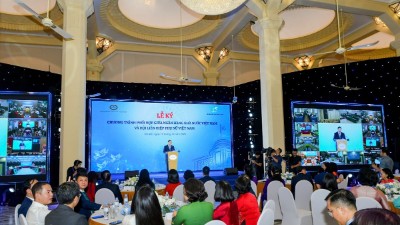
More than 400 senior leaders, policymakers, and global investors gathered at The 1T Summit by Vietnam Vanguard, held in Ho Chi Minh City on January 7, to discuss Vietnam’s pivotal decade ahead.
Discussions focused on finance, innovation, and human capital as three critical pillars for achieving this development milestone amid intensifying geopolitical competition and global economic realignment.
Addressing the Summit, US Consul General in Ho Chi Minh City, Ms. Melissa Brown, highlighted 2025 as a landmark year, marking the 30th anniversary of diplomatic relations between Vietnam and the United States. She underscored the dramatic expansion of bilateral trade, which has surged from several hundred million dollars in the 1990s to more than $150 billion today.
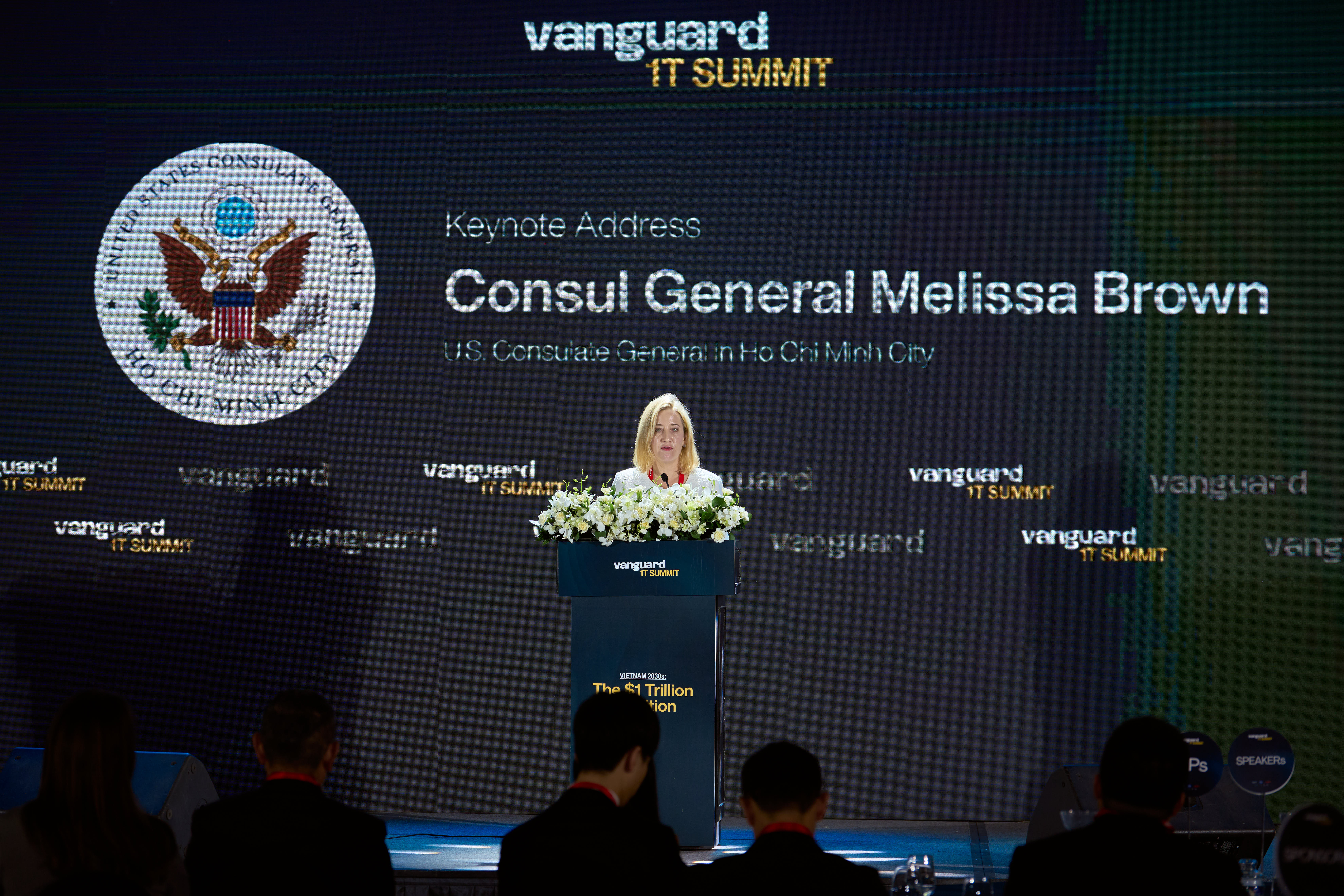
Ms. Brown reaffirmed the commitment of the US Embassy in Hanoi, the US Consulate General in Ho Chi Minh City, and the American business community to supporting Vietnam’s economic aspirations.
“The United States is eager to intensify our partnership with Vietnam in pursuit of these ambitions,” she said, adding that the US remains committed to leveraging American innovation and working with Vietnamese counterparts to further enhance the domestic business environment.
From FDI attraction to capital efficiency
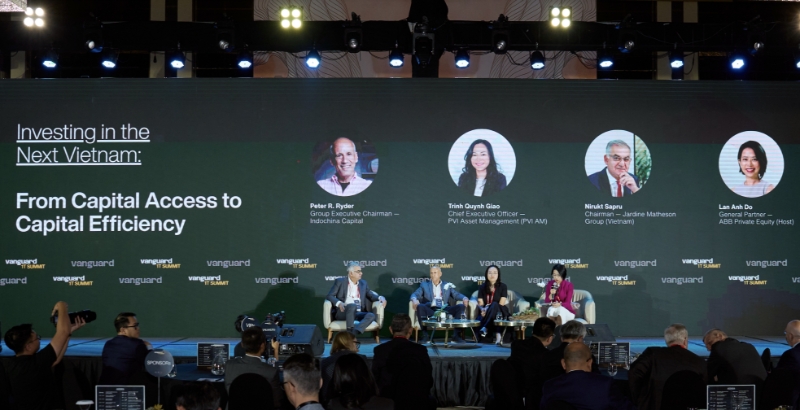
The pursuit of a $1 trillion economy has shifted the national dialogue from a simple focus on attracting FDI to a more complex mandate for capital efficiency. During a panel discussion on the reforms and capital flows reshaping Vietnam’s economic future, industry experts examined how the country can navigate an environment of rising capital costs and increasingly selective global investors.
Ms. Do Lan Anh, General Partner at ABB Private Equity, highlighted a critical tension between liquidity and trust. While liquidity remains available across the stock, private equity, and power markets, she noted that deal completion rates have been constrained by a lack of confidence following recent turbulence in the bond and foreign exchange markets. This view was echoed by Ms. Trinh Quynh Giao, CEO of PVI Asset Management, who said that while the State Bank of Vietnam’s 20 per cent credit growth target in 2025 provided short-term liquidity to support the real estate sector, long-term stability requires stronger structural foundations.
To bridge this trust gap, Ms. Giao pointed to three key developments: the establishment of an International Financial Center to provide a robust legal framework; the mandatory adoption of credit ratings and International Financial Reporting Standards to enhance transparency; and the official upgrade of Vietnam’s stock market to secondary emerging market status, reducing operational risks for global investors.
From the perspective of project developers, the discussion turned to the practical implications of the time value of money. Mr. Peter R. Ryder, Group Executive Chairman of Indochina Capital, emphasized that Vietnam’s primary challenge is not borrowing costs, which remain competitive at around 7 per cent, but prolonged approval processes. He noted that projects which should ideally be completed within 18 months are now taking up to four years, significantly eroding internal rates of return and reducing Vietnam’s competitiveness compared with markets in Europe or the US.
This need for efficiency is further underscored by the scale of investment required to sustain high growth. Mr. Nirukt Sapru, Chairman of Jardine Matheson (Vietnam), explained that achieving annual GDP growth of 10 per cent would require new social investment of up to $220 billion a year, equivalent to roughly 40 per cent of GDP. To meet this target, Vietnam must improve its Incremental Capital-Output Ratio (ICOR), generating more economic output for each unit of capital invested. Without attractive returns and reduced legal risks, he warned, capital will naturally flow towards more developed markets.
Supporting Vietnamese enterprises’ overseas IPOs
Speaking with VnEconomy / Vietnam Economic Times, Mr. Jesse Choi, Regional Director for Southeast Asia at the Sunwah Group, shared insights into Vietnam’s evolving role in global supply chain realignment and the growing interest from Hong Kong (China) and Chinese investors.
As production gradually shifts away from China, Vietnam’s geographic proximity, political stability, and strong workforce position the country as a natural destination for regional manufacturing and investment.
However, Mr. Choi noted that while Vietnam’s workforce is highly industrious, a shortage of skilled workers remains a major constraint. Compared with Thailand and Malaysia, which have established foundations in the automotive and semiconductor industries, Vietnam is still striving to move up the value chain and transition away from labor-intensive sectors such as footwear and textiles. Addressing this gap, he said, requires targeted investment in vocational training and technical education.
Against this backdrop, Sunwah is advancing several initiatives focused on human capital development and capital market access. The group is implementing vocational training programs that emphasize technology transfer, particularly in high-technology and semiconductor-related fields.
“We are implementing a model in which we train teachers at vocational schools in China and bring them back to Vietnam to impart higher-level skills, ensuring that graduates can immediately step into high-technology roles,” Mr. Choi said.
On the application of high technology to improve productivity, Mr. Choi emphasized that high-quality FDI only flows in when there is sufficient market demand. If order volumes remain low, factories tend to limit their operations to assembly in order to meet the 35 per cent localization requirement. Only when market scale is sufficiently large, he said, will enterprises be willing to invest in modern machinery and transfer technology from their original plants.
In parallel, through its Hong Kong (China)-listed subsidiary Sunwah Kingsway, the Group has full capacity and licensing to support Vietnamese enterprises seeking listings in Hong Kong (China). In 2018, Sunwah led the market in the number of initial public offerings (IPOs) by small and medium-sized enterprises.
“We are currently considering supporting several Vietnamese companies, including those in the advertising sector, to list in Hong Kong (China),” Mr. Choi said. “However, the Hong Kong Exchange maintains strict requirements on profitability over three consecutive years, meaning Vietnamese firms must be sufficiently robust to meet these standards.”
Mr. Choi also highlighted Hong Kong (China)’s role as a critical gateway for international capital and a bridge to the Chinese market. Listing in Hong Kong (China) not only facilitates capital raising but also enhances global brand prestige, similar to VinFast’s listing on Nasdaq in the US.
The panel discussion concluded by identifying four strategic pillars for the coming decade: sovereign credit rating upgrades, administrative streamlining, infrastructure development, and the opening of key sectors. While Ms. Giao noted that achieving an investment-grade credit rating by 2030 would significantly reduce capital costs, Mr. Sapru stressed that there is no trade-off between high returns and social progress. Efficient capital allocation into essential infrastructure and affordable housing, he said, naturally aligns investor returns with national development objectives.

 Google translate