


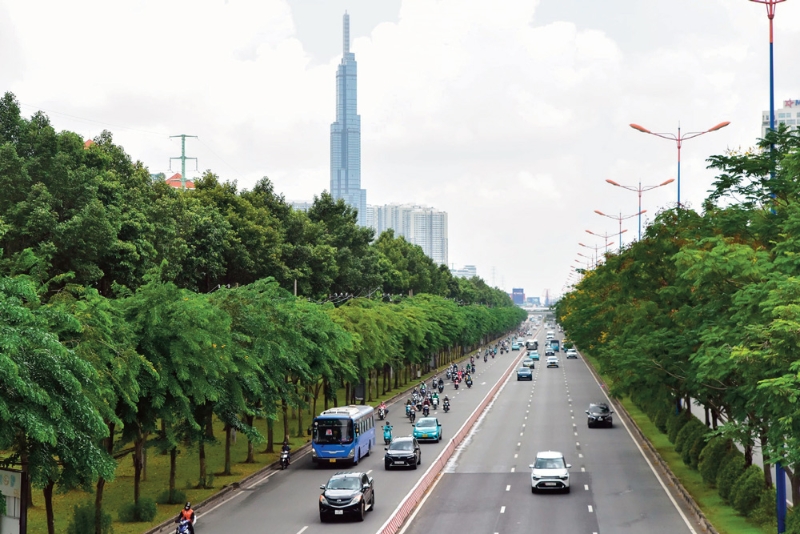
While FDI inflows into Vietnam continue to show solid growth, the value-added remains modest, links with domestic enterprises are weak, and any competitive advantages are still largely based on geographic location. This means that Vietnam remains positioned at the lower end of the global value chain, where profit margins are small and technology spillovers are limited.
The FDI picture exhibited several bright spots during the 2021-2025 period, which was marked by post-pandemic recovery and macro-economic stabilization amid global uncertainties. Disbursed FDI increased from $19.7 billion in 2019 to $27.6 billion in 2025, reflecting sustained confidence among foreign investors in Vietnam’s investment environment.
In the context of global supply chains being restructured, rapid technological shifts, and increasingly unpredictable geopolitical volatility, Vietnam is facing a rare opportunity to upgrade its FDI attraction model.
From attraction to selection
After nearly 40 years of attracting and managing FDI (1987-2025), and despite the fact that “success has been the main outcome,” Vietnam has reached a point where a strategic shift is necessary. The focus is no longer on attracting FDI in terms of quantity, but on selecting high-quality projects with strong spillover effects across the economy.
To turn this into reality, several key priorities must be addressed: institutional breakthroughs to build policy credibility; selective FDI attraction in strategic sectors; synchronized infrastructure upgrades, particularly in energy and digital infrastructure; development of high-tech human resources; stronger links between FDI enterprises and domestic firms; and the promotion of green, innovation-driven FDI.
If these solutions are conducted in a coordinated manner, under the fundamental principle of “utilizing FDI while ensuring an independent and self-reliant economy, linked with national defense, security, and social order,” as outlined in Politburo Resolution No. 50-NQ/TW dated August 20, 2019, FDI will continue to act as a vital resource for Vietnam’s next phase of development.
However, the current context presents significant challenges. First is the intensifying global competition for FDI, as many countries are simultaneously adjusting policies to gain advantage. In addition, investment is increasingly shifting toward “friendly” or geographically-proximate countries (friend-shoring or near-shoring), leading to more concentrated and selective capital flows. At the same time, the pressure surrounding a green transition and the requirements for absorbing and mastering advanced technologies are rising, meaning Vietnam must not only attract capital but also strengthen its absorptive capacity.
As a result, the attraction of “next-generation FDI” needs clearer direction, aligned with green investment, high technology, innovation, and deeper participation in global value chains.
Experience from Singapore and South Korea shows that success depends on consistent strategy. While Singapore relies on transparent institutions to attract high-tech FDI, South Korea closely links FDI with domestic enterprises to build large conglomerates. Despite the different approaches, both countries have not only expanded FDI inflows but also effectively leveraged them to boost exports and develop globally-competitive production hubs. These are valuable lessons for Vietnam as it reshapes its FDI strategy.
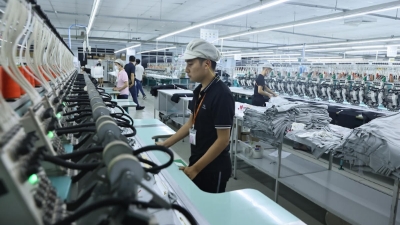
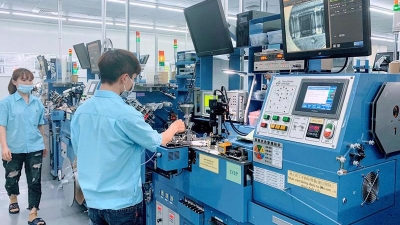
Despite repeated reviews identifying limitations in Vietnam’s FDI attraction and utilization, these have yet to be fully resolved. FDI quality remains modest, with most projects concentrated in processing and assembly with low value-added. Links between the FDI sector and domestic enterprises remain weak, as reflected in low localization rates and limited technology transfer.
Another notable issue is administrative procedures. Although regulations are relatively clear, delays still occur in practice, indicating that the “one-stop-shop” mechanism in FDI management at both the central and local levels has not been effectively implemented. The process of obtaining opinions from different State agencies on issues arising during FDI operations remains slow, affecting project implementation and expansion and creating a less favorable perception of Vietnam’s investment environment.
Reform for new FDI
In the current context, where support industries remain weak, human resources are insufficient, and infrastructure is still constrained, administrative bottlenecks are becoming a major concern. If not resolved decisively, these factors will undermine the competitiveness of Vietnam’s investment environment, especially as the country seeks to attract next-generation FDI linked to high technology and green development.
Global dynamics are also strongly influencing FDI flows, with supply chains being restructured under complex and unpredictable geopolitical pressures. Industry 4.0 is entering a new phase centered on AI, semiconductors, and automation, while imposing higher requirements for green investment, net-zero targets, and ESG (environmental, social, and governance) standards. At the same time, competition for FDI between countries is intensifying, forcing economies to continually upgrade their investment environments.
Under these conditions, Vietnam must continue enhancing its investment competitiveness, as FDI remains an important source of capital for growth. However, to utilize it effectively and sustainably, clear strategic objectives and new management approaches are required. The overarching view is that FDI is a key driver but cannot replace domestic capacity, and that the focus must shift from quantity to quality, linked to innovation and sustainable development.
Accordingly, by 2030 the priority is to improve FDI quality and increase localization rates, while Vietnam aims to become a regional technology hub in the 2035-2045 period, with FDI shifting strongly toward R&D and innovation.
A comprehensive set of solutions must be implemented to achieve this: institutional breakthroughs to ensure policy stability and investor protection; administrative reform through digitalization, shortening licensing timelines and handling procedures, and moving toward data-driven governance.
At the same time, FDI should be selectively attracted into priority sectors such as semiconductors, AI, renewable energy, and support industries, with clear criteria on technology, ESG standards, and domestic links.
Infrastructure remains a critical pillar, with a focus on synchronized transport development, energy security, and the expansion of digital infrastructure such as 5G and data centers. In parallel, high-quality human resources must be developed through training aligned with the needs of Industry 4.0, stronger links between enterprises and educational institutions, and the attraction of international talent.
In addition, stronger links between FDI and domestic enterprises should be promoted through the development of support industries, particularly small and medium-sized enterprises (SMEs), encouraging localization and fostering leading domestic firms. Incentive policies also need to shift toward supporting R&D and innovation rather than relying solely on tax incentives, while promoting green FDI aligned with ESG standards and carbon reduction goals.
Based on these solutions, the implementation roadmap is divided into three phases: 2025-2030 focuses on institutional completion and attracting high-tech FDI; 2031-2035 aims to upgrade Vietnam’s position in the global value chain; and 2036-2045 targets the establishment and effective operation of innovation hubs to meet the requirements of a developed economy.
From these breakthrough recommendations, it is clear that a fundamental shift in the approach to FDI management and attraction is urgently required. First, the “one-stop-shop” mechanism must be effectively implemented to shorten processing times, reduce compliance costs, and improve transparency. This is not only an administrative reform but also a direct competitive factor in attracting green and high-tech FDI, which demands speed and policy stability.
At the same time, developing new industrial parks and gradually transforming existing ones into “eco-industrial parks” is aligned with sustainable development trends. This model optimizes resource use, reduces emissions, protects the environment, and enhances competitiveness in attracting high-quality FDI, particularly as ESG standards increasingly become a “mandatory ticket” for global capital flows.
All of this indicates that Vietnam is at a critical juncture, shifting from “attracting FDI” to “managing and selecting FDI.” If implemented effectively, by 2030 the economy could be significantly upgraded; and by 2045 the goal of becoming a developed country will have a stronger foundation, not only in scale but also in growth quality and internal capacity.
(*)Dr. Phan Huu Thang is the former Director General of the Foreign Investment Agency at the Ministry of Planning and Investment, now the Ministry of Finance)






 Google translate