


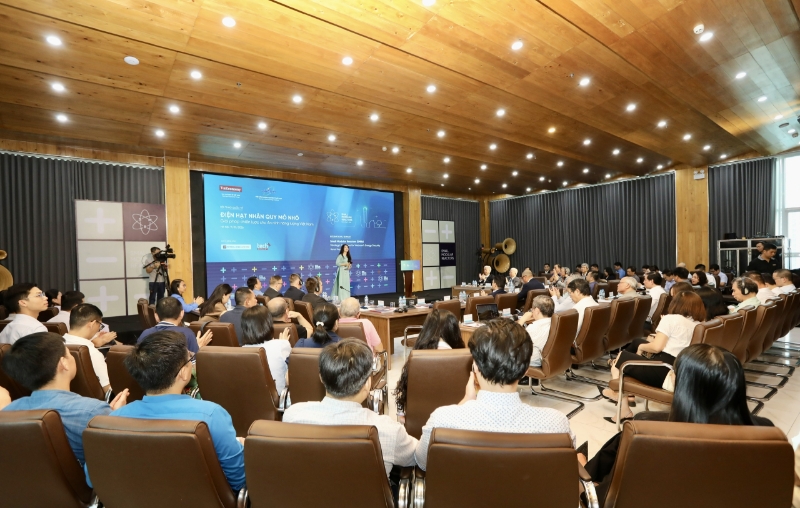
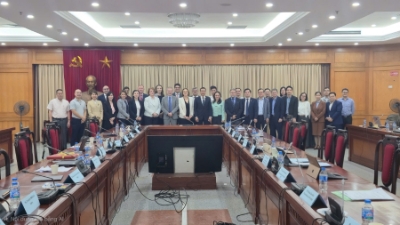
Vietnam Economic Times/VnEconomy in collaboration with the Vietnam Atomic Energy Institute (VINATOM), organized the International Conference: "Small Modular Reactors (SMRs): Strategic Solutions for Vietnam's Energy Security" on May 11 at the BMC Center in the magazine's Hanoi headquarters.
The conference recorded the direct participation of high-level diplomatic delegations from the Embassy of the Russian Federation and the Embassy of India, along with world-leading nuclear experts from Russia, as well as online connections from Canada.
Notably, the conference also drew the participation of major domestic corporations, including Stavian Group, Vietnam Oil and Gas Group (PVN), and Vietnam Electricity (EVN), underscoring the technology's importance to the national energy transition. The program was successfully held with the strategic sponsorship and partnership of Petrolimex Aviation Joint Stock Company and VinFast Commercial and Service Trading Limited Liability Company.
A historic turning point for the global energy industry
In his opening remarks, Mr. Dao Quang Binh, CEO of VnEconomy/Vietnam Economic Times, affirmed: "We are standing at a historic turning point for the global energy industry. According to reports from the International Energy Agency (IEA), the world is facing not only a climate crisis but also heavy pressure from the disruption of traditional energy supply chains. In this context, the commitment to Net Zero by 2050 has officially become a 'new rule of the game' governing all international trade and investment flows."
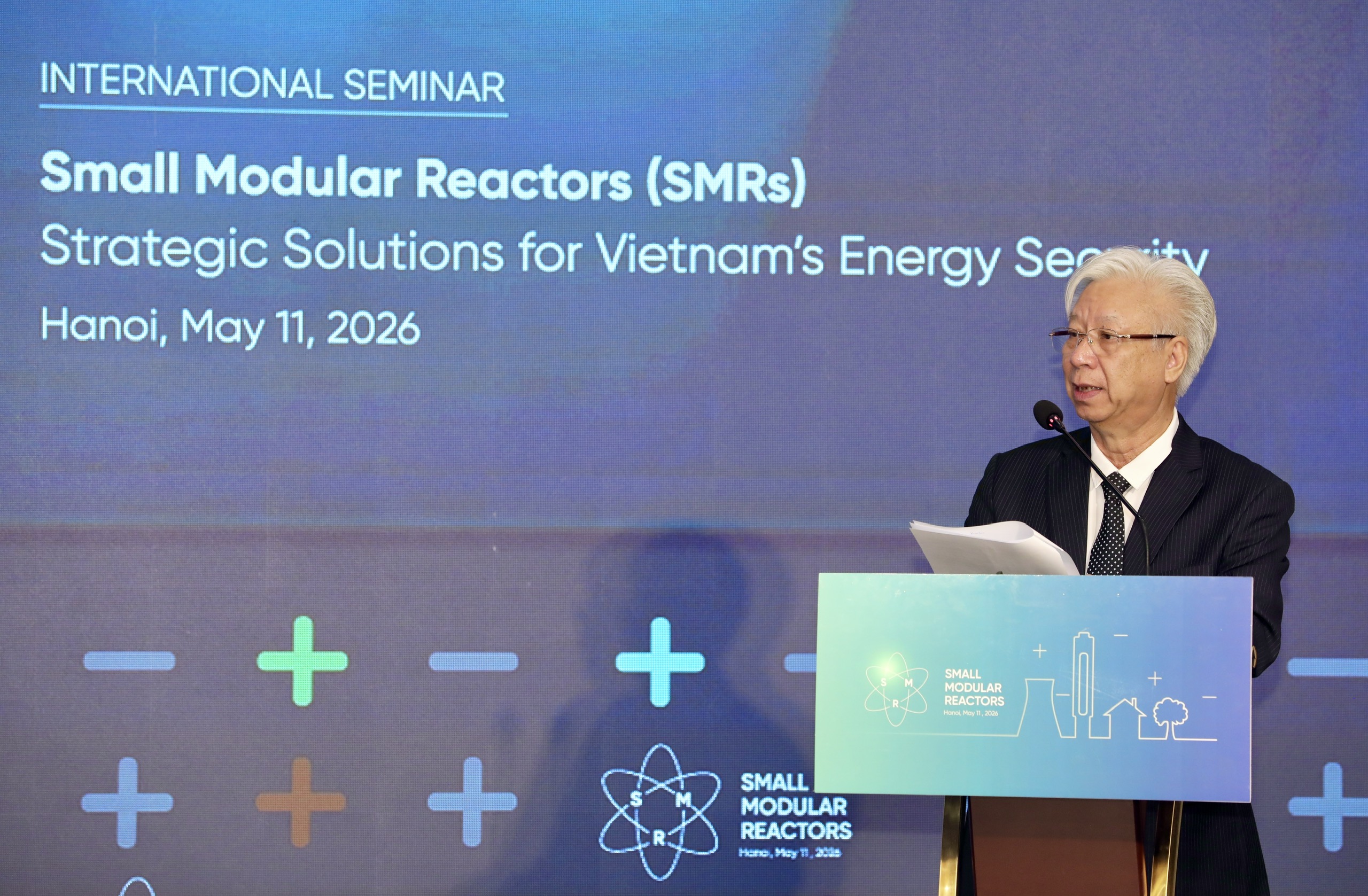
“In Vietnam, the energy security puzzle has become a vital issue. We do not only need energy for growth, but we need an energy source that is truly clean, stable, and autonomous. Therefore, researching deployment models for Small Modular Reactors (SMRs) is currently linked to the process of realizing new energy scenarios in the Adjusted Power Development Plan VIII. Vietnam Economic Times/VnEconomy hopes that today's in-depth discussion sessions will contribute valuable scientific and practical arguments, providing a solid foundation for state management agencies and economic corporations to build a sustainable national energy roadmap,” stated Mr. Dao Quang Binh.
At the conference, Dr. Tran Chi Thanh, President of VINATOM, presented an important keynote address titled: “SMR Vision and the Clean Base-load Energy Problem: An Overview of Nuclear Power Development Policy in Vietnam". Following this, Dr. Nguyen Ngoc Hung - Head of the Energy Economics Division, Institute of Energy, Ministry of Industry and Trade (MOIT), shared a presentation on “Electricity Demand Forecasting and Orientations for Ensuring National Energy Security".
Russian SMR technology: From icebreakers to floating power units
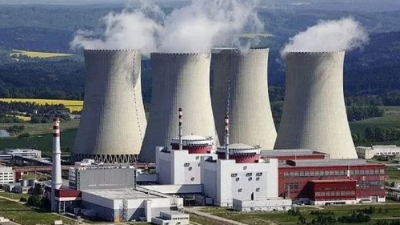
Sharing at the conference, Mr. Dmitry Aleksandrovich Raspopin – Head of Representative Office, State Atomic Energy Corporation Rosatom in Vietnam, stated that Rosatom holds 88% of the global nuclear power plant export market share. Out of 25 large-capacity nuclear power plant construction projects being implemented globally, 22 are carried out by Rosatom across many countries. Regarding Small Modular Reactor (SMR) technology, the Rosatom representative introduced the RITM-200 series. Currently, Russia has put into operation 4 icebreakers equipped with RITM-200 reactors and is continuing to build 3 more ships and modernized floating nuclear power units.
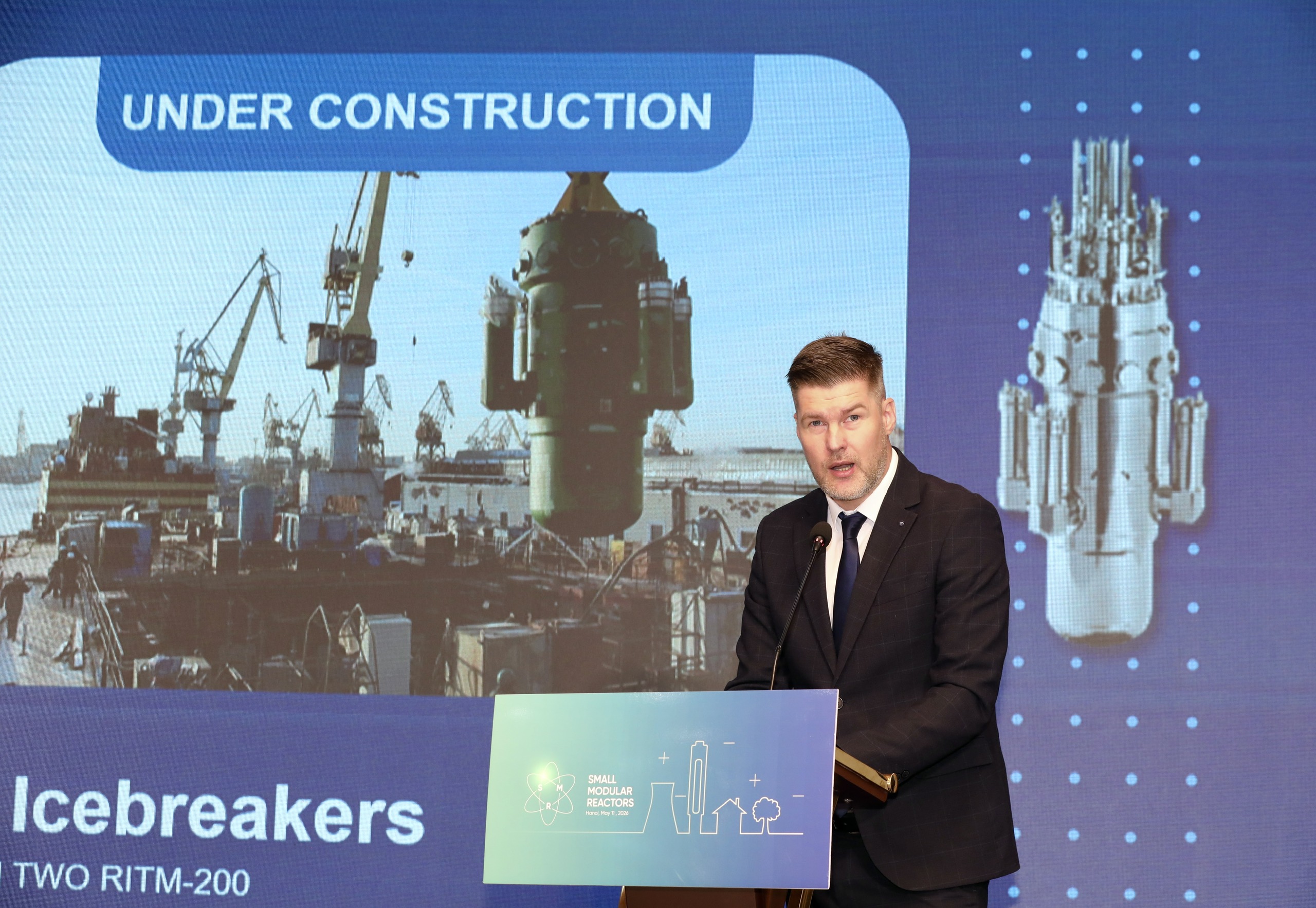
A prime example is the Akademik Lomonosov floating nuclear power unit in Pevek – a project operating since 2020, which produced over 1 billion kWh of electricity by January 2025 and is expected to meet 84% of local electricity demand by 2026. Rosatom is also the energy solution provider for the first SMR project in Yakutia (Russia) using RITM-200N reactor technology.
The project has a fuel cycle of up to 6 years, a 60-year lifespan, and is deployed to provide electricity for tin, gold, and other mineral mines. Rosatom also exported to the international market with the first SMR export contract signed with Uzbekistan in 2024. According to the roadmap, the project in Uzbekistan will begin equipment manufacturing and start construction of the first SMR units in 2025, aiming for energy security and comprehensive economic development.
According to the Rosatom representative in Vietnam, SMR technology possesses outstanding advantages in solving modern energy demand problems.
Specifically, SMRs demonstrate versatility in application, not only stopping at power generation but also serving district heating and cooling, providing energy for data processing and storage centers, as well as replacing traditional power plants. Regarding planning, the compact design and optimization of the Emergency Planning Zone (EPZ) for SMRs help the deployment process without hindering urban infrastructure development.
This technology is particularly suitable for small-scale grids and remote areas with difficult logistics. In addition to the benefits of efficient land use and near-zero emissions, SMRs ensure a stable, reliable, and continuous power supply, completely independent of weather or climate conditions.
Candu technology and strategic cooperation with Canada
The conference also listened to an online video address from H.E. Jim Nickel, Canadian Ambassador to Vietnam, regarding Canada's energy security vision and the opportunity for comprehensive cooperation between Canada and Vietnam in the field of energy security in general and nuclear power in particular.
Sharing via online connection from Canada, Ms. Tran Thu Quynh - Trade Counselor, the Vietnamese Embassy in Canada, Coordinator of the Canada–Vietnam Energy Working Group, presented on “Potential for Energy Cooperation with Canada: Nuclear Energy - A Strategic Pillar for Vietnam’s Energy Security".
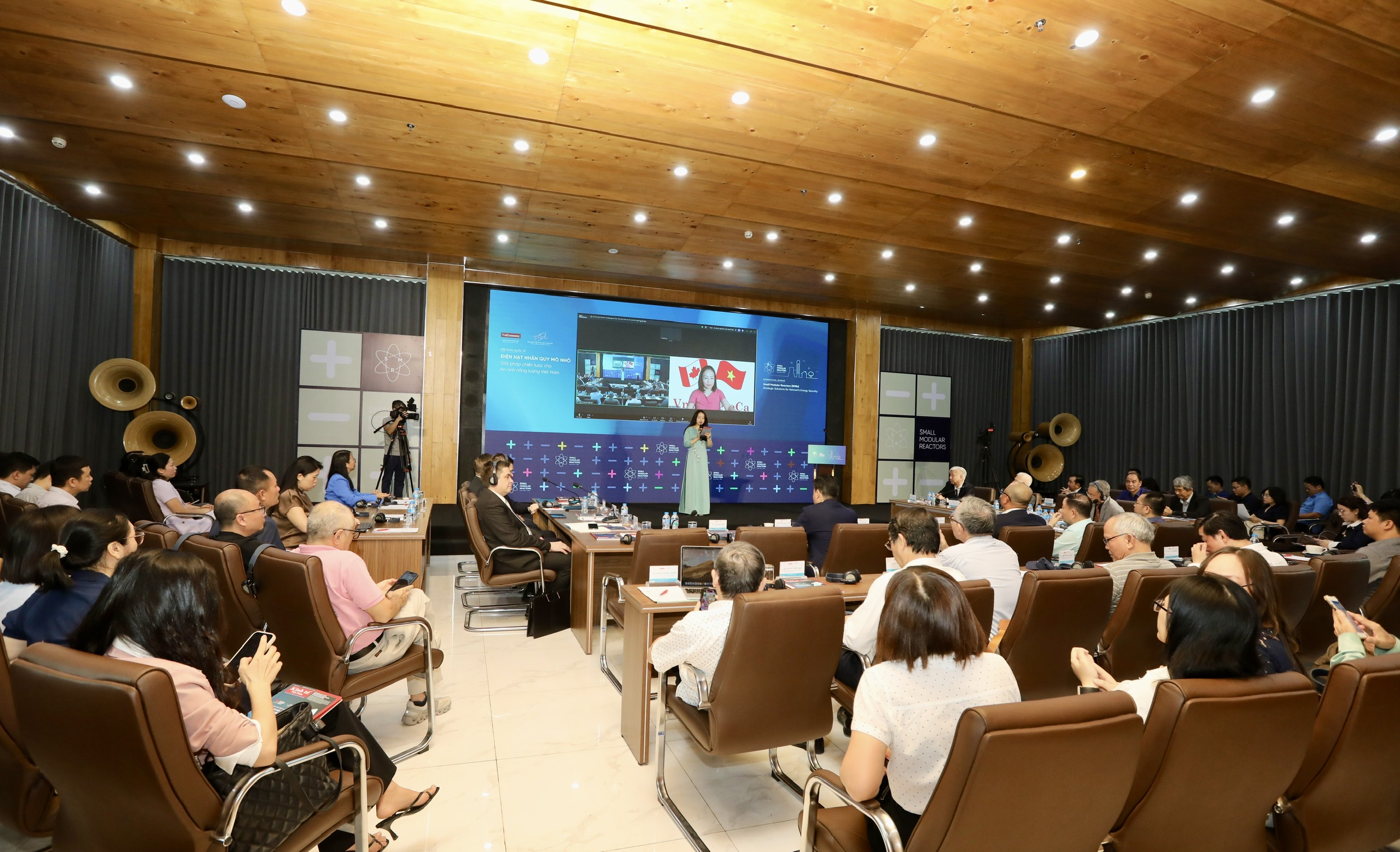
According to Ms. Quynh, Candu technology brings 7 strategic advantages to Vietnam, including: True G2G (Government-to-Government) cooperation; complete fuel independence (natural Uranium, no enrichment required); localization of 60–70% of the supply chain in Vietnam; relatively fast completion time compared to competing technologies; the Direct Self-Cleaning (DUPIC) fuel reuse cycle, turning waste into resources; applying the PPP model of AtkinsRéalis (SNC-Lavalin Capital): equity + non-recourse debt; and Cobalt-60 production to help treat cancer and irradiate exported agricultural products.
Lessons from Poland, Sweden, Canada and the global SMR journey
Ms. Susie Ho, Director, Laurentis Energy Partners (Canada), also delivered an important presentation titled: “From Policy to Reality: Lessons from Poland, Sweden, and Canada for Vietnam's Nuclear and SMR Journey". She stated that the 2026–2030 period marks a significant step in the global SMR deployment roadmap. According to reports from the IAEA and RBC Energy, 20 to 30 SMRs are expected to enter the construction or advanced licensing phase. The total value of the global SMR project roadmap is estimated at approximately $150 billion.

For instance, in Poland, Orlen Synthos Green Energy (OSGE) is actively planning to deploy 24 BWRX-300 reactors at six sites. OSGE demonstrates that combining industrial offtake units, digital demand, and a standardized reactor network strategy is the formula for project takeoff.
SMRs located at hubs like Włocławek, adjacent to chemical plants, provide high-temperature steam for chemical production, hydrogen production, and district heating — ensuring energy security and price stability. Sites are also strategically selected near closing coal plants, allowing for a seamless energy transition for industrial communities.
OSGE has established a dedicated working group with the Polish Data Center Association. Poland's data center sector may need 1,000 MW of capacity by 2034, as hyperscalers like Google, Amazon, and Microsoft all require 24/7 clean power.
In Sweden, after 40 years of phase-out policies, the country has performed a complete reversal. It now aims to reach 2,500 MW of new nuclear capacity by 2045. Meanwhile, Canada is leading the nuclear deployment model, prioritizing project execution at existing sites to create a blueprint for future replication.
By leveraging existing regulatory and environmental permits at Darlington, this approach bypasses the uncertainties of greenfield development to focus on site readiness and sequential de-risking.
Ms. Breann Whitby - Acting Director, Nuclear Policy, Crown Investments Corporation of Saskatchewan (CIC) (Canada), shared regarding energy policy and SMR implementation practices in Saskatchewan.

Accordingly, SMR technology is not only an energy solution but also an engine for achieving socio-economic goals in Saskatchewan's Growth Plan, such as: Implementing the province's climate change strategy, “Prairie Resilience”; supporting the needs of 1.4 million people; contributing to the creation of 100,000 new jobs; driving private capital investment to $16 billion annually; and increasing the annual value of Uranium sales to $2 billion. Future opportunities focus on a high demand for a workforce, estimating a need for 2,500 to 3,500 trained professionals and specialists.
The conference concluded with a lively multilateral Q&A session, where speakers sought solutions for non-technical barriers to realize the SMR roadmap in Vietnam.

 Google translate