


During its meeting held on December 4, the National Assembly (NA) Standing Committee focused its discussions on a draft resolution of the NA on specific mechanisms and policies for major projects in Hanoi.
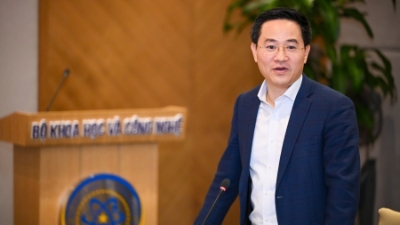
According to Minister of Finance Nguyen Van Thang, Hanoi is undertaking numerous critical projects, ranging from those of public investment and public-private partnerships (PPP) to those for attracting strategic investors and projects of urban renovation, including the redevelopment of old apartment buildings.
Although the revised Capital Law, enacted on June 28, 2024, provides a crucial legal framework, there remain practical challenges, particularly in the decentralization and delegation of investment management authority.
Minister Thang emphasized the urgent need for a resolution to pilot certain special mechanisms to address legal bottlenecks, attract new resources, and create breakthroughs for rapid and sustainable development in the capital city.
The draft Resolution proposes more authority for the Hanoi People’s Council and the Chairman of the Hanoi People’s Committee to approve investment policies for public projects, PPP projects, and private-sector projects, without limitations on capital scale or land area.
Several projects that currently fall under the authority of the National Assembly (NA), the Government, or the Prime Minister are also proposed to be delegated to Hanoi, except for cases requiring exceptions to existing laws, which must be reported to the Government for submission to the National Assembly Standing Committee.
Regarding investor selection, the draft allows the application of special mechanisms for urgent projects or nationally important projects.
The draft permits Hanoi to advance municipal budget funds for compensation, support, and resettlement prior to investment policy approval; its People’s Council is empowered to approve compensation levels up to twice the standard rate for urgent projects. The city may also use budget surpluses and apply emergency public investment and construction mechanisms to address issues such as traffic congestion, flooding, and environmental pollution.
During the meeting, the NA Economic–Financial Committee agreed on the necessity of the Resolution but recommended careful examination to avoid overlap with existing laws and to clarify the legal status of the Comprehensive Master Plan.
NA Chairman Tran Thanh Man also emphasized that only truly exceptional mechanisms that effectively remove bottlenecks should be retained. Hanoi’s leadership expressed hope that the Resolution will soon be adopted to expedite key projects and advance the city’s 100-year planning vision.
NA Vice Chairman Vu Hong Thanh said that the dossier meets the requirements for inclusion in the legislative program and for submission to the National Assembly through a fast-track procedure.


 Google translate