


The Ministry of Agriculture and Environment's Department of Geology and Minerals plans to complete a draft National Strategy on Rare Earths for issuance in 2026.
This is one of key tasks of the department this year, which also include submitting a decree on administrative penalties in geology and minerals to the government, and continuing to adjust national mineral planning for 2021-2030, with a vision to 2050.
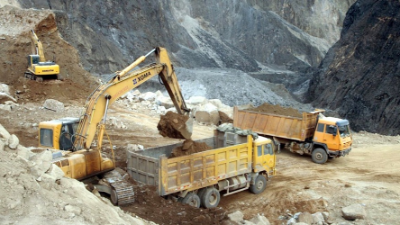
Vietnam possesses significant rare earth potential, ranking second or third globally, distributed across 21 provinces and cities, according to the Ministry. The Ministry has thoroughly surveyed areas with rare earths, managed them closely, and is developing the national strategy for rare earth minerals, expected to be issued in early 2026. After delineating areas with rare earths, the key task is to effectively exploit this resource, form a deep processing value chain, and minimize raw material exports.
According to the recently approved Law on Geology and Minerals, rare earths are a special strategic mineral, and their exploration, mining, and processing must be strictly controlled, with no raw exports. Only state-designated or authorized enterprises and organizations are allowed to explore, mine, process, and use rare earths. Deep processing activities must be linked to building a modern industrial ecosystem to enhance the domestic value chain.
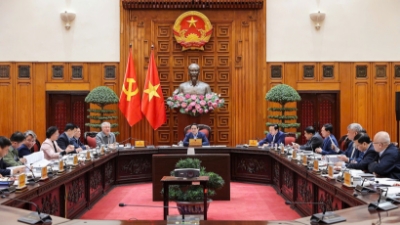
Earlier, at a government meeting on January 17, 2026, Prime Minister Pham Minh Chinh emphasized strengthening state management in this field, developing the rare earth industry, and contributing to strategic autonomy with key tasks and solutions. These include building and completing institutions, mechanisms, and policies, prioritizing deep processing; financial investment, mobilizing state resources, public-private partnerships, and investor resources; developing infrastructure; transferring and mastering advanced, suitable technology; promoting public-private cooperation; and smart management based on digital transformation.


 Google translate