


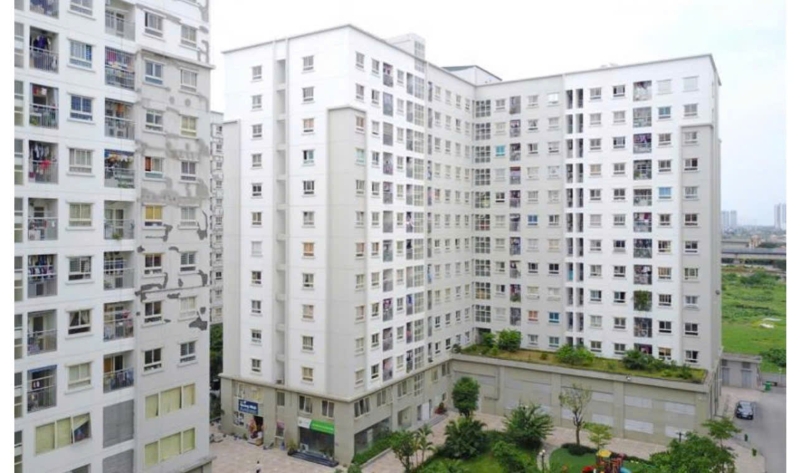
Total outstanding loans for social housing have reached approximately VND41 trillion ($1.56 billion), stated the State Bank of Vietnam (SBV). Of this amount, the Vietnam Bank for Social Policies accounts for over VND25 trillion or nearly 60%, while commercial banks contribute more than VND16 trillion.
Against a backdrop of surging demand for social housing, the challenge of securing capital for development and ensuring accessibility for low-income earners remains a top priority. Following Government directives, the SBV has prioritized credit flows into this sector while coordinating with the Ministry of Construction and relevant agencies to refine policies and remove bottlenecks in project implementation.
Speaking at a real estate event on March 12, SBV Deputy Governor Nguyen Ngoc Canh stated that the central bank has instructed credit institutions to direct capital toward the affordable and low-income housing segments.
According to Mr. Canh, to encourage wider bank participation, the SBV has excluded these loans from the annual credit growth quotas assigned to individual banks. Additionally, the SBV is maintaining stable policy interest rates to create conditions for lower lending rates. Currently, lending rates stand at approximately 6.1% per annum for developers and 5.6% per annum for social housing buyers—levels considered highly preferential compared to the broader market.
The Deputy Governor noted that thanks to synchronized solutions from the Government, ministries, and local authorities, the program's disbursement progress has seen marked improvement.
By the end of January 2026, commercial banks had approved VND20.5 trillion (nearly $781 million) in loans—a more than 200% increase compared to the end of 2024. This represents 17% of the total VND120 trillion ($4.57 billion) credit package. However, the remaining capital for the program remains substantial, indicating significant "credit room" to drive social housing development in the coming period.
Commenting on the role of credit, Mr. Nguyen Xuan Bac, Deputy Director of the SBV’s Department of Credit for Economic Sectors, emphasized that the banking industry views credit as a vital resource for social housing development. Consequently, the SBV has established and implemented specific credit mechanisms and policies designed to support both project developers and citizens in need of housing.







 Google translate