


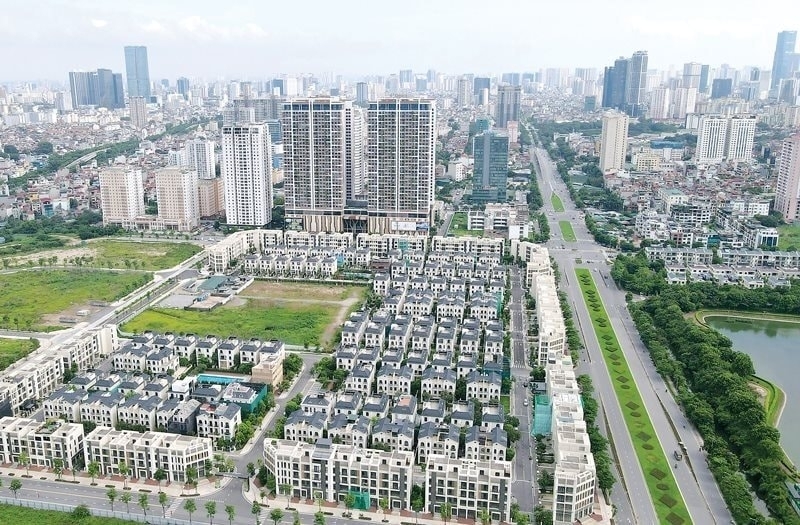
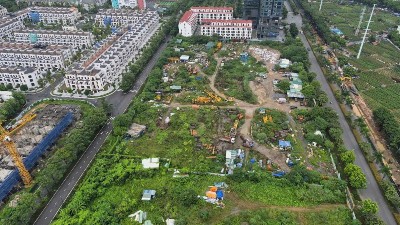
Approximately 4,500 real estate projects nationwide are currently facing obstacles, leaving more than VND3 quadrillion (nearly $114 billion) capital stagnant, according to statistics from the Ministry of Construction (MoC). To date, authorities have resolved difficulties for 1,025 projects, successfully unlocking VND800 trillion ($300.4 billion) in investment capital.
This information was revealed at a recent seminar titled “Unlocking Growth – Momentum from the Private Economy.”
Speaking at the event, Ms. Hoang Thu Hang, Deputy Director of the Housing and Real Estate Market Management Department, the MoC, noted that a major market inadequacy is the prolonged supply-demand mismatch. While high-end housing continues to account for a large share of the market, there is a severe shortage of segments that align with the financial capacity of the majority of the population. Despite high demand for actual housing, many people have yet to find opportunities to access suitable products.
To address these market challenges, the Government has directed ministries and sectors to implement various solutions to boost supply.
“Resolving projects that have been stalled for years not only helps release social resources but also supplements market supply, contributing to lower housing prices and improving accessibility for the public,” she said.
Another vital solution, according to Ms. Hang, is the promotion of science, technology, and digital transformation to enhance market transparency. The MoC has advised the Government on the issuance of Decree 357 and is urgently finalizing an information system for housing and the real estate market.
"Each property will be assigned a unique identification code. Through this code, citizens and investors can look up comprehensive information regarding legal status, land use rights, transaction conditions, sales history, and price trends. This public data disclosure is expected to help the market operate more transparently, curb speculation, and reduce risks for investors," she added.
Ms. Hang also stated that leaders of the Party and the National Assembly have directed the MoC to research new mechanisms and policies to develop the rental housing market, particularly as affordable supply remains scarce. Currently, the ministry is finalizing policy documents to submit to the National Assembly for consideration during the October 2026 session. Proposals focus on land, tax, and credit incentives to attract businesses to the rental housing sector.
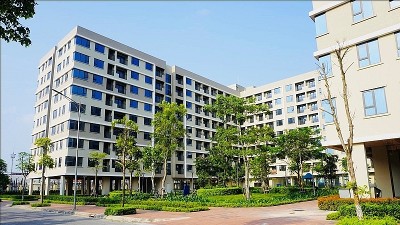
The objective is to increase the supply of affordable housing, providing more options for the public—especially workers, laborers, civil servants, and members of the armed forces. Those who are not yet in a position to purchase a home can still secure stable accommodation through renting.
In addition to regulatory solutions, experts believe that the sustainable recovery and development of the market will also depend significantly on the adaptability and business strategies of the enterprises themselves.
According to Dr. Nguyen Van Dinh, Chairman of the Vietnam Association of Realtors (VARS), enterprises must focus on developing highly competitive products characterized by reasonable pricing, superior quality, effective commercial utility, and high liquidity. Developers need to flexibly apply customer support policies to enhance the appeal of their offerings. Additionally, businesses should continue to improve investment efficiency and optimize costs to create products with price points that are better aligned with the general public's affordability.





 Google translate