


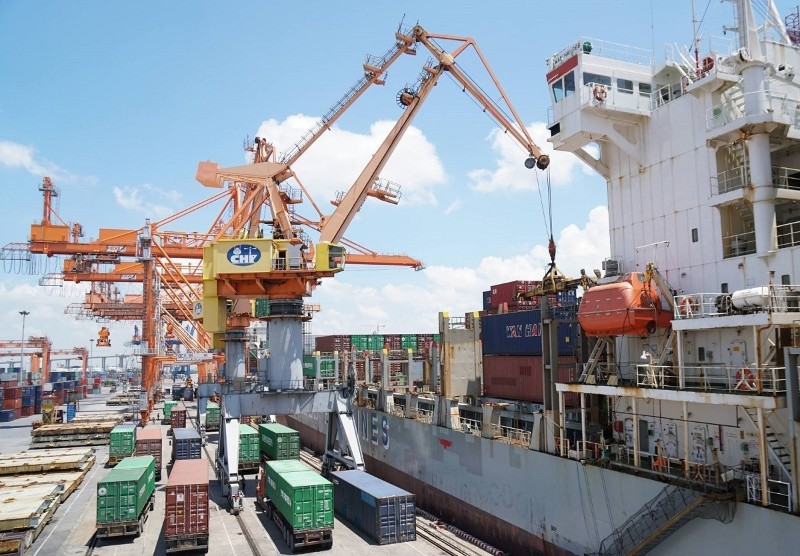
Speaking at a September conference in Ho Chi Minh City, Mr. Ngo Chung Khanh, Deputy Director General of the Multilateral Trade Policy Department at the Ministry of Industry and Trade, outlined how local firms can convert Vietnam’s seventeen free trade agreements into sustainable market gains by meeting strict origin, environmental, and trust-based standards.
Vietnam’s trade network covers almost every major global region, with preferential trade agreements currently under negotiation with markets like Brazil to offer near-zero tariffs. However, the core challenge has shifted from acquiring free trade agreements (FTAs) to converting trade commitments into actual market share. Vietnamese goods currently maintain a modest presence in major FTA markets.
In 2023, Vietnam accounted for roughly 2 percent of the EU’s $2.51 trillion import market, a proportion that has remained stagnant over the past six years. Similar trends exist in Canada, the UK, and Mexico, where Vietnamese market shares fluctuate between 1 percent and 2 percent.
Furthermore, utilization rates for preferential Certificates of Origin (C/O) under major agreements remain low, standing below 10 percent for the Comprehensive and Progressive Agreement for Trans-Pacific Partnership (CPTPP), 34 percent for the EU-Vietnam Free Trade Agreement (EVFTA), and 38 percent for UK-Vietnam Free Trade Agreement (UKVFTA).
In high-tariff markets like Mexico, where un-partnered Asian competitors face import duties up to 50 percent, Vietnamese products enjoy massive tariff margins under CPTPP yet hold just over 1 percent market share.
Additionally, trade tensions between the US and Canada are prompting Canadian buyers to diversify supply sources beyond the US, creating untapped openings for Vietnamese firms.
Beyond export volume, local value retention remains a critical issue. Approximately 80 percent of Vietnam’s exports originate from foreign direct investment (FDI) enterprises, down from a nearly 50 percent domestic share 15 years ago. While overall turnover has expanded, domestic firms are capturing less added value. This trend is further complicated by shifting global trade rules. Modern FTAs have moved past basic tariff cuts, adding requirements on sustainable development, labor rights, economic security, and supply chain trust.
Exporters operating across major destinations like the US, China, and the EU face conflicting regulatory demands. The US emphasizes supply chain trust and forced labor prevention under Sections 301 and 232. China enforces Orders 248 and 249 regarding supply chain controls, while the EU applies rigorous labor, environmental, and carbon-adjustment standards alongside protective steel quotas. These differing legal regimes create compliance deadlocks for Vietnamese firms attempting to audit multi-tier suppliers.
To navigate these complexities, Mr. Khanh recommended that businesses transition from simple product sales to structured FTA compliance strategies. Exporters must meticulously evaluate tariff margins, origin rules, technical barriers, and total compliance costs before entering target markets.
“Rather than relying solely on standard C/O documentation, companies should compile comprehensive compliance dossiers covering origin proof, supply chain mapping, and alternative supplier lists. Diversifying both export markets and raw material sourcing will prove essential to safeguarding Vietnam’s position in global trade,” he said.



 Google translate