



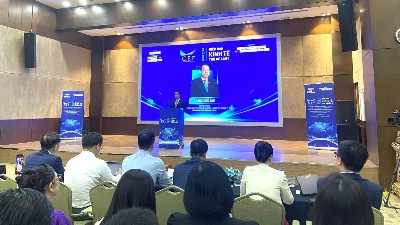
Speaking at the “Brand Strategy and Competitiveness Forum” in Hanoi on September 23, Mr. Tran Le Hong, Deputy Director General of the Intellectual Property Office of Vietnam under the Ministry of Science and Technology, highlighted the causal system connecting innovation, technological capability, brand value, and national competitiveness. Missing any link in this chain prevents companies from converting innovation into sustainable revenue.
Mr. Hong warned that possessing both strong technology and a powerful brand gives top corporations a formidable edge, allowing them to earn super-normal profits and reinvest heavily in R&D to maintain market dominance. Conversely, companies relying solely on brand heritage while neglecting core technology risk obsolescence - a lesson highlighted by iconic giants like Nokia and Kodak.
At the other extreme, firms with advanced manufacturing capabilities but weak brands remain stuck in a high-end OEM (original equipment manufacturer) trap. While contract manufacturers like TSMC and Foxconn hold world-class production technologies, Apple captures the highest symbolic value and gross profit margins because it owns the consumer brand and underlying intellectual property.
The worst scenario involves companies lacking both technology and branding, forcing them to survive on razor-thin margins at the bottom of the value chain. In the coffee industry, for instance, roasting technologies and retail networks allow importing nations to capture over 90 percent of processing patents and retail value, leaving primary farming nations with minimal returns. A similar pattern exists in electronics manufacturing, where assembly labor accounts for only a fraction of a smartphone’s total retail value compared to the profits claimed by IP holders.
Despite Vietnam’s rising Global Innovation Index rankings and growing national brand equity, its corporate brand values remain modest. The combined brand value of Vietnam’s top 100 enterprises equals less than half that of Samsung alone. Although Vietnam boasts large export volumes in electronics and agricultural goods, the domestic economy retains low added value due to its heavy focus on raw assembly and processing.
To escape this assembly trap, Mr. Hong stressed the need for structural reforms, starting with deeper R&D investment driven by genuine corporate demand. Resolution No. 57-NQ/TW sets a target for R&D expenditure to reach 2 percent of GDP by 2030, with over 60 percent coming from the private sector and at least 3 percent of the state budget allocated to science and technology.
Additionally, FDI attraction policies must selectively target high-quality projects tied to mandatory technology transfer and local R&D centers. Domestic firms must also build technical infrastructure and skilled human resources to absorb advanced technologies, while the intellectual property system must function as vital economic infrastructure rather than mere administrative paperwork.
Dr. Vo Tri Thanh, Director of the Institute for Brand and Competitiveness Strategy (BCSI) in Vietnam, emphasized that a national brand cannot rely on symbolic praise; it requires validation through product quality, continuous innovation, and solid domestic technology. Mastering core capabilities remains the only pathway for Vietnamese enterprises to break free from low-value manufacturing and establish global competitiveness.







 Google translate