


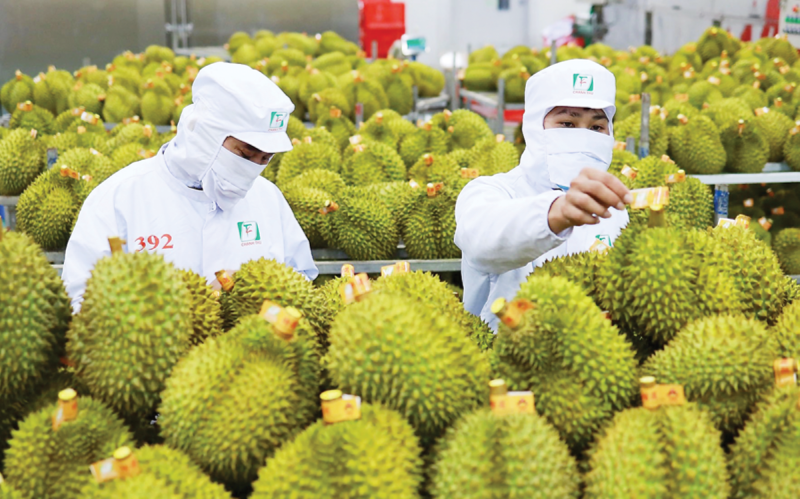
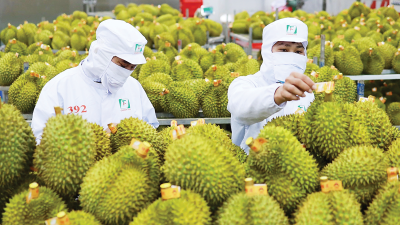
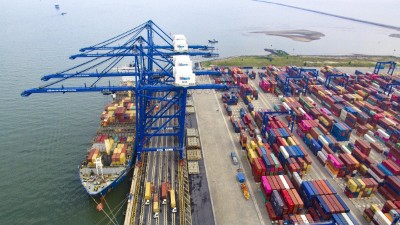
In the first quarter of 2026, Vietnamese durian exports witnessed a staggering 230% year-on-year increase, further asserting the fruit's growing appeal in international markets.
Beyond China, high-standard markets such as the US, South Korea, Australia, and Japan all recorded impressive growth. Notably, Vietnamese durian is expected to officially penetrate the Indian market starting in July 2026, as the industry aims for a total export target of $4.5 billion this year.
According to Ms. Nguyen Thi Thu Huong, Deputy Director of the Department of Plant Production and Protection (Ministry of Agriculture and Environment), Vietnamese durian has successfully paved its way into India.
It is anticipated that by July this, Indian authorities will finalize the necessary procedures to permit durian imports from Vietnam. This is a highly positive signal for the industry, given that India is the world’s second-largest billion-person market, trailing only China. Overcoming the technical barriers to access this market demonstrates that the capacity of Vietnamese durian to meet international standards is steadily improving.
“Opening the door to India does more than just unlock opportunities in a billion-person market; it serves as evidence of the Vietnamese durian industry’s transformation toward professionalism, quality, and long-term development,” Ms. Huong stated.
She further noted that while it may take time for Indian consumers to become accustomed to the flavor of Vietnamese durian, the potential is vast. Expanding export markets will help diversify outlets, reduce reliance on traditional markets, and create room for sustainable growth.
According to the Department of Plant Production and Protection, while expanding acreage and output were once the top priorities, “quality” has now become the central focus of the entire industry. In many regions, farmers have begun shifting their cultivation habits—emphasizing production logs, utilizing fertilizer rationally, controlling chemical residues, and strictly adhering to technical processes required for export.
In tandem with these efforts, the system of growing area codes and packing facility codes is being refined, acting as a “passport” for Vietnamese agricultural products to guarantee transparency and traceability in the global market. Simultaneously, businesses are accelerating investments in cold storage, freezing lines, quality management systems, and the digitalization of supply chains.
The durian industry is also moving toward sustainable farming models by focusing on soil improvement and reducing the use of chemical fertilizers and pesticides. These measures aim to lower input costs while maintaining productivity and quality. This shift is considered a prerequisite for entering the carbon credit market, creating added value through low-emission production activities.



 Google translate