


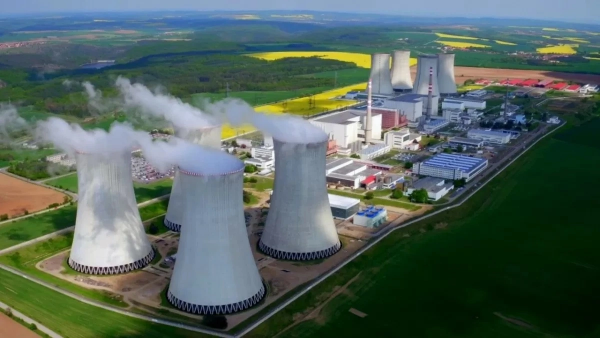
Nuclear power is projected to account for 6–8% of Vietnam’s total electricity output by 2050, according to a newly approved national strategy that establishes atomic energy as a key driver of energy security and green development.
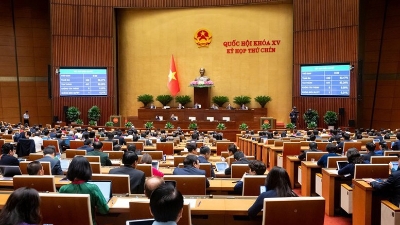
This is one of the key goals set out in the "Strategy for the Development and Application of Atomic Energy for Peaceful Purposes through 2035, with a Vision to 2050," approved under Prime Ministerial Decision 438/QD-TTg, signed by Deputy Prime Minister Nguyen Chi Dung on March 16.
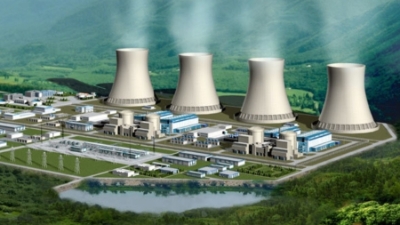
The long-term plan involves the addition of approximately four large-scale reactors and 10–15 Small Modular Reactors to the national grid to ensure energy security
The strategy aims to develop and apply atomic energy safely and securely to effectively serve socio-economic development, improve public quality of life, and protect the environment. It is also designed to strengthen national energy security and contribute to Vietnam’s commitment to achieving net-zero emissions by 2050.
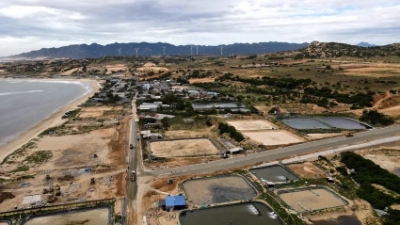
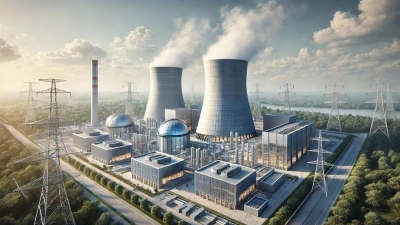
Regarding nuclear power development, the Strategy sets a goal to complete the construction and safely commence operations of the Ninh Thuan 1 and Ninh Thuan 2 nuclear power plants by 2035. The Government aims for domestic enterprises to account for 30% of the total investment value in the construction and installation of auxiliary components for these projects. Additionally, the plan seeks to deploy at least one nuclear power project utilizing Small Modular Reactor (SMR) technology.
By 2035, Vietnam expects to have finalized its nuclear power infrastructure and established a framework for future projects to ensure safety, sustainability, and efficiency.
In the field of radiation and radioisotope applications, the Strategy targets an average annual growth rate of 10–15% in economic efficiency by 2035.
Vietnam aims to bring its radiation medicine up to advanced ASEAN standards, targeting 20 CT scanners, 10 MRI machines, one imaging scanner, and one to two linear accelerators per million people, alongside a 100% transition to digital X-rays.
Furthermore, the country intends to master advanced nuclear techniques for industrial quality management and material processing, while manufacturing its own radiation and measurement equipment to replace imports.
To bolster scientific and technological potential, the strategy focuses on developing advanced research facilities by 2035. This includes the establishment of two national key laboratories specializing in nuclear power technology and rare earth, uranium, and titanium technologies, as well as three to five advanced laboratories.
The plan also aims to foster four to five research groups capable of mastering nuclear technologies to support power plants and research reactors, while investing in three to five international-standard universities for nuclear power training.



 Google translate