


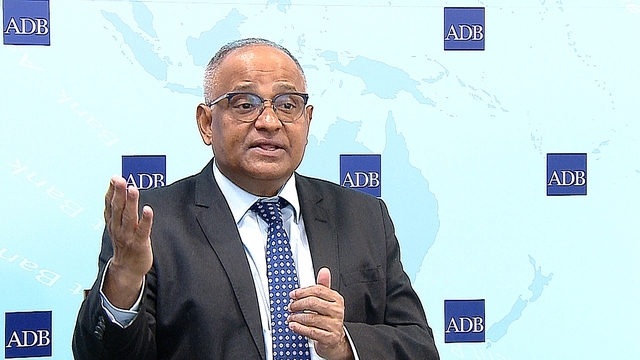
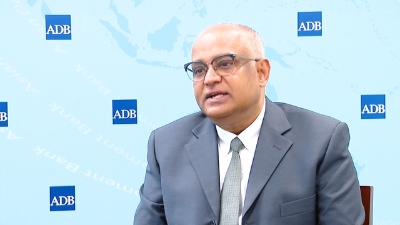
In a recent interview with the Vietnam Government Portal, Mr. Shantanu Chakraborty, Asian Development Bank (ADB) Country Director for Vietnam, held that 2025 has been a rollercoaster year for the global and regional economies, with a lot of uncertainties and surprises although with mixed impact on growth and global integration.
However, Vietnam achieved 7.9 per cent GDP growth in the first three quarters of 2025, up from 6.8 per cent in the same period of 2024, with positive quarter-on-quarter growth, according to him.
As of the end of November, exports increased by 16.1 per cent from the previous year, reaching $430 billion, while imports rose by 18.4 per cent to $410 billion, resulting in a trade surplus of $20.5 billion.
Robust foreign direct investment (FDI) attraction with disbursed inflows for the first 11 months reached $23.6 billion, up 8.9 per cent, while registered capital reached $33.7 billion, up 7.4 percent.
Vietnam's economic success in 2025 was driven by both external and domestic factors, with robust trade and investment, and effective policy responses, he remarked.
"The Vietnamese government has shown tremendous efforts in undertaking wide ranging reforms to achieve the growth ambition. The accelerating pace of ongoing institutional reforms with a drive to improve efficiency is timely and commendable. The focus should be on ensuring prompt and thorough implementation to deliver the results", he said.
In terms of directions, the broad reforms in development policies – ranging from science and technology, innovation and digital transformation, private sector development, human development in education and health, and energy security – are all relevant and urgently needed, added the ADB Country Director.
With a strong performance in 2025, Vietnam is in a good position to maintain the momentum to push for further growth and manage the emerging risks effectively.
However, the country faces important challenges in financial stability, external pressures, climate resilience, and the need for continued competitiveness and diversification.
Vietnam has many opportunities to sustain economic growth, attract investment
Regarding main opportunities for Vietnam in 2026 and beyond, Mr. Chakraborty said, reforms to improve the business environment, strengthen institutions, and enhance market efficiency can unlock productivity and support faster, more sustainable growth. There are some mixed results in the early stage, and more efforts are needed to sustain the early gains.
Besides, a young, tech-savvy workforce supports growth in digital services, fintech, e-commerce, and smart logistics. The country should continue making progress in skills upgrading and innovation ecosystems to drive higher-value, knowledge-based growth.
Building on existing strength, Vietnam has potential to attract more high-quality FDI in electronics, high-tech manufacturing, and green industries, supported by investment in renewables, grid upgrades, and climate-resilient infrastructure. This will create opportunities for both domestic and foreign investment growth.
The ADB Country Director suggested Vietnam give priority to expanding domestic demand – both in consumption and investment, which is supported by continued public investment in transport, digital infrastructure, and climate-resilient projects, while sustaining structural reforms to improve the business environment, raising productivity, and advancing digital and green transitions. Measures to foster innovation and technology can be pursued through functional markets for science, technology, and entrepreneurship, a vibrant start-up ecosystem, a robust regulatory framework and public-private collaboration. They are essential for strengthening competitiveness and securing higher-value, more sustainable growth and raise household incomes, improving consumer confidence.
Mr. Chakraborty emphasized the need to sustain external demand, particularly in manufacturing and exports, by enhancing competitiveness and diversifying markets as well as deepen domestic firms' integration into global value chains by linking with FDI exporters, maintain strong manufacturing performance and FDI inflows.
Vietnam's economic outlook is still positive, with strong opportunities in FDI, digital transformation, green growth, and innovation. Realizing these opportunities will require effective implementation of structural reforms, balanced macroeconomic management, and continued investment in human capital and infrastructure. The main risks are external shocks and domestic structural challenges, but with the right policies and support, Vietnam is well-positioned for sustainable, high-value growth, said Mr. Chakraborty.
Key measures for Vietnam to drive double-digit growth
The Vietnamese Government has set course for an ambitious goal to achieve high-income status by 2045, and a growth target of double-digit growth in 2026-2030, especially in a challenging global environment.
In the ADB Country Director's opinion, the target is meaningful as a directional guidance for the government's reform efforts, and its achievement is dependent on effective implementation of necessary actions.
To maintain high growth over a long period, Vietnam needs to push further foundational reforms to expand its exports, investment, and consumption, while maintaining macroeconomic stability, recommended Mr. Chakraborty.
In the near term, a large stimulus for public investment can be a boost for growth, and careful project selection and swift execution are important to ensure high return to investment and strengthen fiscal sustainability.
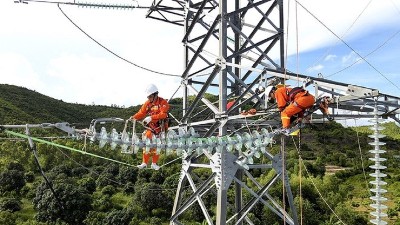
In the longer term, accelerated public investment in quality infrastructure can help unlock private sector investment and FDI to strengthen the country's competitiveness. Such investments including clean energy infrastructure, and a modernized power grid will also support the government's net-zero commitment and mobilize climate finance.
Fiscal stimulus and monetary easing can only push the economic development in the long run if they are accompanied by efforts to improve the business environment, ensure transparent regulations, and promote digital transformation.
These reforms will help Vietnamese businesses move up the value chain and improve efficiency in both private and state-owned enterprises. They should promote innovation and technology development through establishing robust markets for science, research, and entrepreneurship to speed up digital transformation and foster a thriving start-up ecosystem. Collaboration between public and private sectors is key to enhancing innovative capacity.
In addition to business regulation reforms, the country also needs to invest in human resource development, particularly upgrading digital, technical, and green skills, and strengthening social protection to build resilience and fostering inclusive growth. They will help enhance the workforce's productivity, which is crucial to transform the growth model.
If Vietnam maintains steady progress on macroeconomic stability, near-term stimulus and longer-term structural reforms, and human capital development, it is poised to achieve sustained growth goals and build a more resilient, competitive economy, said the ADB Country Director.






 Google translate