


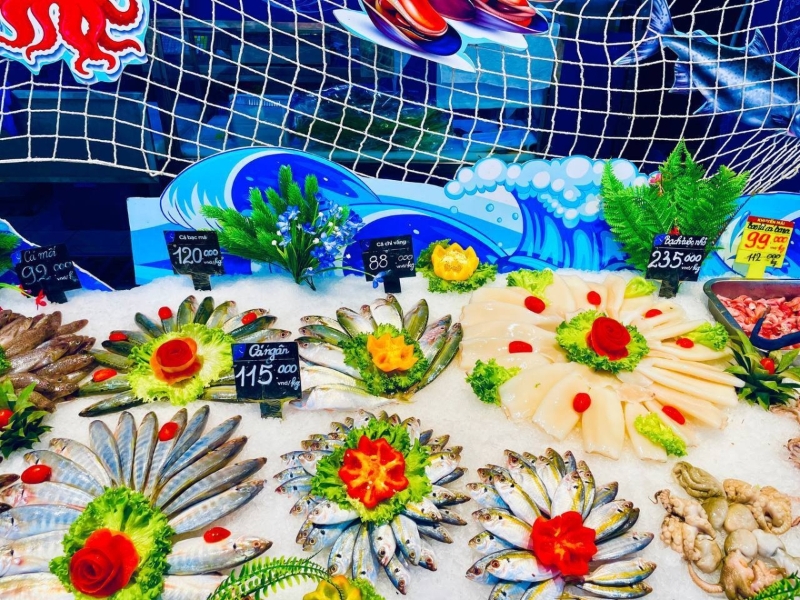
Since the second day of the Lunar New Year (Tet) - February 18, the market has gradually regained its vibrancy as traditional markets and retail outlets began partial reopenings. This year, several convenience store chains operated 24/7 throughout the holiday, while major retail systems resumed operations early with adjusted spring schedules.
According to the Domestic Market Authority (under the Ministry of Industry and Trade), the post-Tet market for essential goods has seen positive momentum. Although citizens continue to prioritize spring outings, New Year greetings, and family reunions, the demand for shopping—particularly for fresh food—has increased compared to the peak holiday days.
A survey of traditional markets in Hanoi on February 23 (the 7th day of Tet) revealed that vegetable prices remained stable, with some items dropping by 15–20% compared to the pre-Tet period. Prices for livestock, poultry, and seafood also saw reductions of VND10,000–15,000 per kilogram compared to the holiday peak. Conversely, fresh flowers for spiritual offerings continued to be sold at significantly higher prices than on ordinary days.
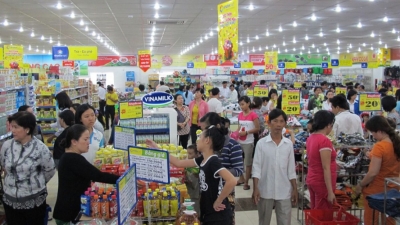
Reports from supermarkets indicate that inventory has been fully replenished with a wide variety of goods. Numerous spring promotion programs have been launched simultaneously, focusing on essential items, processed foods, household appliances, and cosmetics to stimulate consumer demand. Thanks to abundant supply and early stockpiling plans, prices for basic commodities have remained stable, with no reports of shortages or price spikes.
Modern distribution networks continue to play a key role in market stabilization. Convenience chains such as Circle K, FamilyMart, 7-Eleven, and GS25 remained operational throughout the holiday, while major retailers including Aeon, MM Mega Market, GO!, and Saigon Co.op have already reopened for the new season.
Experts predict that as daily life and production return to normal, purchasing power will gradually rise. However, given the ample supply and the stable operation of distribution systems, the market is likely to maintain a balanced state, effectively meeting consumer needs.
Regarding consumption trends, current demand is concentrated on fresh food groups such as green vegetables, seafood, and meat (pork and beef). Meanwhile, spiritual items such as fresh flowers and fruits for New Year offerings maintain steady purchasing momentum.
Outlining post-Tet priorities, the Domestic Market Authority stated that the focus will be on stringent market and price management. This includes maintaining seamless distribution networks and ensuring a balance between supply and demand for essential goods and services to prevent shortages, hoarding, or unreasonable price hikes. Authorities will also continue to implement solutions to stimulate domestic consumption and promote the "Vietnamese People Prioritize Using Vietnamese Goods" campaign.
Following the holiday, market surveillance forces will intensify inspections and controls at festival sites, on e-commerce platforms, and along key transportation routes.
The Ministry of Industry and Trade (MoIT) aims to strictly penalize violations regarding pricing, smuggling, counterfeit goods, products of unknown origin, and food safety issues to protect consumer rights and stabilize the market from the beginning of 2026.








 Google translate