


How would you assess Vietnam’s labor market in the current context?
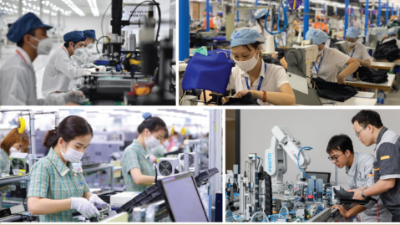
The ILO’s latest brief, “Jobs in Trade and Global Supply Chains (GSCs) in Vietnam,” shows that Vietnam now has the largest number of GSC-related jobs in Southeast Asia, with more than 20 million positions, accounting for over a quarter (27.1 per cent) of the region’s total GSC workforce.
Vietnam has also made significant structural progress, with millions of workers shifting from traditional agriculture to industry and services. This transition has been supported by strong institutional reforms, including amendments to the Labor Code 2019, the Law on Social Insurance 2024, and the revised Law on Employment 2025, aimed at strengthening the legal framework for employment support and social protection.

However, deeper integration also brings substantial external challenges. Vietnam’s labor market is highly exposed to global volatility. Recent ILO analysis shows that 76.8 per cent of GSC-related employment depends on demand from just six major partners: the US, China, the EU, Japan, South Korea, and ASEAN.
Domestically, demographic shifts pose long-term risks. Vietnam’s “golden population” period is gradually ending as the workforce ages. The median age reached 41 in 2024, while the share of young workers aged 15-24 fell sharply, to 9.5 per cent. Informal employment also remains widespread, leaving many workers without adequate protection during economic downturns.
Against this backdrop, what factors are shaping Vietnam’s labor market?
First, digitalization is rapidly expanding beyond the IT sector and becoming integral across the economy, particularly in e-commerce, fintech, and manufacturing. Digital skills are increasingly essential for most jobs. While this transformation has strong potential to boost productivity and business efficiency, it also requires a workforce capable of operating within integrated digital ecosystems.
Second, automation and robotics are expected to accelerate, especially in labor-intensive sectors such as textiles and garments, electronics assembly, and parts of agriculture. Automation can enhance efficiency and help Vietnam move up the value chain, but it will reduce demand for repetitive, low-skilled jobs. This creates an urgent need for large-scale reskilling and upskilling to ensure workers are not displaced and can transition into higher-value roles alongside new technologies.
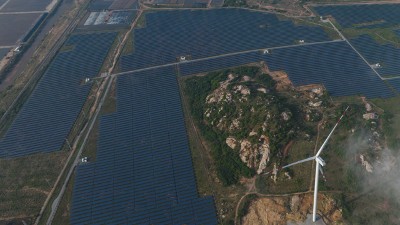
Third, the green transition is emerging as a key driver of future employment. Though green jobs currently account for only about 3.6 per cent of total employment, demand is expected to grow rapidly as Vietnam expands renewable energy, sustainable production, and climate-resilient infrastructure. Globally, green skills shortages are projected by 2030. This presents Vietnam with both a challenge and a strategic opportunity to equip its workforce with the skills needed to support green growth and strengthen its position in global supply chains.
Finally, demographic change is beginning to shrink Vietnam’s young workforce, requiring businesses to invest in lifelong learning, age-friendly workplaces, and technologies that help older workers remain productive.
What should Vietnamese businesses do to build their competitive advantages?
To achieve sustainable competitiveness, Vietnamese enterprises must move beyond a narrow focus on low labor costs and reposition themselves as centers of high productivity, innovation, and responsible business practices. The traditional low-wage model is increasingly unsustainable as Vietnam aims to become a high-income country by 2045.
Improving productivity through human capital development is essential. Competitive advantage today depends less on wage levels and more on workforce skills, adaptability, and innovation capacity. Businesses should invest systematically in reskilling and upskilling, particularly in technical fields, STEM [Science, Technology, Engineering, Mathematics], and emerging green skills.
Companies should also move towards productivity-linked wage systems, where efficiency gains and technological upgrading translate into fair wage growth, enabling workers to share in the benefits of innovation.
Strengthening industrial relations and working conditions is another pillar of sustainable competitiveness. Stable, safe, and inclusive workplaces are more resilient and better able to attract and retain talent. Effective social dialogue and collective bargaining can help align the interests of workers and employers, reduce workplace conflicts, and improve decision-making on wages, working hours, gender equality, and non-discrimination. Occupational safety and health should be treated as a strategic priority, not merely a legal obligation. Investing in safe and healthy workplaces enhances productivity and protects workers in higher-risk sectors.
Demonstrating strong corporate social responsibility and compliance with international labor standards has also become a prerequisite for participation in global supply chains. As Vietnam deepens integration and implements new-generation free trade agreements such as the Comprehensive Agreement from Trans-Pacific Partnership (CPTPP) and the EU-Vietnam Free Trade Agreement (EUVFTA), compliance with international commitments, including labor provisions, increasingly serves as a “license to operate.”
Businesses must eliminate child labor, forced labor, and discrimination, while upholding fundamental principles and rights at work. Expanding access to social insurance and unemployment insurance, and providing adequate income and health protection, are essential to building a stable and committed workforce. At the same time, adopting environmentally-sustainable production methods, supporting green job creation, and ensuring a just transition will help Vietnamese enterprises remain competitive in the global shift towards sustainable development.
What are the ILO’s priorities in expanding social protection and promoting sustainable employment in Vietnam?
The ILO’s priorities in Vietnam focus on strengthening social protection systems while supporting a labor market that can adapt to rapid economic, technological, and environmental change. Expanding social protection coverage and promoting sustainable employment are seen as mutually reinforcing goals.
A top priority is supporting the development of a multi-tiered, inclusive, and shock-responsive social protection system tailored to Vietnam’s socio-economic context. This includes promoting a nationally defined social protection floor in line with ILO Recommendation No. 202 and progressively applying minimum standards across the nine branches of social security set out in ILO Convention No. 102. Such a system is essential to protect workers from income shocks caused by economic volatility, technological disruption, or climate-related risks.
At the same time, promoting sustainable employment means enhancing job quality and resilience, particularly within global supply chains. Ensuring that economic integration translates into decent work is critical for long-term competitiveness and social cohesion.
Another cross-cutting priority is ensuring a just transition for workers affected by digitalization, automation, economic restructuring, and climate change.
By strengthening social protection systems, promoting sustainable and decent employment, investing in skills for digital and green transitions, and advancing social dialogue and labor standards, Vietnam can ensure that economic transformation delivers shared prosperity and inclusive growth, leaving no one behind on the path to 2045.




 Google translate