


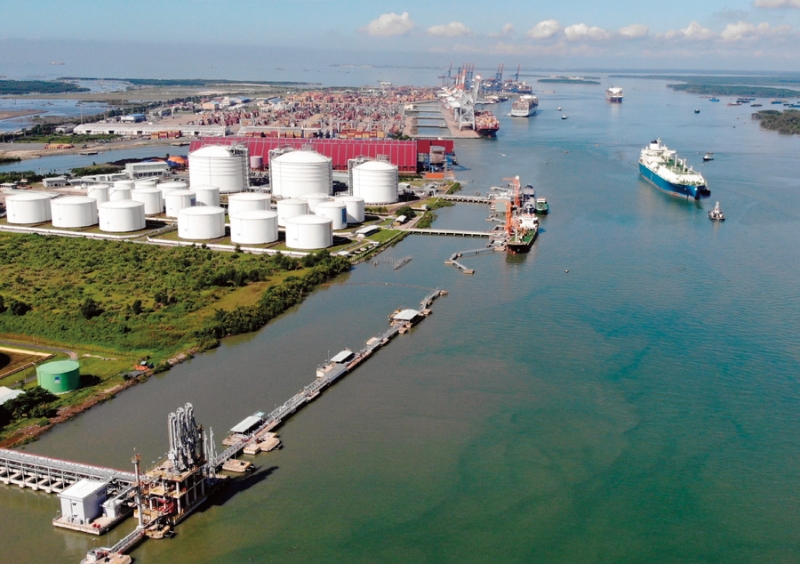
Developments in the Middle East continue to have far-reaching impacts on global energy security and transportation, forcing countries to adjust policies to respond proactively. In this context, the government has flexibly established fiscal and supply “buffers” to stabilize the economy. The Ministry of Industry and Trade has proactively increased petroleum reserves from 15 to 26 days and at the same time cut a range of taxes and fees, such as environmental protection tax, VAT, and special consumption tax, to 0 per cent to help stabilize market sentiment, control cost-push inflation, and maintain reasonable profit margins for the production sector.
However, tax and fee cuts or the use of the Petroleum Price Stabilization Fund are only short-term tools. According to recommendations from the Organisation for Economic Co-operation and Development (OECD) and the International Monetary Fund (IMF), prolonging price support measures would put significant pressure on the State budget, distort market signals (reducing incentives for energy conservation), and hinder long-term structural solutions. Despite having the Dung Quat and Nghi Son oil refineries, Vietnam currently meets only 70 per cent of its petroleum demand domestically, with the remaining 30 per cent being imported from ASEAN and the Middle East, exposing the country to supply chain disruptions.
Historic step
In the new global economic structure, energy is no longer merely an input commodity but a factor shaping geopolitical order. A country lacking energy self-reliance is highly vulnerable to supply chain disruptions, and dependence on external sources is not only a price risk but also a national security risk. Therefore, the strategic focus must shift from “shock mitigation” to “enhancing economic resilience to energy volatility” by strengthening internal capacity through science and technology.
To understand the value of technological self-reliance in the oil and gas sector, it is useful to revisit the Dai Hung oil field. In 1974, Mobil Oil first discovered hydrocarbons at the Dai Hung structure. In 1988, PetroVietnam directed its subsidiary to identify the Dai Hung field. From 1993 to 1996, an international contractor consortium including BHP (Australia), Total (France), Sumitomo (Japan), Petronas (Malaysia), and the PetroVietnam Exploration Production Corporation (PVEP) invested more than $400 million to develop the field, with BHP as operator. However, complex geology, harsh deep-water conditions, and underwhelming financial performance led foreign investors to gradually withdraw.
In 1999, the Dai Hung field was transferred to PetroVietnam for a symbolic price of $1. The corporation then assigned Vietsovpetro to continue operations, maintenance, and further exploration. By 2003, a pivotal decision was made to hand over operations entirely to domestic units under PetroVietnam.
From this near-zero starting point, Vietnamese petroleum engineers, through expertise, internal capacity, and persistence, gradually optimized production processes, mastered complex operational technologies, and significantly improved oil recovery rates. Advanced scientific and technological solutions were applied, including AI, well design optimization, enhanced oil recovery techniques, and improvements in offshore processing and transportation systems.
From a project once valued at $1, the Dai Hung field has been successfully revived, generating cumulative revenues of more than $4 billion and becoming a symbol of Vietnam’s technological mastery in the oil and gas sector.
While the revival of Dai Hung in the early 2000s was a story of determination, the current Phase 3 development project is considered a historic milestone, as it is fully designed, constructed, and operated using 100 per cent domestic resources and expertise. The integrated strength of the PetroVietnam ecosystem has been fully leveraged, with close coordination among leading scientists under the direction of the PVEP.
The project includes the construction and installation of the WHP-DH01 wellhead platform at a water depth of over 110 meters, along with a complex 5.2 km flexible pipeline connecting it to the central processing platform. Notably, the project was implemented under extremely challenging conditions: the Covid-19 pandemic disrupting global supply chains, geopolitical volatility driving up material costs, and an offshore location 265 km from shore.
Completing the project with entirely Vietnamese personnel not only delivers economic benefits but also marks Vietnam’s entry into a small group of countries capable of fully mastering the design, construction, and operation of deep-water offshore oil and gas facilities.
This achievement is not only a solution to increasing output to offset supply shortages but also a milestone affirming economic sovereignty and the capacity to safeguard national maritime space through modern civilian infrastructure.
Energy reshaping global order
In the current context, lessons from technological self-reliance at Dai Hung extend beyond fossil fuel extraction and serve as a key reference point as Vietnam enters a new era: the era of renewable energy and digital and green transformation.
As short-term fuel price support policies phase out, the economy must focus on optimizing energy use across the system. Digital transformation in Vietnam’s petroleum sector is improving operational efficiency, enhancing transparency, and increasing economic effectiveness. PetroVietnam is applying AI, the Internet of Things (IoT), and big data to optimize costs, improve the customer experience, ensure regulatory compliance, strengthen data measurement and forecasting capabilities, and support decision-making amid global uncertainties.
Heavy industries such as cement, steel, and chemicals currently account for 50-60 per cent of national energy consumption. According to the Institute for Policy and Strategy Studies, applying new technologies, smart grids, and automation could reduce energy costs by 10-20 per cent. Price pressures should therefore be transformed into a driving force for businesses to restructure, innovate, and reduce energy intensity per unit of GDP.
Completing the project with entirely Vietnamese personnel not only delivers economic benefits but also marks Vietnam’s entry into a small group of countries capable of fully mastering the design, construction, and operation of deep-water offshore oil and gas facilities.
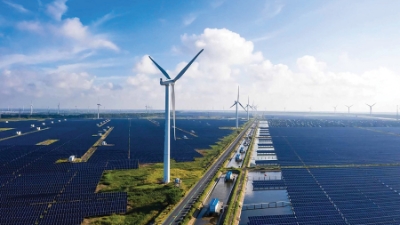
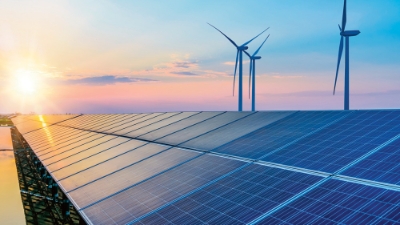
Moreover, the capability to master deep-water offshore projects like Dai Hung provides valuable experience for Vietnam to confidently implement the National Power Development Plan for 2021-2030, with a vision to 2050 (Power Development Plan VIII, or PDP8). Vietnamese engineers are fully capable of designing, building, and operating offshore wind farms in the near future. This represents a transformative shift: from extracting finite resources beneath the continental shelf to harnessing limitless wind and solar energy.
At the same time, energy self-reliance and the greening of the power system are essential to attracting next-generation, high-quality FDI. As developed markets impose stricter environmental, social, and governance (ESG) standards and Carbon Border Adjustment Mechanisms (CBAM), a clean, self-reliant, and technologically-advanced energy system would serve as a “passport” for Vietnamese goods to integrate deeper into global supply chains.
The technological achievements of the energy sector are not accidental but the result of persistent and often unrecognized efforts by the scientific and technological workforce. The Prime Minister’s direct role as Chairman of the Central Emulation and Commendation Council underscores a clear political direction and strategic vision of the Party and the State in the new era.
(*)Ms. Le Nguyen Thien Nga is the Director of the Institute of Policy Administrator and Development Strategy.






 Google translate