


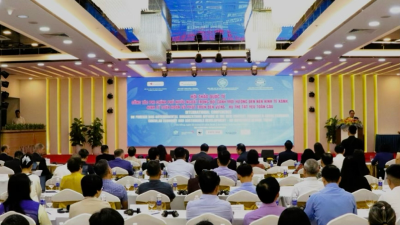
Ho Chi Minh City’s Investment and Trade Promotion Centre and the Import-Export Department under the Ministry of Industry and Trade held a seminar on October 23 to explore export opportunities arising from the Vietnam–United Arab Emirates Comprehensive Economic Partnership Agreement (CEPA).
The event aimed to help Vietnamese businesses capitalise on tariff preferences and rules of origin under the agreement to expand into the UAE, the Gulf Cooperation Council (GCC) market, the wider Middle East and Africa.
Mr. Pham Binh An, former deputy director of the Ho Chi Minh City Institute for Development Studies, said the agreement established a comprehensive legal framework for trade, with the UAE committing to eliminate tariffs on approximately 99% of Vietnam’s export value. The deal could also facilitate UAE investment in Vietnamese infrastructure and clean energy projects.
However, Mr. An warned that businesses must meet the UAE’s stringent technical requirements and Halal standards, ensuring compliance throughout the supply chain, from raw material sourcing to transportation.
According to the Vietnam Customs, bilateral trade between Vietnam and the UAE reached approximately $6.55 billion in 2025, with Vietnamese exports accounting for more than $5.9 billion. In the first half of 2026, Vietnam’s exports to the UAE fell 16.4% year on year, while total two-way trade edged up 0.2%.
The CEPA, which took effect on February 3, 2026, provides for the UAE to immediately eliminate tariffs on 74.2% of tariff lines, rising to 89.2% after five years.
The preferential access offers Vietnamese exporters a potential competitive advantage, but businesses will need to comply with origin requirements and quality standards to secure and expand their market share.






 Google translate