


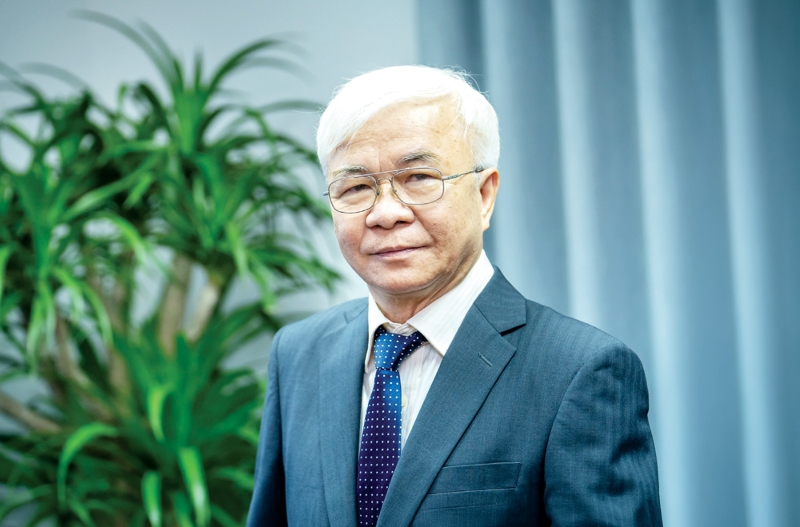
Looking back over the 35-year journey of Tap chi Kinh te Viet Nam / Vietnam Economic Times / VnEconomy, what do you consider to be the key milestones that have shaped its identity and position today?
Over its 35 years of development, Tap chi Kinh te Viet Nam (with publications including Tap chi Kinh te Viet Nam, Vietnam Economic Times, and VnEconomy), formerly Thoi bao Kinh te Viet Nam, has achieved a number of significant milestones that have helped shape the strong identity and standing it enjoys today.
Among its most notable achievements has been the launch and sustained development of influential forums and programs. One example is the Vietnam Connect Forum, an annual event initiated by Tap chi Kinh te Viet Nam in 2021 in cooperation with the Ministry of Foreign Affairs. The Forum acts as a bridge between the government, local authorities, and the business community, both foreign-invested enterprises (FIEs) and domestic enterprises, to discuss economic issues, promote green growth, and advance sustainable development.
Another landmark initiative is the Vietnam Excellent Brands program, organized annually by Tap chi Kinh te Viet Nam since 2003. The program has recognized hundreds of Vietnamese enterprises for outstanding achievements in business performance, innovation, digital transformation, green transition, and contributions to society, thereby supporting the country’s broader economic development.
Similarly, the Golden Dragon Awards, which have been held for the past 25 years, have not only honored FIEs but also created opportunities for dialogue and networking between domestic and international business communities and policymakers.
Another key milestone is the Vietnam Economic Scenario Forum (VESF), launched by the organization in 2008. Over the past 16 years, it has evolved into an official, independent, credible, and practical platform that has consistently accompanied Vietnam’s economic development. The Cool Product Awards program, initiated in 2006, has likewise represented a long-term effort to foster stronger connections between manufacturers and consumers.
In the digital era, our pioneering spirit is reflected in its bold digital transformation strategy and adoption of AI. The publication introduced a new digital interface and an AI-powered newsroom management platform, AI CMS, integrating solutions such as automated translation, article summarization, automated podcasts, and, notably, the Askonomy AI chatbot.
We are proud to be among the first Vietnamese media organizations to develop a comprehensive, customized AI ecosystem designed to better serve readers. The launch of the Marcom-AI Platform and the Data and Artificial Intelligence Alliance (D.A Alliance) further underscores our commitment to enhancing content quality and expanding our influence.
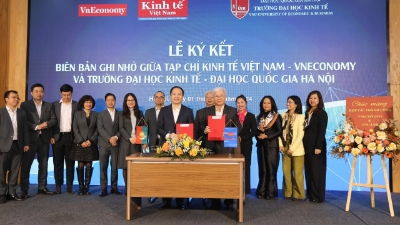
These efforts, combined with our editorial philosophy of “Authentic Perspectives - Positive Thinking - Practical Solutions” and close collaboration with research institutions such as the University of Economics and Business under the Vietnam National University, Hanoi, have enabled us to continually innovate while preserving its core values and reinforcing its position as one of Vietnam’s leading economic publications.
From its beginnings as an economic publication launched during Vietnam’s early reform period, how has the organization contributed to and accompanied the country’s economic development, particularly in its role as a bridge between the Party, the State, businesses, entrepreneurs, and the public over the past three decades?
For more than three decades, we have remained committed to its mission of reflecting and accompanying the nation’s economic development, particularly through its role as an important bridge connecting the Party, the State, businesses, entrepreneurs, and the public.
It has always recognized the vital role of journalism and communications in promoting growth and sustainable development, from the enterprise level to the broader national economy.
This bridging role has been demonstrated through a variety of initiatives. First, we have created effective dialogue platforms between the business community, both domestic enterprises and FIEs, and policymakers and regulators at both the central and local levels. The VESF stands as a vivid example. Through years of persistence and dedication, the Forum has accompanied Vietnam’s economy through periods of both challenge and achievement, becoming an official, independent, credible, and valuable source of information and policy consultation. It has contributed practical recommendations and high-quality solutions based on official, multidimensional information and innovative perspectives.
Second, the magazine has focused on producing high-quality, in-depth journalism closely aligned with the realities facing businesses. It listens to concerns and policy barriers affecting enterprise development and uses its reporting to propose recommendations and solutions aimed at addressing shortcomings in both macro-economic policymaking and day-to-day business operations. Many reports and recommendations generated through our thematic forums and discussions have been submitted to the Prime Minister and relevant ministries, helping address urgent issues across various sectors of the economy.
Finally, guided by the principle of “standing alongside businesses,” we haveffectively conveyed the concerns and aspirations of enterprises to senior leaders within the Party, State, and government. At the same time, it has provided businesses and the public with timely, accurate, and comprehensive information on Party and State policies and directions, thereby contributing to the broader mission of national economic development.
In your view, what is the greatest challenge facing economic journalism today?
In an era increasingly dominated by digital technology, social media, and AI, economic journalism faces unprecedented challenges. The greatest challenge lies in maintaining accuracy, depth, and professional integrity within a fast-moving and increasingly complex information environment.
First, the pressure to process and publish information quickly continues to intensify. Readers expect immediate updates, yet they also demand in-depth reporting that explains the meaning behind economic data and its real-world implications for markets and society. This creates a dangerous trap: if journalists become less rigorous in verifying information, even a single unsupported assessment or one-sided perspective can generate unrealistic expectations or unnecessary concerns, potentially affecting markets and public sentiment.
Second, sourcing information and pursuing the truth have become more difficult than ever. In the economics sphere, data and information available to journalists may be carefully framed to serve particular interests. Obtaining positive information from business leaders is often straightforward; uncovering and verifying negative developments is far more challenging. This reality requires journalists to possess strong professional expertise, a deep understanding of economic and market dynamics, and a healthy degree of skepticism, to avoid being drawn into subjective judgments or one-sided narratives.
Third, profound changes in audience behavior, including growing demand for diverse, personalized, and interactive content, have made digital transformation an existential challenge for media organizations. Newsrooms must continually innovate to meet these evolving expectations while ensuring that technology does not overshadow the profession’s fundamental values.
Ultimately, the greatest challenge is ensuring that economic journalism remains agile and technologically advanced in the digital age while preserving the rigor, fairness, accuracy, and analytical depth that define credible journalism. Economic reporters must navigate an increasingly chaotic flow of information without becoming trapped by the distortions and pitfalls hidden within a complex maze of data.

Based on your own experience, what enables an economic news organization to preserve its core values, credibility, and professional integrity in an increasingly competitive information environment?
I believe the most important factor is professional integrity and an unwavering commitment to the publication’s mission and principles.
Today’s information environment is characterized by the rapid spread of news and unprecedented competition from social media and digital platforms. Yet it is precisely in such circumstances that mainstream journalism must remain firmly anchored to its core principles: accuracy, objectivity, responsibility, and a commitment to serving the broader interests of the economy and society.
Economic journalism is not simply about reporting on businesses or markets. Behind every economic policy, market fluctuation, or technological trend are direct implications for society, the investment climate, and the confidence of businesses and citizens. As a result, economic journalists must possess not only professional expertise and critical thinking skills but also a high degree of care and discipline in handling information.
Another essential factor is the ability to maintain editorial independence. In today’s competitive environment, media organizations face pressure from every direction, including the race for speed, audience traffic, and financial sustainability. However, if a publication sacrifices objectivity for convenience or pursues sensationalism at the expense of credibility, trust can be lost very quickly, and is often extremely difficult to regain.
How do you view the role, social responsibility, and influence of economic journalism on the business community and the broader economy?
I strongly believe that the role, social responsibility, and influence of economic journalism on the business community and the broader economy are both significant and far-reaching. We are proud to serve not only as a media organization but also as a platform for dialogue and a trusted bridge connecting the government, businesses, and experts, helping to foster and advance national development.
First, economic journalism plays a vital role in promoting growth and sustainable development. Through the analysis and evaluation of policies, market trends, and business activities, Tap chi Kinh te Viet Nam / Vietnam Economic Times / VnEconomy provides comprehensive insights that help economic stakeholders make informed decisions. This reflects the fundamental value of journalism and communications in supporting sustainable growth at the enterprise, sectoral, and national levels.
Second, the magazine carries an important social responsibility as an official, independent, credible, and practical source of information. Forums such as the VESF have become venues for policymakers, regulators, domestic and international economists, and business leaders to exchange ideas and discuss pressing issues. We listen closely to the challenges and policy barriers faced by businesses and convey those concerns to senior leaders within the Party, the State, and the government.
Third, the influence of economic journalism is reflected in its ability to create and spread value. By developing high-quality, in-depth journalism closely connected to real-world challenges, we do more than report events, we help shape public understanding and build consensus around important economic issues. When recommendations and solutions generated through our thematic forums are received by the government and lead to action by ministries and agencies, that represents the clearest evidence of journalism’s practical impact. It demonstrates that the magazine is not merely a provider of information but also a trusted partner working alongside institutions and businesses to drive development and create new value for society.
On the occasion of the 101st Vietnam Revolutionary Press Day and the 35th anniversary of Tap chi Kinh te Viet Nam / Vietnam Economic Times / VnEconomy, what do you believe are the key factors that ensure the stable and sustainable development of a media organization?
In my view, three fundamental factors are essential to ensuring the stable and sustainable development of a media organization in the new era: people, content, and technology.
First, people - the journalists themselves. They are the organization’s most valuable asset. A team that is politically grounded, professionally capable, and ethically sound provides the foundation for overcoming any challenge. Meticulousness, emotional discipline, and the ability to build arguments based on independent data are enduring professional values that must never be lost. These principles should be continuously nurtured and strengthened in every generation of reporters and editors.
At the same time, media organizations must adapt to changing circumstances and emerging demands, particularly the need to provide information that contributes to national economic development in a new era. In my opinion, leadership plays a critical role in fostering consensus, unity, and cohesion within the organization. Only by creating an environment that inspires creativity, commitment, and collective purpose among reporters, editors, and staff can a media organization secure sustainable long-term growth.
Second, content quality and innovation. In an age of information overload, only high-quality, in-depth, and genuinely useful content can retain audiences and build lasting credibility. We strive every day to improve our products so they are more insightful, constructive, effective, and modern. Content must remain closely connected to business realities, listening to the challenges and policy obstacles faced by enterprises while offering practical recommendations and solutions. At the same time, journalism must continue to fulfill its role as a bridge, conveying the concerns and aspirations of businesses to the government while providing citizens with timely and accurate information about the Party’s and State’s policies and directions.
Third, the ability to adapt to and master technology. Digital transformation is no longer an option - it is an inexorable path forward. Media organizations must build professional digital platforms, diversify content formats, and embrace the most advanced technologies available, particularly AI. Developing a robust digital ecosystem, operating a modern digital newsroom, and distributing content across digital platforms are essential to making information more accessible to audiences. Technology serves as a powerful enabler, helping improve content quality, optimize operations, expand influence, and create new value for society.
The balanced and coordinated development of these three pillars - people, content, and technology - will be the key to ensuring that media organizations remain stable, sustainable, and capable of contributing to the country’s socio-economic development in the new era.
In the next stage of development, what goals do you envision for Tap chi Kinh te Viet Nam / Vietnam Economic Times / VnEconomy as it seeks to maintain its position as one of Vietnam’s leading economic media organizations?

We will continue serving as an effective platform connecting the government, businesses, and experts, while sharing our technological achievements with the wider journalism and business communities to help them optimize their operations in this new era of the nation’s rise.”
In this new phase of development, Tap chi Kinh te Viet Nam / Vietnam Economic Times / VnEconomy will pursue ambitious goals and aspirations aimed at strengthening its position as one of Vietnam’s foremost economic media organizations.
Our primary objective is to become Vietnam’s leading economic newsroom, not only in scale but also in quality, depth, and influence. To achieve this, we will continue accelerating comprehensive digital transformation while building and expanding a strong digital ecosystem supported by a modern digital newsroom. We aspire to be a pioneering Vietnamese media organization with a rich and highly-customized AI ecosystem that serves readers in the most effective way possible, delivering fast, reliable information on Vietnam’s economy to audiences around the world.
We also seek to contribute to the country’s broader development and the advancement of the business community. This means continuously innovating and evolving to better meet audience needs while supporting the rapid, strong, and sustainable growth of Vietnam’s economy. We will continue serving as an effective platform connecting the government, businesses, and experts, while sharing our technological achievements with the wider journalism and business communities to help them optimize their operations in this new era of the nation’s rise.
Our guiding principle - “Authentic Perspectives - Positive Thinking - Practical Solutions” - will remain the foundation of everything we do.
What message would you like to share with economic journalists?
To economic journalists, especially younger reporters and editors, I would like to share several thoughts.
First, embrace innovation while preserving traditional values. The digital era and AI offer powerful new tools, but they should never replace the core principles of journalism: meticulous reporting, emotional restraint, and evidence-based analysis grounded in independently verified data. Adopt the most modern reporting methods available, but always maintain integrity and professional rigor.
Second, continuously strengthen your expertise and personal resilience. Economics and finance are highly-complex fields that require deep knowledge and understanding. The journey from recording facts to becoming a journalist capable of delivering insightful analysis and critical thinking is demanding, but it is through that journey that true professional growth occurs. Learn to maintain a healthy balance between work and personal life, because a calm mind and clear judgment are essential conditions for producing high-quality journalism.
Finally, never lose your sense of purpose and commitment to creating value. Economic journalism is not merely a profession - it is a mission. Every article and every analysis have the potential to influence policy, shape markets, and contribute to society. Take pride in that responsibility and continue striving to become outstanding journalists who help advance the prosperity and development of the nation.




 Google translate