


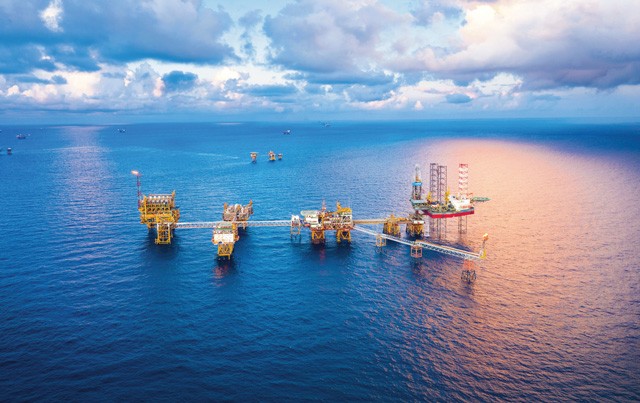
Vietnam’s 3,260 km coastline has long supported fisheries, shipping, and coastal tourism, but today the sea is emerging as a strategic development space where offshore renewable energy, modern aquaculture, maritime logistics, marine biotechnology, and ecosystem conservation must coexist as the country pursues faster economic growth and its green transition.
In an article published on the occasion of World Environment Day on June 5 and World Oceans Day on June 8, Party General Secretary and State President To Lam wrote that “green development, environmental protection, ocean conservation, and climate change adaptation should become a central pillar of the country’s development model in the new era.”
Turning that vision into reality will require more than policy commitments; it demands stronger governance, regulatory reforms, and financing mechanisms capable of mobilizing both public and private capital. With Southeast Asia facing an estimated $2.1 trillion financing gap for the blue economy through 2030, according to the Organisation for Economic Co-operation and Development (OECD), Vietnam’s next challenge is not defining its ocean ambition but delivering it through effective implementation, investment, and coordination.
New vision for the sea
As Vietnam’s blue economy expands, so too does competition for marine space. Economic activities are increasingly competing for the same ocean resources, exposing the limitations of traditional sector-based management. Without stronger coordination, conflicts over sea use could discourage investment while placing greater pressure on fragile marine ecosystems.
Associate Professor Nguyen Chu Hoi, Permanent Vice Chairman of the Vietnam Fisheries Society, believes the solution lies in fundamentally rethinking marine governance. “The sea is a three-dimensional space with multiple uses and interests,” he said. “Therefore, governance should move away from a sector-based approach toward integrated and cross-sectoral management.”
Marine governance, he continued, should also become ecosystem-based. Rather than regulating individual species or isolated economic activities, authorities should manage entire marine habitats together with the environmental factors that influence them. He noted that this approach has increasingly become the norm in modern marine governance worldwide.
The transition toward integrated governance is becoming increasingly urgent as environmental pressures intensify. Mr. Nguyen Quoc Toan, Director of the Vietnam Agency of Seas and Islands, warned that unless waste is controlled at its source, environmental quality in many coastal areas will continue to deteriorate. Critical ecosystems such as coral reefs, seagrass beds, and mangrove forests will face further degradation, directly threatening the livelihoods of coastal communities. More concerning, he noted, is that such damage often occurs gradually and silently, yet leaves long-lasting consequences that are difficult to reverse.
The shift toward integrated governance is therefore about more than environmental protection and is increasingly viewed as a prerequisite for sustainable investment and long-term economic development. Clear planning can reduce conflicts between competing marine industries, improve the allocation of ocean space, and provide investors with greater confidence in capital-intensive projects such as offshore renewable energy, industrial aquaculture, and maritime infrastructure.
Rather than treating conservation and development as competing priorities, Vietnam is increasingly seeking to integrate the two through a governance model that recognizes healthy marine ecosystems as an essential foundation for future economic growth.
Turning vision into action
Recognizing that effective governance is essential to unlocking the blue economy, Vietnam has spent the past four years building the institutional foundation for integrated ocean management through Marine Spatial Planning (MSP); an internationally-recognized approach that seeks to balance economic development, environmental protection, and social interests.
Supported by the Norwegian Government through a United Nations Development Programme (UNDP) project on MSP, Vietnam has established the country’s first comprehensive framework for integrated ocean management. The recent approval of the National Marine Spatial Plan by the National Assembly, followed by the government’s adoption of the Coastal Master Plan, marks what project partners describe as a game-changing milestone, providing the country’s first comprehensive legal framework for balancing ocean conservation with economic development.
The project has also sought to strengthen institutional capacity beyond national planning. Through initiatives including the Blue Economy 2.0 strategy, the Provincial Blue Economy Index (PBEI), and the publication of “12 Lessons Drawn from Vietnam’s Marine Spatial Planning Process,” national and provincial authorities have worked to build a shared understanding of integrated ocean governance across sectors.
Pilot initiatives are already demonstrating how the new approach can be applied locally. In Quang Ninh province, Hai Phong city, and Khanh Hoa province, marine zoning plans, coral transplantation activities, and the mapping of innovative blue business models are helping restore marine ecosystems while supporting new economic opportunities. Hundreds of local officials have received training, creating a growing network of practitioners responsible for implementing marine spatial planning at the local level.
The next phase is shifting from planning to execution. Building on the initial project, the Norwegian Government has committed a further NOK12 million ($1.2 million) to support implementation between 2026 and 2029, focusing on removing the institutional, spatial, and financial barriers that continue to constrain Vietnam’s blue transition.
The project will support all 21 coastal localities in translating national zoning guidelines into local planning while strengthening institutional capacity and expanding marine conservation. It also aims to establish Marine Coordination Platforms at both the national and local levels, bringing together government agencies, researchers, and industries including fisheries, oil and gas, maritime logistics, and renewable energy to jointly plan the use of marine space.
Rather than allowing sectors to compete for increasingly scarce ocean resources, the platforms will use advanced geographic information system (GIS) modeling and shared data to evaluate multiple-use scenarios and promote more coordinated decision-making.
The project seeks to strengthen public-private partnerships, improve marine data sharing, and identify investment-ready marine areas capable of attracting capital into offshore wind, sustainable aquaculture, and other emerging marine industries. It also aims to help unlock new financing mechanisms, including blue bonds and blue carbon markets, to support long-term ocean sustainability.
Unlocking investment
While Vietnam has established an ambitious policy framework and laid the institutional foundations for integrated ocean governance, translating those plans into tangible economic outcomes will depend on mobilizing significantly greater investment and addressing longstanding regulatory constraints.
According to the OECD’s “Financing Southeast Asia’s Blue Economy” report, Southeast Asia faces a financing gap for the blue economy of nearly $2.1 trillion through 2030. The report argues that development assistance will remain important for supporting public goods such as governance reform, data systems, and capacity building, but cannot by itself finance the region’s transition. Rather, governments will need to attract a broader mix of public and private capital through instruments including blended finance, blue bonds, and blue carbon mechanisms.
Vietnam’s experience illustrates both the opportunities and the remaining obstacles. Several coastal localities are already leveraging their marine advantages to drive growth. In Ca Mau province, where more than 300 km of coastline and around 120,000 sq km of fishing grounds support fisheries, renewable energy, ports, and tourism, processed fishery output exceeded 1.49 million tons during 2021-2025, generating more than $10.4 billion in export revenue. The province remains Vietnam’s largest shrimp producer and aims for marine industries to contribute 40-45 per cent of budget revenue by 2030 as it works toward becoming a modern, green, and sustainable marine economy by 2045.
In the north, Quang Ninh is restructuring its marine economy around industrial-scale aquaculture and stronger environmental management. Under its 2021-2030 master plan, the province plans to dedicate more than 45,000 ha to marine farming while increasing the share of industrial aquaculture to more than 75 per cent of total output by 2030. As of the end of June 2026, authorities had allocated more than 5,200 ha of sea surface to 57 organizations and more than 800 individuals, helping improve access to bank financing and attract investment in modern marine farming.
Yet implementation continues to expose weaknesses in the regulatory framework. More than 50 applications for sea-area allocation remain pending in Quang Ninh because of legal issues surrounding investment approval procedures, underscoring the gap between policy ambition and practical execution.
Business groups argue that institutional reform will ultimately determine whether Vietnam can fully unlock the potential of its blue economy. Mr. Dau Anh Tuan, Vice Secretary General and Head of the Legal Affairs Department at the Vietnam Chamber of Commerce and Industry (VCCI), said investors in offshore wind, high-tech aquaculture, marine tourism, and coastal reclamation continue to face difficulties because property rights over sea areas have yet to be clearly established. Without rights that can be transferred or used as collateral, businesses struggle to secure long-term financing for capital-intensive marine projects.
Similarly, Mr. Bui Tuan Anh, Vice Secretary General of the Vietnam Seaculture Association, called for synchronized infrastructure planning, simplified procedures for long-term sea-area allocation, and insurance and financial mechanisms to support the marine farming industry.
Recognizing these challenges, the government is preparing revisions to the Law on Marine and Island Resources and Environment that are expected to introduce new incentives for sustainable marine economic development while strengthening the legal framework governing the use of marine resources.




 Google translate