


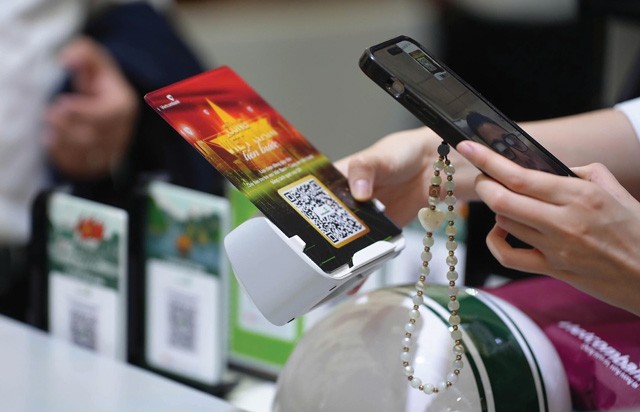
QR payments began to be rolled out in Vietnam around 2017 and have been gradually standardized since 2018. The launch of VietQR in 2021 established a common identity and connectivity standard, laying the foundation for the nationwide expansion of QR payments. Also in 2021, Vietnam’s QR payment system expanded beyond its borders when the National Payment Corporation of Vietnam (NAPAS) and the Thailand Switching Company (NITMX) announced the completion of a retail QR payment connection between Vietnam and Thailand, allowing Thai visitors to use their familiar banking applications to scan codes and make payments at participating merchants in Vietnam.
After nearly five years of building infrastructure and implementation experience, Vietnam’s cross-border QR payment system - VietQR Global - is entering a new phase of expansion, with only 6.2 per cent of the potential market currently covered. NAPAS had completed retail payment connections with six Asian countries as of August - Thailand, Laos, Cambodia, Singapore, China, and South Korea - while continuing to expand into other markets.
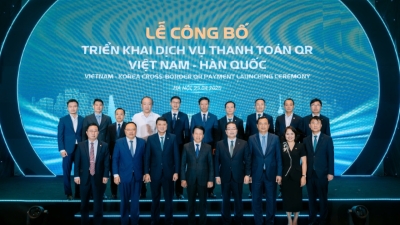
Speaking at the “Promoting Cross-Border QR Code Payments: A New Impetus for Retail and Tourism” forum, jointly organized on September 25 by Tap chi Kinh te Viet Nam / Vietnam Economic Times / VnEconomy, the Payment Department at the State Bank of Vietnam (SBV), and NAPAS, Deputy Governor of the SBV Pham Tien Dung stressed that the issue is not simply about a technology or a QR code, but about how payment connections can create real value for the economy.
Cross-border retail payments, he said, should be viewed more broadly - from connecting payment infrastructure to connecting people and businesses, and from connecting systems to facilitating the flow of tourism, retail, trade, and services. This approach sets a new benchmark for the expansion of cross-border QR payments.
Driving spending
Tourism is among sectors where the economic value of cross-border QR payment connectivity is most evident. According to the Vietnam National Authority of Tourism (VNAT) at the Ministry of Culture, Sports and Tourism, Vietnam welcomed nearly 21.2 million international visitors in 2025, up 20.4 per cent from the previous year, with Asian visitors accounting for 16.6 million, or 78.6 per cent. In the first eight months of this year, nearly 16 million international visitors came to the country, including around 11.8 million from Asia, accounting for 74.2 per cent. The region is also home to many markets with high levels of electronic payment adoption.

According to Mr. Pham Van Thuy, Deputy Director of the VNAT, international visitors typically look for five key factors when making payments: convenience, widespread acceptance, transparency, security, and access to support when problems arise. Difficulties at the payment stage can cause tourists to reduce their spending or switch to another destination.
Conversely, when payment barriers are lowered, businesses gain more opportunities to turn demand into revenue. Digital payments allow businesses to sell tickets online, offer service packages, introduce additional services when customers make hotel reservations, link payments with promotions and loyalty programs, and even continue selling local products after tourists have left the destination.
Mr. Thuy believes cross-border QR payments can therefore be viewed as infrastructure that supports purchasing power. Ultimately, the value lies not in the number of QR scans but in the additional spending generated by making the payment process easier.
For banks and businesses, the economic benefits become more tangible when viewed through the lens of costs. According to Mr. Tran Van Thanh, Deputy Head of the Digital Channels and Partnerships Development Division at Vietcombank, the bank’s calculations show that cross-border QR payment costs can be around 70 per cent lower than those of card payments. Beyond reducing direct transaction costs, businesses can also cut investment and operating costs for payment equipment.
For businesses that directly serve customers, the benefits extend beyond transaction costs. Mr. Ngo Xuan Bach, Chairman of the Board of Directors at City House Vietnam, said QR payments allow businesses to streamline cash-related processes, including counting and reconciling cash, giving change, converting currencies, and arranging staff to collect payments in person.
Businesses would be “very willing” to pay for such a payment method if necessary, because the cost could still be lower than the operating costs associated with cash, while greater convenience could help increase revenue.
Scaling up
Mr. Pham Anh Tuan, Director General of the Payment Department at the SBV, said Vietnam currently has more than 2.5 million domestic payment acceptance points, while the number accepting VietQR Global stands at around 154,000. The gap indicates significant room to expand the cross-border payment network.
Expanding coverage, however, is only part of the challenge. Actual performance also varies significantly across connectivity projects. In some projects, the transaction acceptance rate among international visitors has been as low as 8.14 per cent, while in others it has exceeded 50 per cent and continues to rise.
Within the cross-border payment chain, merchants are where technical connectivity is ultimately converted into actual transactions. Expanding VietQR Global therefore requires sufficient incentives for merchants to participate.
Drawing on Singapore’s experience, Mr. Matt Quinlan, Chief Technology Officer at the Liquid Group, said attracting merchants to VietQR Global requires the service to deliver clear business benefits without creating additional operational burdens. “Merchants are not overly concerned about or interested in technical standards,” he told the forum. “They want to see tangible benefits.”
VietQR Global, he continued, should first be viewed as a channel that gives merchants access to the purchasing power of international visitors, rather than simply as another payment method. Merchants also do not want to deploy additional QR networks, systems, or processes. They expect receiving payments from international customers to be almost as seamless as accepting domestic QR payments. The more a payment solution can leverage existing infrastructure while offering low costs, instant and transparent transactions, and clear dispute resolution procedures, the easier it will be to attract merchants.
“We need to understand what kind of support merchants need, while strengthening training and awareness so they clearly understand how VietQR Global works and how to use it effectively,” said Mr. David Chong, Regional Deputy Director for Southeast Asia at Tenpay, under the Tencent Group (China). “To achieve this, close coordination between the relevant parties is needed.”
Mr. Nguyen Dang Hung, Deputy CEO of NAPAS, said a major advantage of QR payments is their low deployment and acceptance costs. While card payments require banks, payment intermediaries, and solution providers to invest in equipment at merchant locations, QR payments can be accepted simply through a code printed or displayed at the counter or integrated directly into sales management software.

The first step is to identify the barriers that increase the cost of entry for merchants into the digital payment ecosystem. For household businesses and small stores, these could include connection and software integration costs, digital skills, reconciliation, invoicing, data security, or simply insufficient customer demand for them to see a clear benefit.

The cost advantage is not limited to the initial investment. NAPAS said the fees merchants pay to accept VietQR or VietQR Global are “very low compared with other traditional payment methods.” When QR payment systems are integrated with sales management platforms, merchants can also do more than receive payments: they can monitor revenue and cash flows, support refunds and transaction inquiries, and handle complaints.
Easier use
According to Mr. Chong, technical connectivity alone is not enough to create value at a payment acceptance point. Merchants and cashiers need to understand the payment method, users need to be able to see and recognize it, and both sides need confidence in the transaction experience.
Tenpay therefore recommends integrating VietQR Global throughout the tourist spending journey rather than waiting until visitors reach the payment counter. The service should be visible at places where tourists commonly spend money, from airports, duty-free stores, and hotels to attractions, shopping, dining, and transportation. Information about cross-border QR payments should also reach visitors when they are researching a destination, throughout their trip, and during post-trip engagement.
Singapore’s experience, however, shows that being present in the right places must be accompanied by clear and consistent recognition. Mr. Quinlan said that during the early development of QR payments in the city state, a single merchant location could display 10, 20, or even 30 different QR codes, making it difficult for users to determine which codes they could use. The market subsequently moved toward consolidation and developed SGQR (Singapore Quick Response Code) as a common identity. This experience is particularly relevant as VietQR Global connects with an increasing number of international payment networks.
Tenpay therefore proposes using a common identity at payment acceptance points so that visitors can easily recognize the payment methods supported while avoiding a situation in which each partner uses a different payment symbol or code.
If tourists encounter difficulties when making payments, they may reduce their spending or switch to another destination. Payment is therefore not simply a checkout process, but something that directly affects tourism revenue.

Creating a seamless payment experience for tourists will require different parties to play different roles: NAPAS and payment providers should expand acceptance capabilities and improve the user experience; the tourism sector should provide information to visitors at key touchpoints; merchants should train staff and clearly display the relevant identity; and international wallets should establish connections and communicate with their users.
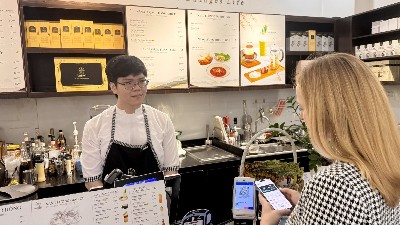
The ultimate goal is to create an experience in which visitors can “travel abroad but pay as they do at home”; they do not need to understand the systems operating behind the transaction but must be able to recognize participating merchants and use familiar applications to pay.





 Google translate